1603-1640: THE GREAT MIGRATION
Every life writes its own Work of Fiction (anonymous)
 From 1602 to 1620 when the Mayflower sailed, 81 ships (probably more, but those are the ones that have been recorded) crossed the Atlantic, some to found settlements there; most of these failed and the passengers either died or managed to return home. Many of those to make these first journeys were single men. For example, the Concord left Falmouth, England on May 15, 1602 but carried no settlers. In 1603, the Speedwell and the Explorer left for the territory known as Virginia to evaluate its commercial potential. They arrived instead on the coast of Maine in June of that year, were attacked by Indians, and returned to England by October. In 1606, the Richard left Plymouth in August also heading for the North Plantation of Virginia with supplies; they returned in March of the following year without ever having made it to their destiny. This is just a sample of what would turn into an incredible criss-crossing of the Atlantic Ocean.
Saturday, December 30, 1606, 150 passengers left Blackwell, London in three ships: the Susan Constant, the Goodspeed and the Discovery. After 6 weeks at sea they landed in Cape Henry in Virginia and were attacked by Indians. It was the 105 survivors of the original 150 men and boys that founded Jamestown in May of 1607. Of that group, only 38 or 40 would 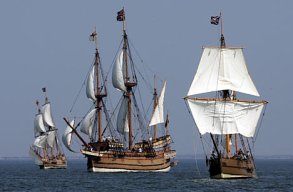 survive to see the second landing in January of 1608. This ship arrived carrying only 100 of the 120 original settlers that had set out from England.
In the late summer of 1609, 200-300 more colonists disembarked at Jamestown, many of them women and children. The death rate in the colony had risen to 70% by this time. But mortality due to disease and starvation was to go higher, reaching almost 80% during the winter following their arrival, a period that came to be known as the “Starving Time”. Scientific proof has been found that the colonists –during this time- even resorted to cannibalism[1] eating the flesh of those who had died before them in order to survive.
In May of 1611, the Starr left England headed for Virginia, accompanied by the Prosperous and the Elizabeth. Amongst them they carried 300 people, much needed supplies and horses, cows, goats, rabbits, pigeons and chickens. The men aboard were listed as 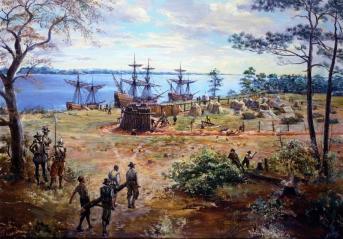 “honest, sufficient artificers, carpenters, smiths, coopers, fishermen, tanners, shoemakers, shipwrights, brickmen, gardeners, husbandmen and laboring men of all sorts.” Jamestown was being seriously populated and every kind of artisan and builder was needed to insure its growth.
And so it went: the Treasurer sailed in 1613; the Blessing with 100 passengers in March of 1614; the John and Francis in the first week of November 1614 with 34 men and 11 women and other necessaries for the rest of the Colony. The George departed in December of 1617 and took five months to reach Virginia with its supplies mostly lost and some 400 men, women and children in a sorry state. In 1618 a ship called Gift from God sailed to Virginia with 250 settlers. About 180 to 200 people crossed also in 1618 aboard the William and Thomas and some 30 to 130, according to varying reports, died on the way. The Bosa Nova and the Diana both sailed in 1619 carrying 120 persons and 100 children between them; only 80 children survived the crossing. And more, the Margaret of Bristol and the Sampson sailed in 1619 carrying 36 and 50 settlers respectively. In 1620 there were several trips over, all to Virginia, carrying more settlers in what was by then the most important colony in the New World.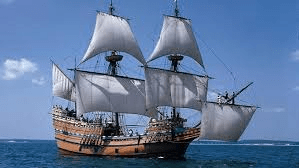
In that same year, the Mayflower set sail from Harwich, England on the 6th of September and arrived on the 11th of November in Plymouth Harbor. During the crossing, two people died and one baby was born (it died shortly after landing). Of a total of 102 passengers, 54 either died on board over the first winter when the harsh weather obliged them to stay on the ship, immediately after gaining land or over the first year. At the end of that period, only 45 survivors were counted in the budding Plymouth Colony. The Mayflower was but the first ship to take emigrants to what would later be Massachusetts and it therefore has been marked as the signal founding voyage of the future New England.[2]
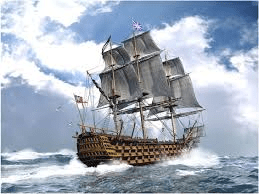 Between the Mayflower and the Winthrop fleet, 66 other recorded ships made the crossing, founding settlements in Plymouth, Braintree, New Amsterdam, Salem and Charleston bringing the grand total of known crossings to 147 ships with varying numbers of passengers and rates of mortality. These were not pleasure cruises and one can barely begin to imagine the courage it took to embark on them.
Many of the travellers on these first voyages returned with tales of their hardships, but also with stories of the unimaginable extensions of choice land to be had for the wanting, of the possibility of founding communities based on their dreams and of the freedom from tyranny. In 1630, right before the departure of the Winthrop Fleet, the Mary and John sailed with approximately 140 passengers from Dorchester, Dorset, England that arrived at Nantasket Point and, just a few months before the founding of Boston, founded one of the first New England towns: Dorchester, Massachusetts; three years later, on the 8th of October, the first town meeting in America was celebrated there. Dorchester would later become the home of Baker’s Cocoa, which has formed a part of almost every American child’s diet since then. It was annexed to Boston in 1870.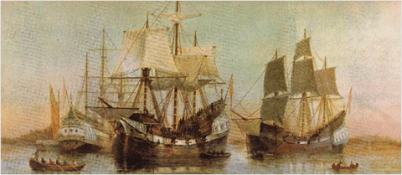
In spite of the fact that so many had already made the crossing, the so-called “Great Migration” began in honest in 1630 when the Winthrop Fleet of 11 ships gathered and crossed the Atlantic carrying more than a thousand emigrants, mostly families, to the future ‘New England’. The Fleet consisted of ships named the Arabella, the Ambrose, the Charles, the Hopewell, the Mayflower (a different one), the Jewel, the Success, the Trial, the Whale, the Talbot and the William and Francis. It landed near what would later become  Salem, Massachusetts during the year of 1630 and constituted the first mass exodus of Puritans from England. Their dream, expressed by their leader, John Winthrop, was to found “a city on the hill” so that in sight of all who saw them they would be a model of goodness and light lived on this earth. Of the thousand settlers in that first group, two hundred died that winter and two hundred more returned to England the following spring. But, over the next ten years, more than 20,000 persons –mostly from East Anglia (Suffolk, Essex and Norfolk) in England and mostly of the Puritan philosophy– migrated to America to form the backbone of New England.
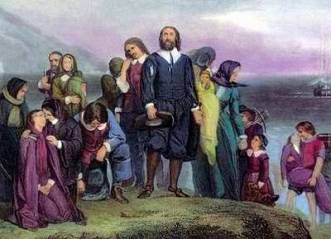 The difference between this migration and previous ones is the fact that it was realized by whole families who –pulling up their roots, selling or giving away or storing with others everything they had, saying goodbye to whatever family stayed behind perhaps to never be seen again– packed in grand trunks what necessary possessions they could not make anew on the other side (the metal parts of farming instruments, for example, a small store of pots and pans, the family bible, basic linens) and set out on an adventure that they couldn’t even begin to imagine. Most of them had never been aboard a ship before; some had never even seen the sea. Perhaps, if the real hardships of the trip and the new settlements had been known, the colonization effort might have been set back for many decades. But news did not travel fast then, mostly it did not travel at all and what ill tidings did manage to reach the coast of England, rarely continued inland or, if they did, were promptly overridden by dreams of barely imagined possibilities. The stories of over 100 acres of land being allotted to each settler; of communities making their own laws and governing themselves in a new and freer way, of prayer and religious gatherings being held in what for them was the true way… all this told of a ‘new beginning’ where anything was possible.
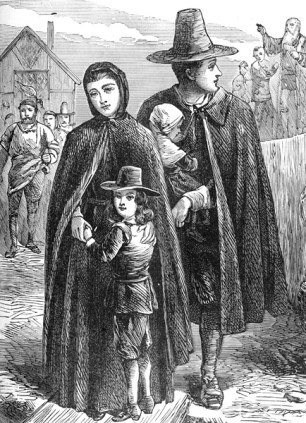 The East Anglian families that made up the bulk of those crossing in the 1600’s were not starving, uneducated people. Most of them had good schooling for the times; they were established artisans in their communities; some owned houses and land which they sold to pay for the trip. A few could afford servants and often took them along, paying for their passage as well. Some, however, were yeomen, tenants subservient to the nobility who had little hope of ever owning their own land. Most of these could not afford the cost of passage for themselves and their families so they became indentured servants during the trip and upon arrival until that time when they could repay their debt and become freeman. And then, of course, there were the adventurers and the restless, men who travelled alone seeking fortune. There was even an occasional single woman hoping, perhaps, to form a family with one of so many single men. But for the most part it was families that crossed. The long lists of passengers –saved over time so that today we may read them in wonder on Google- include families called Abbot (10), Barnard (6), Belcher (4), Cheesebrough (6), Dudley (8), Gardner (4), Greene (6) … Hawes (5), Kemball (13), Longe (13), Swayne (6) and so on. These were whole families pulling up their roots, leaving forever the known and moving to a new land. [3]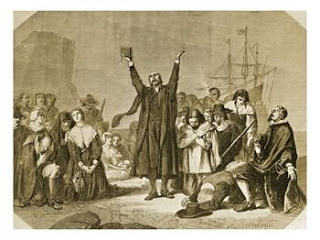
On the Planter, for example, that made the voyage in 1635, there were 118 passengers registered before boarding. The roll does not necessarily mean everyone on it boarded the ship or arrived in America: “Some may have decided not to sail; some servants may have run away. And there usually was some loss of life among the passengers from disease and malnutrition during the passage.”[4] Among those registered to board, the eldest is a man 70 followed by a woman 65 (not related) and another unrelated man of 65; there are 11 passengers in their 40s, but most are in their 20s and 30s. 53 of the passengers are under 17; the youngest is 3 months old, Thomas Tuttell who, at least, would have been assured of his food as long as his mother survived. The incredible thing about these passenger lists is they speak not of strong seamen, foolhardy adventurers or rough-and-tough men of the world, but of simple, everyday families. William Beardsley, for instance, was a 30 year old mason travelling with his wife, Mary, who was 26 and his three children –Mary, John and Joseph- aged 4, 2 and 6 months; Thomas Olney, shoemaker, 35 and his wife Mary, 30, took two children: Thomas 3 and Etenetus whose age is not registered. Also on board there were several husbandman (free tenant farmers or small landowners), 2 shoemakers, 3 tailors, a linen weaver, 2 curriers, 2 glovers, a carpenter, a hostler (one who looks after the horses), a couple of millers and 2 sawyers. 9 men and 3 women identify themselves as “servants” and travel attached to one of the families. In other words, these were not sea-people. They had lived in towns, they had worked on land, they had housed their families in nice cozy houses, everything they knew was solid and controllable. Nothing jumped about and possibly sank the way a small ship in a storm was apt to do. So, what drove them to the sea, to the unknown, to the dangers and the possible death during the journey or in the new land?
One factor was religious persecution. East Anglia was, at the time, a hotbed of dissenters and, although not all of them were Puritans, all of them believed that theirs was the only true religion and the only road to salvation. They truly believed. Today, perhaps, we would find that kind of absolute belief only in the jihadists who fly planes into towers or blow  themselves up in nightclubs or drive a ten-ton truck through a crowd of revellers. In those days, it probably could be found amongst most believers of any religion. After Charles I rose to power, religious persecution increased as the Established Church of England grew ever more intolerant of what they called “heresies”. It was, apparently, William Laud who –upon becoming Archbishop of Canterbury- tightened the laws against “deviations” and was not prepared to compromise on any aspect of his policy. He gave the Justices of the Peace authorization to arrest all non-conformists who met in private. The leaders of ‘deviant’ movements were forbidden to preach and often imprisoned. He made it a criminal offense to attend Puritan worship services in an attempt to squash any opposition to the Anglican Church.
When the Puritan dominated Parliament was closed by Charles I, the followers of Puritanism found all channels for change blocked. Believing that eventually God would smite England for its sins, they had no qualms about leaving the followers of the ever more “popist” Church of England to their fate and emigrating with their leaders to a land where they could worship as they saw fit. So, many of the trips over were commandeered by Puritan leaders wishing to establish the “true” religion in the New Land.
The Puritan dream was to reform human civilization through religion, to wipe out poverty, to allow women to be educated so that they too might read God’s Word and be saved, and to make a heaven on Earth in which everyone was free to discover God’s will for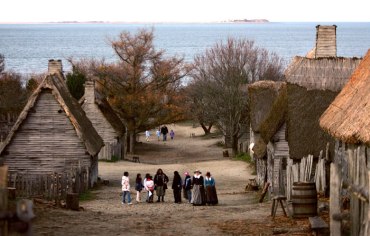 themselves. In this way, Puritans would be able to live exemplary lives in every respect so that everyone else would see God through them and be converted to their beliefs. Therefore many left England to preserve that faith and to create a place where Puritanism could thrive, grow strong and eventually –when England had been smote for its apostasy- re-establish Christian civilization[5]
However, some economic reasons were just as compelling. The Crown, to support King Charles’ self-serving excesses, imposed heavy taxation and much of the countryside suffered. “We are being taxed into the alms house without so much as a voice,” said one such victim of injustice[6]. East Anglia, already suffering because of the decline in wool trade, found itself doubly oppressed. Large and small freeholders became victims of taxation illegally laid on their holdings. Many in the region began suffering from severe poverty. Hardworking men could no longer see the benefits of the land that had birthed them. The stories that managed to filter back from the New World, spoke so gloriously of endless opportunities for land and betterment that the dangers and sacrifices involved in migrating must have seemed worth the risks.[7] Even noble landowners such as John Winthrop found themselves taxed to such an extent that they feared the future of their families.
 Fear of the plague was another incentive to get as far away as possible. Death was a possibility even in the homeland especially since the bubonic plague continued to claim lives. Although the devastating epidemic of the 14th century had not since been repeated, people continued dying in the thousands from this disease. In 1603, there had been 30,000 deaths in London, in 1625 more than 35,000 died and again in 1636 the deaths reached more than 10,000 individuals. Even though it was known to hit hardest in cities, the plague also spread to towns in rural areas. There are, obviously, no numbers for smaller urban areas. In the New World there were no overcrowded and filthy cities to attract the disease, and one could safely hope it would not find a way to propagate there.
And then there was just simply hope or greed. Among other restless spirits were those whose land hunger was not satisfied at home. They heard of the great continent across the Atlantic where a hundred acres would be given to each and every settler –an expanse  almost beyond their conception of reality. Farmers who had long lived as tenants to landed gentry dreamed of finally being landowners themselves. Small landowners who envisioned their properties decimated amongst their many offspring, hoped to be able to allot to each child a just amount. And, for some –the young, the unattached, the endlessly curious- it was simply the spirit of adventure, the dream of a land where everything was yet to be done, the creative challenge of establishing the perfect society, the thought of freedom from all constraint and the need for doing everything anew that pushed them up the boarding plank onto the waiting ships.
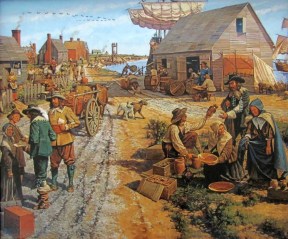 The eleven ships of the Winthrop Fleet were followed by 40 more recorded ships between 1630 and 1634. Afterwards, from 1634 to 1639, 98 more registered ships sailed across the Atlantic to the New World. According to Anne Stevens, who has carefully researched the matter[8], over 7100 families on 290 ships went to America between 1602 and 1638. And, then, it was over. There was hardly any further migration into New England until after the Revolution. Virtually all growth of the colony after 1640 was by natural reproduction. Those who had gone and stayed were founding –without knowing it- a new and incredible nation that would eventually come to be the most powerful in the world.
[1] (http://www.bbc.com/news/world-us-canada-22362831)
[2] There is a TV miniseries called Saints & Strangers illustrating marvellously the struggles of these first settlers.
[3] On the internet site founded by the Winthrop Society we can view the lists of passengers by ship, and the names and ages of the passengers. http://winthropsociety.com/ships.php#passname
[4] http://winthropsociety.com/ships.php
[5] (https://thehistoricpresent.com/2008/10/27/the-puritans-and-freedom-of-religion/)
[6] Contentment, A Novel of New England’s Birth, Raymond E. Sullivan, 2006, IUniverse, Inc. USA.
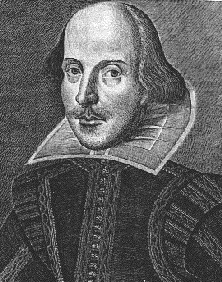 In the spring of 1616, William Shakespeare died. He was 52 years old. Although most of his work had already been published in editions of questionable quality, it wasn’t until 1623 that two of his friends and fellow actors finally published a more definitive text called the First Folio. In the preface, Shakespeare was hailed as “not of an age, but for all time”. Today, his complete works are free on Internet and few of us have not been touched by Shakespeare; I for one have so often been amazed at the depth of his knowledge of the human mind and heart as to be convinced that after William, there is nothing new under the sun. So many things that modern psychology has allowed us to see, he already knew. I recently quoted him in relation to my work with the method of Byron Katie: “There is nothing either good or bad, but thinking makes it so” (Hamlet, Act II, Scene II) and his phrases have become so commonplace that we no longer remember they came from him. “It’s Greek to me”, “In my mind’s eye”, “Can one desire too much of a good thing”, “Forever and a day”, “But love is blind”, “The world’s mine oyster”, “As good luck would have it”, “He will give the devil his due”, “I’ll not budge an inch”, “I have not slept a wink”, “Out of the jaws of death”, “The game is up” and so forth. Shakespeare is so much a part of our everyday language that it is hard to believe anyone could find fault with him, yet the Puritans did along with theater as a whole. The Puritans, it seems could find fault with almost anything that was entertaining, exciting or just downright distracting except –that is- sex… as long as it was practiced within marriage (and with your partner, of course).
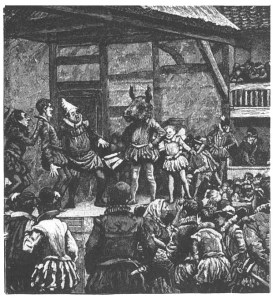 In part, the problem was that the theater had grown out of a tradition of enacting religious dramas that was popular amongst Catholics so for the Puritans, who rejected every physical representation of the Divine, it would be suspect from the very beginning. Theaters, public houses, halls where music was played and dancing encouraged were all places that invited vice, drunkenness, gambling and prostitution. Above all, they implied having fun, and fun was considered a dire distraction from the building of a better and more moral society, the only worthy goal here on Earth. Preachers complained that their flock could sit through a couple of hours of theatre and then fall asleep during a one hour sermon. Actors were to be “taken as rogues”, and plays were described as being ‘sucked out of the Devil’s teats, to nourish us in idolatry, heathenry and sin’.
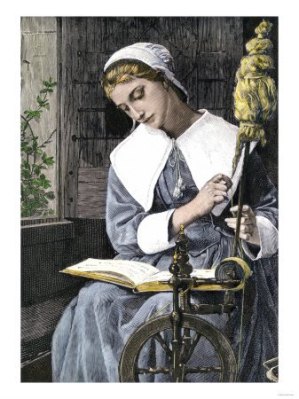 Puritans, and therefore Elizabeth, were brought up reading the Bible, not Shakespeare; she would have been instructed to take every word of the sacred book literally, never doubting that there were snakes in Paradise as surely as there were in Hadleigh. She was shown to avoid wearing colorful clothing or using adornments of any kind –even buttons- which were considered expressions of self-pride, a dreadful sin in itself. She wasn’t allowed to dance, heaven forbid! and the only music to be heard was in church. If she had ever questioned these Spartan rules, which is very doubtful, her father surely would have explained that these earthy occupations excited the imagination and sometimes the body and could do no good for a young woman entering her adulthood. Elizabeth might have thought that having her imagination excited sounded rather… exciting and that her parents seemed to have a peculiar dread of young girls enjoying themselves. Could it possibly be true that all that seemed delightfully enticing was no more than “a waste of time that spent the soul in frivolous pursuits” as her father, no doubt, had emphatically pointed out.
 In 1620, Elizabeth turned 18. On the 6th of September of that year, the Mayflower sailed for the New World with 102 passengers and 30 more between officers and crew, but probably no one in Hadleigh heard about it or cared for that matter. It may seem strange for us to think today that such a signal event could be totally ignored at the time but that is how history is: we go about our daily lives ignorant of the fact that someone in the future will either make up a story about how important we were or pass us over entirely.
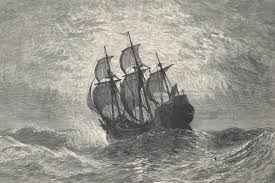 Elizabeth, apparently in no hurry to wed, sat out the year without a beau. The Mayflower, on the other hand, hurried to its destination arriving around the middle of November after a gruelling journey. They had been lucky: only two passengers had died during the crossing. They were not, however, to fare as well during their first winter which turned out to be an extremely harsh one. Obliged to sit it out aboard the ship, the 100 surviving passengers found themselves decimated by disease; a combination of pneumonia, scurvy and tuberculosis left only 54 passengers and 15 crew members to
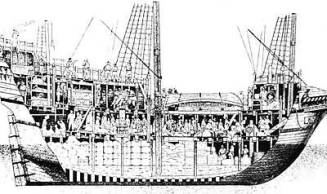 disembark the following spring. Those are numbers; they sound dire, but they don’t tell us anything about the families that made the voyage, about the mothers that watched their children die and could do nothing about it, of the children who lost their parents, of the men who stood helpless as their wives succumbed to disease or starvation. Numbers don’t speak of pain or sacrifice; they are just finger-counts of tragedy. And even more sad, the names of those that died were not remembered as the new settlers founded the future Nation.
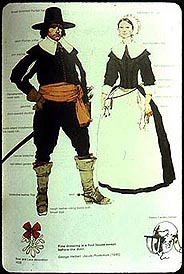 It must have been sometime between the end of 1623 and the beginning of 1624 when Elizabeth Smyth met Samuel Smyth from Whatfield, a somewhat smaller village lying some two miles north of Hadleigh. If these two young lovers had lived in Spain where children kept both parents names, their offspring would have been Smyth and Smyth, and heaven forbid any of them should also have married a Smith of whom there were myriads, much to the dismay of future genealogists. Fortunately, they lived in England, so Miss Elizabeth Smyth became Mrs Elizabeth Smyth without even having to change her signature.
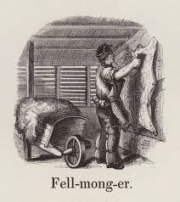 Samuel Smyth, like his father before him, was a fellmonger, a dealer in hides and sheepskins which he prepared for tanning. Exactly when Elizabeth began to notice him, or him her is not known at all and much less for sure. They might have seen each other in the Hadleigh marketplace or in church, or strolling along High Street, and perhaps Samuel, after seeing la belle Elizabeth spoke to his father who in turn would speak to Elizabeth’s father who in turn would speak to his wife who would in turn speak to her, or the other way around, but what is known for certain, without the smallest doubt and absolutely, is that by May of 1624 they knew each other quite well. I will refrain from wondering if this levity
 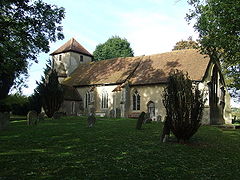 of morals was passed down through the generations for I consider that each generation is responsible for its own, shall we say, de-generation.
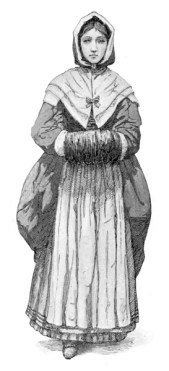 “full”, so to speak, in order to cover any untimely fullness there might be underneath. However that may be, in Elizabeth’s case appearances were kept, at least until the following year when little Samuel was born on February 7th, just four months after the ceremony.
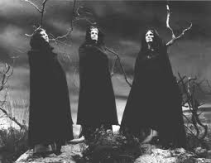 Yet all was not conjugal bliss and family; there was “double, double toil and trouble,” in more than just Shakespeare’s Macbeth, as the Century of the General Crisis became each year more worthy of its name.
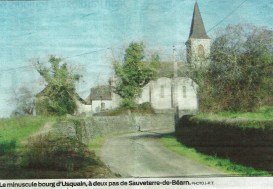 According to Paul Raymond (see Wikipedia), a French archivist and historian born in 1833, Usquain in the year of 1385 was composed of twelve families and belonged to the territory (canton) of Sauveterre. Actually, the 12 families were spread out over something called La Veguerie de Campagne de Usquain, with the word ‘veguerie’ meaning a group of counties or districts within the ‘countryside’ of Usquain. So it is possible that the 12 families in the list never saw, or perhaps had never even heard, of one another. The inhabitants of Usquain were vassals to the viscount of Bearn up until the time that this region was absorbed by France. Raymond continues: “Usquain is the cradle of the Domecq family, dynasty of wine producers and merchants and raisers of brave bulls in Jerez de la Frontera.”
 squabbling descendants thanks to the impossible French inheritance laws. It is crumbling and surrounded by a thick wall of brambles that in summer produce tiny, edible blackberries; the building itself is probably past the point of recovery. There are two smaller houses –one with a barn-like structure attached to it- inhabited by a pair of sisters from Granada, Spain and their families (it is anyone’s guess what they are doing there). Across the patch of dirt that serves as a parking lot for occasional visitors, lays a
 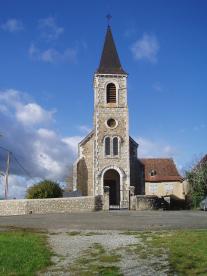 fourth house next to the chapel; this house is also crumbling. The chapel was apparently built sometime during the 19th century by someone from the Domecq family, probably my great-great grandfather or uncle. The door is open and one can go in and somebody is keeping it up. A sign on the door lists three priests and their phone numbers for emergencies, and the times when services
 are held elsewhere. There is a graveyard beside the chapel, and on one very old gravestone lying on the ground next to the chapel wall, the name DOMEC (the original spelling) can still be made out. There are four gravestones lying together, but the others have long since given over their letters to the elements.
 The first time I visited Usquain, someone took me, but the second time I went alone. Back then there was a smaller house built of stone behind the Domecq building; it has since been torn down. One stone to the right of the front door had the words ICI VI DOMEC and the year 1662
 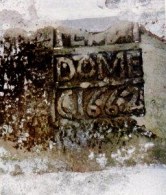 written under them. One may presume that the “stone house” was, at one time, the main house and might even have been where Jean Domecq was born in 1615.
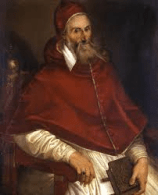 counterparts in England- believed that the Catholic Church needed radical cleansing of its impurities and that Pope Pius IV, ruler of a worldly kingdom, sat in tyranny over the things of God determining who was saint and who was sinner as if on a hotline to the Divine.
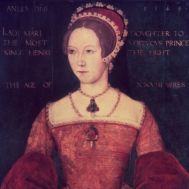 Mary to persecute their own Protestants. In 1559, King Francis II and with his wife, Mary Queen of Scots, came to power. During the eighteen months of her husband’s reign, Mary
  encouraged a rounding up of French Huguenots on charges of heresy, employing torture and burning as punishments for dissenters from the one true religion. This Mary, however, would pay for her crimes. She returned to Scotland a widow in the summer of 1561 and later, after 18 years of imprisonment, was executed by her half-sister Elizabeth I of England.
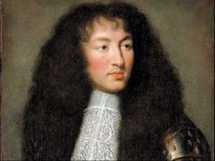 In 1643, when Louis XIV (le Roi-Soleil or Sun King), ascended to the throne, he wasn’t so ‘Sunny’. He began an increasingly aggressive campaign of conversion against the Huguenots. First he financially awarded those converting to Catholicism, then he imposed penalties on those that didn’t: schools were closed, churches destroyed and Huguenots excluded from favored professions. Wishing to force the unrepentant either to convert or to flee, he instituted the dragonnades, which gave military troops permission to occupy and loot Huguenot homes. Finally, in 1685, he issued the Edict of Fontainebleau, declaring Protestantism illegal, forbidding services, requiring the education of children as Catholics and forbidding emigration.
 homage to Louis XIV in the Castle at Pau, as would his son and his grandson, each in his own turn, tells us that if he ever had been Huguenot, he had definitely recanted by this time. Nevertheless, one must wonder because the region of the Bearn was the only one in France to have Protestantism declared as the dominant and official religion for over 50 years. However that may be, he could never know that his direct descendants, in Jerez de la Frontera, would be, marry and produce during the 19th Century a breed of Catholics so devout that some might have called them “rabid”.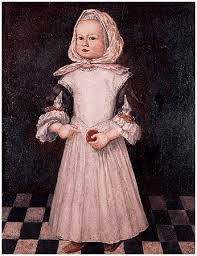
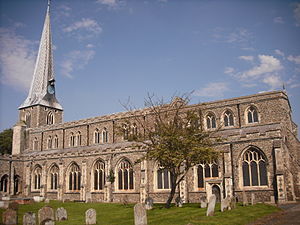

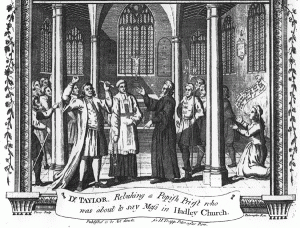 The supreme example of Hadleigh’s radicalism lies in the story of Rowland Taylor, that Elizabeth must have heard over and over much to the horror of her little heart. Rowland Taylor (an ancestor of Elizabeth Taylor, by the way) was appointed Rector of St. Mary’s Church in Hadleigh the 16th of April, 1544; he had been ordained a priest in 1541 in spite of the fact that he was married, because the English Reformation had lifted the requirement of celibacy for the clergy. Taylor’s wife, Margaret Tyndale, had seen her father burned at the stake in 1536 for his ‘heretical’ translation of the English Bible so it was no surprise she married a man called to martyrdom. In Hadleigh, Taylor had used his post to disband Catholic religious guilds, sell their possessions and use the proceeds to help the poor, a chore for which he had a passion. He was known to press the rich cloth merchants of the town for generous donations to be invested in aiding those less fortunate. These charitable deeds endeared him to the hearts of his parishioners who found in their rector a gentle kindness, coupled with unaffected cheerfulness. It seems that ‘cheerfulness was a prominent feature in his character’ and he was remembered as ‘smiling constantly’ and having had the ‘merriest and pleasantest wit’.
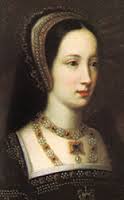 In 1553, Edward VI died and Mary I (later known as ‘Bloody’ Mary for
 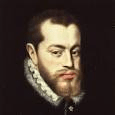 her persecution of Protestants), along with her very Catholic husband, King Phillip of Spain, tried to sink England back into “the one true faith” and the sphere of the Holy Roman Empire. Taylor, at that moment spiritual leader of Hadleigh, was a staunch resister of any back-stepping, believing (and preaching) that clerics should be allowed to marry and that the story of ‘transubstantiation’ (the conversion of bread and wine into the flesh and blood of Christ) was a lot of hogwash. Mary –true to her faith- had him promptly arrested. He was tried, excommunicated and sentenced to death. Before his execution, he was taken back to Hadleigh where his wife awaited him so they might have the allowed ‘last supper’ at home together. The following day, a cold one in February, he was more than warmed up at the stake in Aldham Common near Hadleigh, while his wife, two daughters, his son and a large crowd of Hadleighens looked on. According to an eyewitness, his last words to his son were:
 “My son, see that thou fear God always. Fly from all sin and wicked living. Be virtuous, serve God daily with prayer, and apply thy boke. In anywise see thou be obedient to thy mother, love her, and serve her. (…) Beware of lewd company of young men, that fear not God, but followeth their lewd lusts and vain appetites. Flee from whoredom, and hate all filthy lying, remembering that I they father do die in the defense of holy marriage”
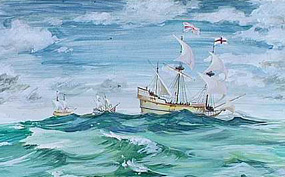 settlement on Saint Croix Island in what is now Maine, but a harsh winter killed nearly all the settlers and the remainder moved out of New England up to Nova Scotia. It was commented that King James certainly wouldn’t want to be bettered by the French so there was no surprise when he issued competing royal charters to both the Plymouth Company and the London Company in order to establish a permanent settlement that would claim what rightfully belonged to England.
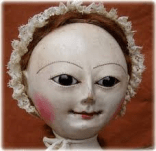 doll with the face painted on the cloth, or maybe she played “dolls” using the newest brother or sister that had arrived in the family. In the meantime, the London Company was playing ‘house’ in a more serious way; it had established a foothold known as Popham Colony at the mouth of the Kennebec River in the Gulf of Maine. Unfortunately, its colonists faced an incredibly harsh winter, worsened by a fire in the storehouse that wiped out their supplies. When one of their leaders died and the other abandoned the New World, the colonists en mass abandoned the project and headed for home. Their stories, like the sailors returning, would drift into Hadleigh and end up in the pub or in the homes as tales to put your hair on end.
![tumblr_inline_mf8dkslNWP1qggdq1[1]](https://writingalife.com/wp-content/uploads/2016/01/tumblr_inline_mf8dkslnwp1qggdq11.jpg?w=332&h=234) The 17th century lasted from January 1, 1601, to December 31, 1700, in the Gregorian calendar and became known as the Century of The General Crisis. During this period of 100 years, Europe suffered a series of struggles for power or religion or both that no one particularly remembers and no one particularly cares about. The usual battles ensued between one Royal Family and another and within the Royal Families themselves; between the people of one region and the people of another and between all the different entities of the then splintered Christianity. These battles led to death, migrations, territorial divisions and general devastation which perhaps touched the early protagonists of our story very little, if at all.
The 17th century lasted from January 1, 1601, to December 31, 1700, in the Gregorian calendar and became known as the Century of The General Crisis. During this period of 100 years, Europe suffered a series of struggles for power or religion or both that no one particularly remembers and no one particularly cares about. The usual battles ensued between one Royal Family and another and within the Royal Families themselves; between the people of one region and the people of another and between all the different entities of the then splintered Christianity. These battles led to death, migrations, territorial divisions and general devastation which perhaps touched the early protagonists of our story very little, if at all.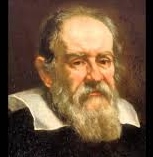
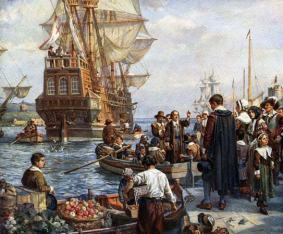 Dutch, French, Spanish, Portuguese, English, and others, all struggled to maintain and extend colonies and trading-posts in distant corners of the globe, with profound and permanent consequences for the whole world. They also fought one another in Europe, where warfare grew increasingly complex and expensive. To gain an edge against other powers in war, European governments invested in research in military technology, and the
 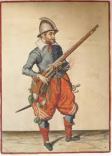 seventeenth century was consequently an age of military revolution, enabling Europeans from then on to defeat most non-European peoples relatively easily in battle.”
 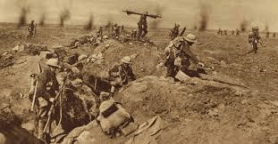 henceforth, was rapidly terminated, not by peacemaking or any human endeavor, but by a flu epidemic that killed off more men in the trenches than the war itself; WWII, as you may still recall from your history courses, was ended abruptly by the initiation of the Atomic Age which swept two entire Japanese cities, including a large part of
  their populations, clean off the map. Since these two WW’s, wars have gone back to being what they were before: localized, intermittent (sometimes), interminable (some) and breaking out all over the place as it was during the years of the General Crisis, so once again we probably should honor our century with a similar epitaph.
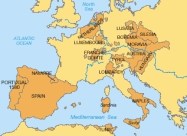 American colonies), initiated by James I and lasting from 1603 (the year the beloved but never loved ‘Virgin’ Queen died) until 1714, suffered rebellions and unrest. The Spanish fought the English and vice-a-versa; the French tried to clobber the Low Countries and Spain with both resisting violently. And, according to someone quoted somewhere, “political insurgency and a spate of popular revolts seldom equaled shook the foundations of most states in Europe and Asia. More wars took place around the world in the mid-17th century than in almost any other period of recorded history.” Apparently, it was a mess.
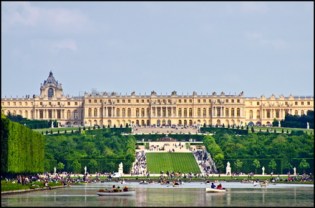 Admittedly, not all was killing, conquering and conflict. The Baroque cultural movement had for some time been populating horizons with all the ornate palaces (Versailles, amongst them) and breathless churches we pay tourist tickets to visit today; the Renaissance which started back in the 13th Century, had blossomed enough painters to fill entire rooms of our vast museums with names our children strive to memorize like Michelangelo, Raphael, Botticelli, van Eyck, Tintoretto, Murillo, Hieronymus Bosch, van Dyck, Velazquez, Zurbaran and da Vinci in places we dream of visiting such as Florence, Rome, Paris, Madrid, London and Venice mostly located in Italy, France, Germany, Spain, England or the Netherlands. Of the writers, very few are read today (or possible to read
 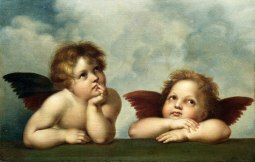 today) although their names and their importance, the dates they were born or died and the titles of their principal works continue to appear on exams in schools the world over (Shakespeare, Cervantes, Chaucer, Rabelais, Boccaccio, Marlowe, John Donne…). Philosophers had a heyday producing volumes of highly unintelligible flights of mind under the names of Bacon, Erasmus, Machiavelli, and Thomas More.
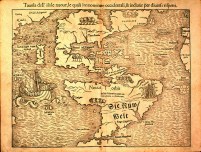 Explorers had gone and come back and set their countries on fire with a mad race to gain ever more territory in the so-called New World which was “new” only to its discoverers as the Aztecs and the Apaches, the Incas and the Mayas, the Mohicans and the Sioux and every other inhabitant of that side of the globe had known about it all since time inmemorial. Children then heard the names of Columbus and Cortés, Francis Drake and Sir Walter Raleigh, Magellan and Pizarro with awe and wonder and not just as something to remember at the end of the term.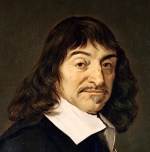
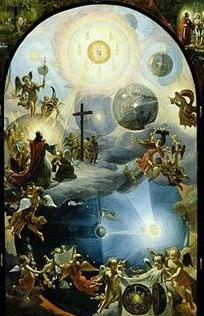 Descartes rearranged the human mind, with “I think therefore I am” (when surely the opposite is true: I am therefore I think) making us slaves to the god of Reason who has turned out to be the most unreasonable god of all, while Newton took the apple of Adam and Eve’s fall and through its falling gave us gravity to explain why the people (called ‘antipodes’) on the “underside” of the Earth did not fall off and drift away.
 miserably
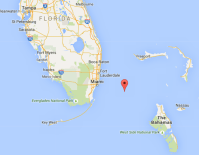 the Florida coast. At that time, they were both married and not to each other, although Perico was not living with his spouse and Betty -while still enjoying the multiple advantages that hers offered- was on the brink of separation. What went on on this first meeting is anyone’s conjecture. But
  the fact that this event had even taken place underlines the fortuitousness of destiny and the incredible intricacy in the pattern of individual lives which blindly determines their fate.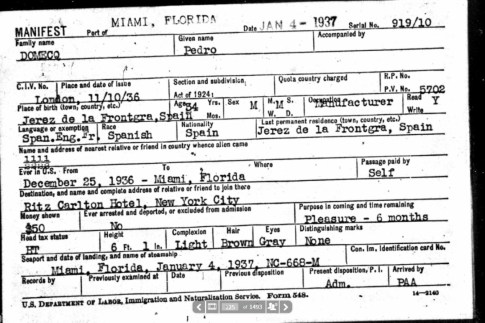
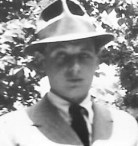 At the time of their meeting, according to this son, Perico stayed at the house of his friend, Gager Wasey (at left) at that moment still married to Betty. Also according to that narrative, Betty “would walk around the house naked,” and Perico “could not take his eyes off her.” Then, so his friend would not be fooled, he told him that “he fancied his wife a great deal.”
 phrase “half-naked”, and considering the circumstances (beach, warm weather, seashore, island), she might have sat on the deck or walked across the living room in her bathing suit which at that time wasn’t even close to being a bikini. Or she may even have laid by the pool wrapped in a towel as after a swim, something more normal for a girl brought up in America, than for the tight-laced English or the ultra-Catholic Spanish ladies that Perico had known previously. As for warning the husband of his
  future intentions, it is no more in Perico’s character than having told a son that the second wife flaunted herself shamelessly in front of him making it impossible to resist her. Perico was, above all, a gentleman and speaking poorly of one’s wife, present or past, was not in his nature; much less would he have violated a friend’s invitation by confessing he lusted after that man’s wife, even though on the following visit, lust he did.
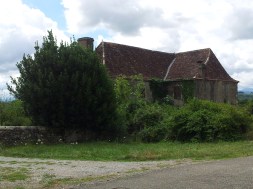
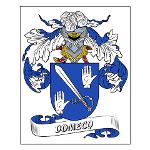 Several of the last names in the Bearn region derive from the state of domenger: Domenger, Domenge, Menjot, Domecq, Doumecq, etc. Domecq was registered as domenger of Usquain in 1385 and the family coat of arms comes from the custom of giving a pair of white gloves as a symbol of the vassalage to the viscount of the Bearn región.
 sides of approximately 750 A4 size sheets of paper and weighing some 2.6 kilos in total. Every time I pick it up, I marvel at what the Universe can do when we let go and invite it in.
 Writing a life