When I was 9 years old, I was torn up with all and roots and transplanted –as Harry Belafonte more or less said while introducing his song about Jamaica- with no one wanting my opinion about nothing, at no time and in no way. Children were to be “seen and not heard” according to my father, so voicing an opinion –even if I had had one- was not an option. Of course, I didn’t have one. I had no idea what “moving to Mexico” meant, or where Mexico was, or anything of anything. All I knew was that, while I was away at summer camp
 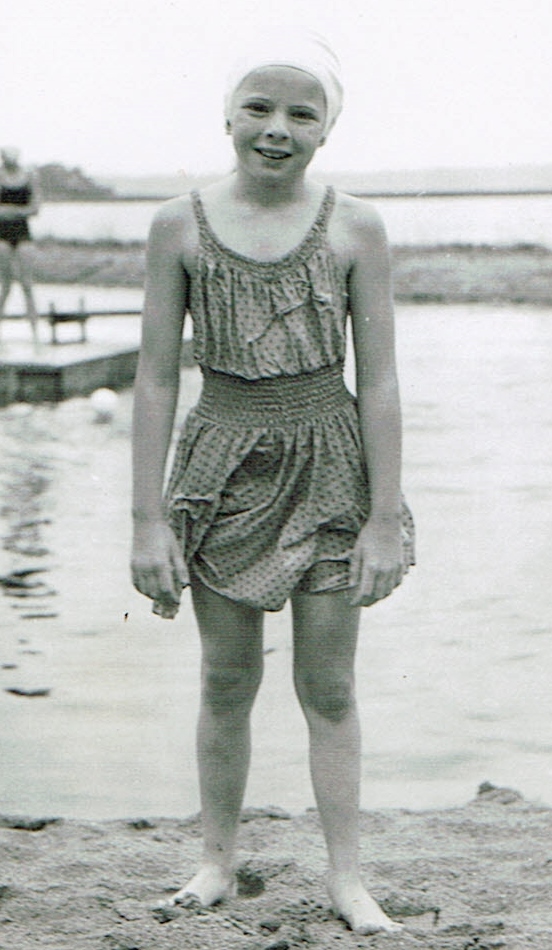 learning to ride horseback and row and swim and fish by inserting tiny frogs on a hook, and kiss a boy behind the watch tower, a decision had been taken that would determine my whole future and in its accordance we were loading up the car and “moving”. I had been moved before, from New York City to New Canaan, Connecticut, but that move was at 5 years old and –frankly- I remember nothing about New York even looking at the old
 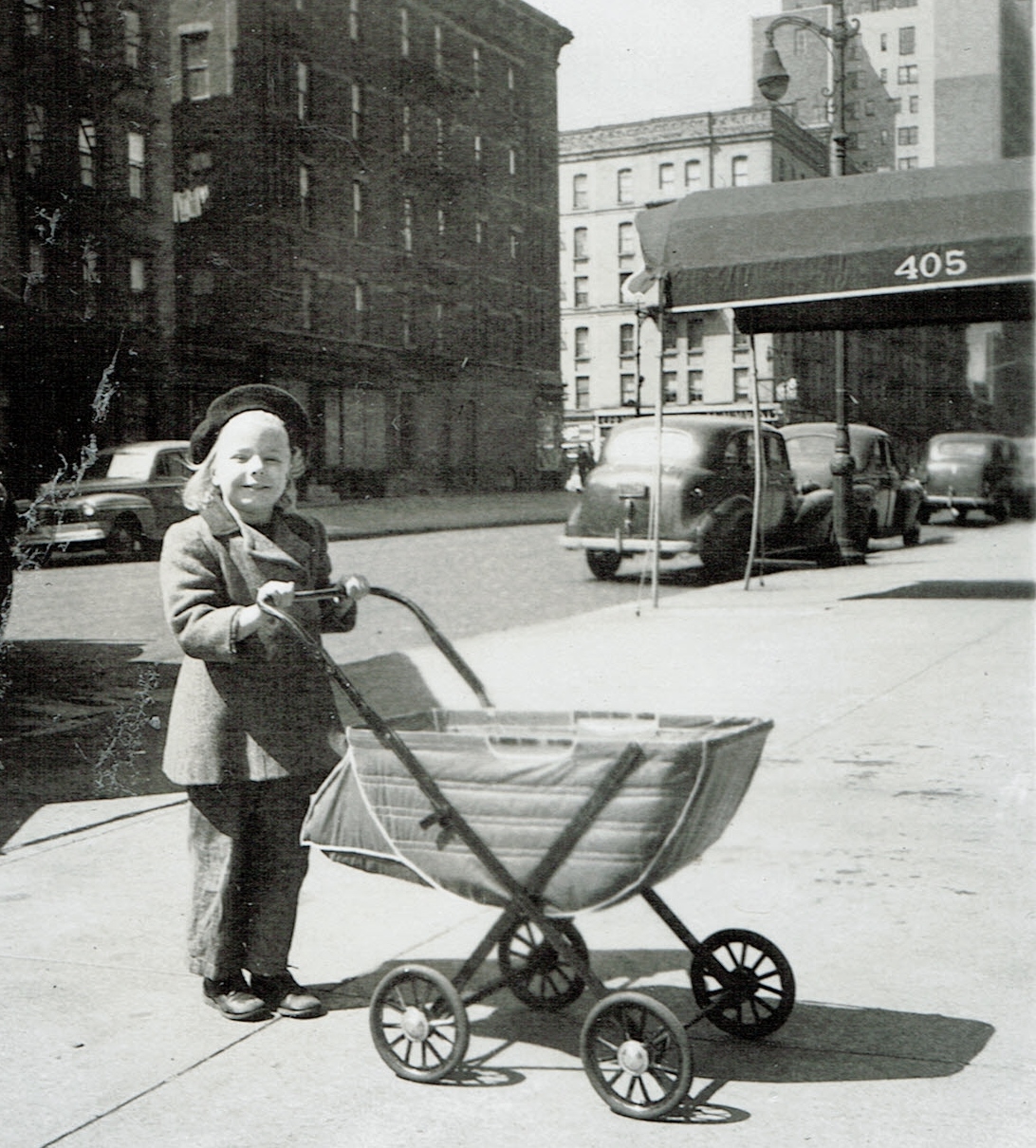 photographs. Besides, I was moving from an apartment in the city to a beautiful, spacious house in the country where I had miles of woods and fields in which to spend all my infantile energy. It was a better deal. I had already experienced “countryside” because while living in New York, we would go to our place in Poughkeepsie on long weekends and in the summer. In Poughkeepsie we had two horses (I don’t remember, but there are photographs and my father often spoke of this experience) and I would ride sitting in front of my father, tightly held. At least, this is how it was until one of the horses tried to brush my mother off by rubbing its side against a tree trunk at full trot and then
  almost killed my father with its hooves when he went in to feed it. That was the end of the horses. We had a black poodle called “Peter” too, until my mother ran him over one evening coming into the driveway when he galloped out to greet her. That was the end of Peter. The dog was Peter because my father was Pedro or, as is the
 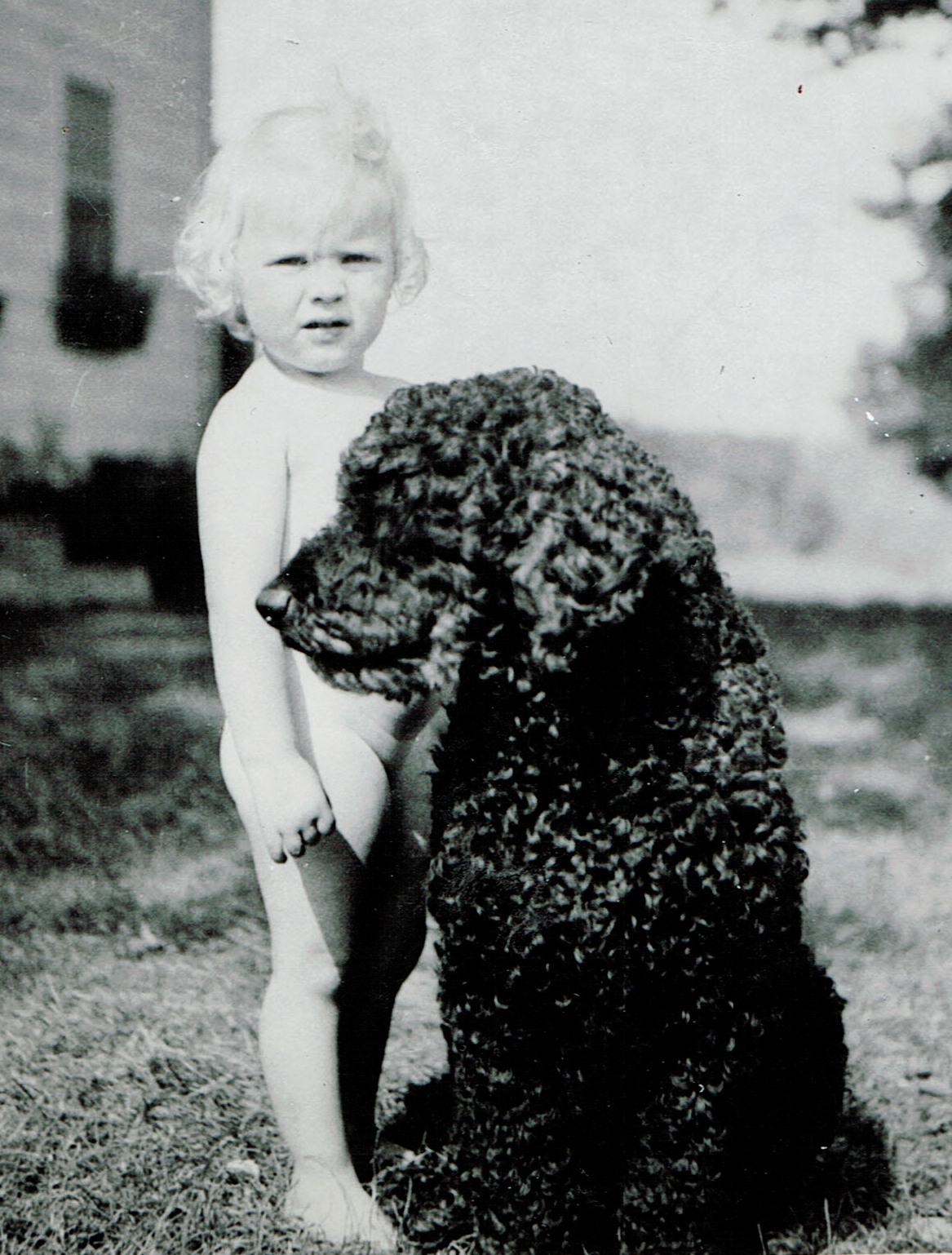 nickname in Spain, Perico. My mother, a good American who did not speak Spanish at the time, wanted to call my father “Peter”, but he would have none of it, so she called the dog “Peter” and then killed him. So much for love. This anecdote has a continuation. Many years later, while on a hunting trip with my father in Mexico, she shot a small parrot in place of a dove. In Mexican Spanish, a small parrot is called a “perico” (which there is not a nickname for Pedro) and my father loved to retell the story of how my mother was, for sure, out to gun him down.
 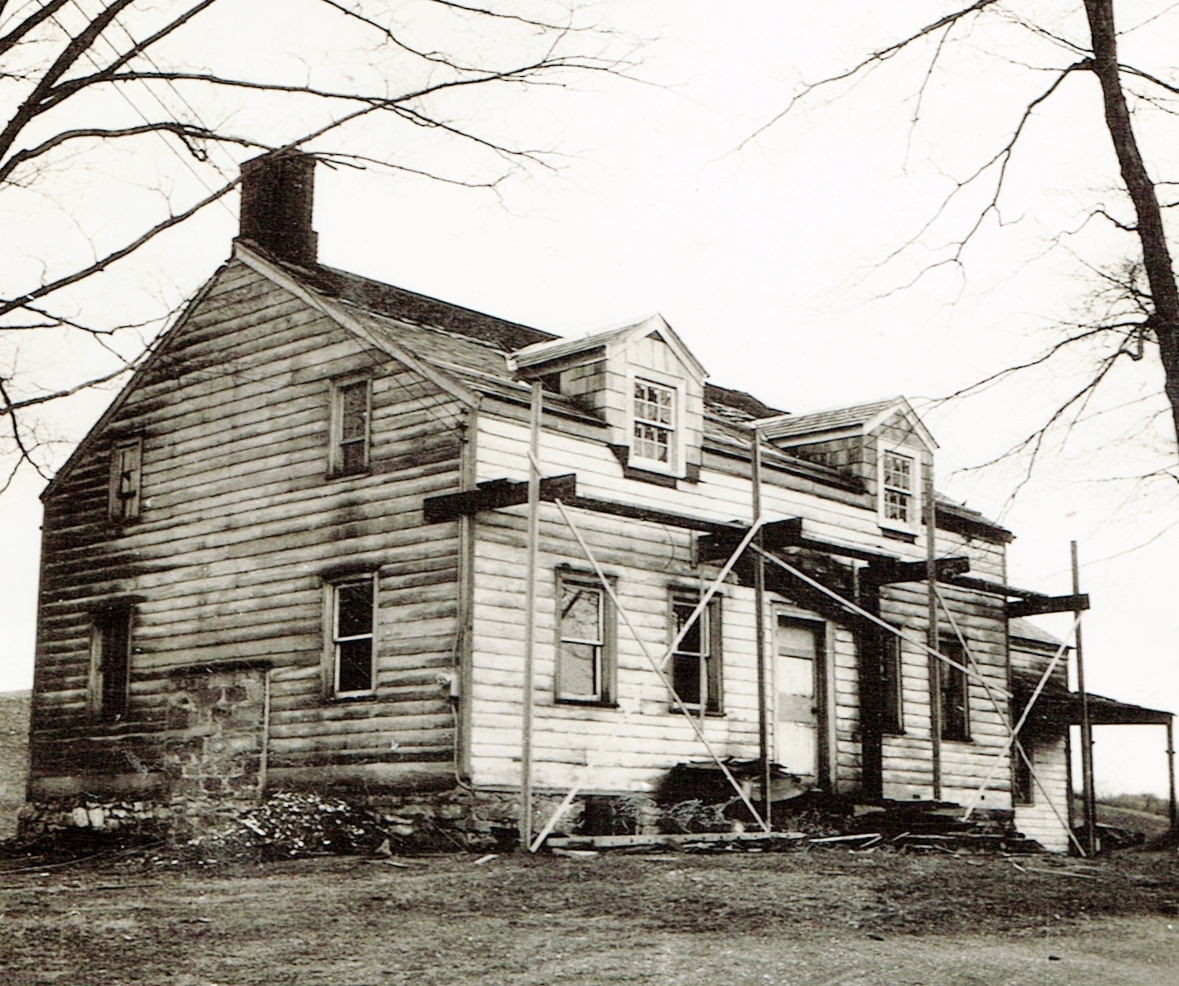 So Poughkeepsie melted into New Canaan and I had a black retriever named Brandy and a cat called Minnie, and
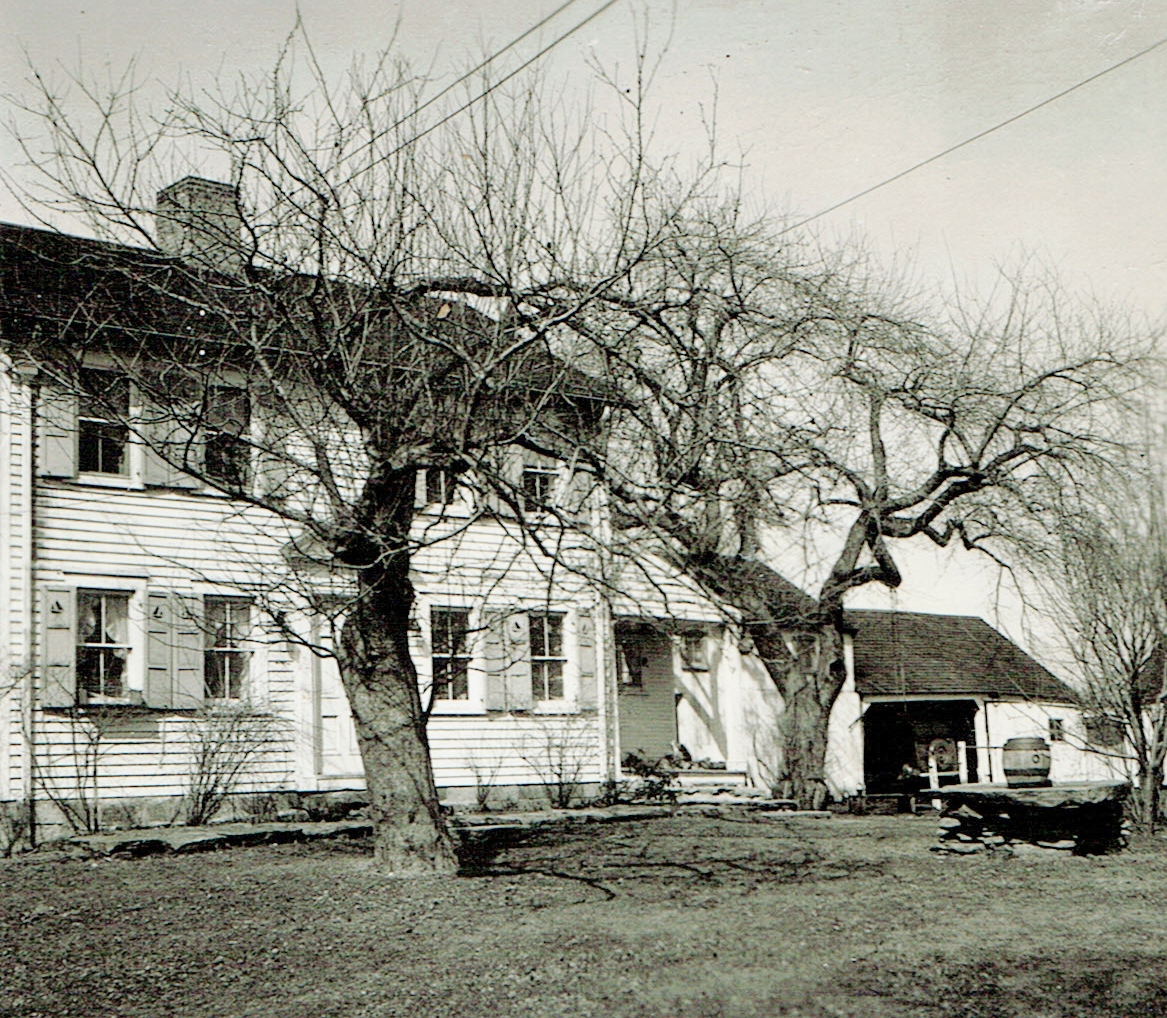 the freedom to roam, investigate, get lost and found, and live as I hadn’t experienced previously at least in a conscious manner. There was to be only one thing I would remember that would mar my New Canaan experience and that was the birth of my brother, something not easily forgotten considering that, in spite of me, he survived childhood. I was six, I had been queen of the house since birth with no competition whatsoever, and then
 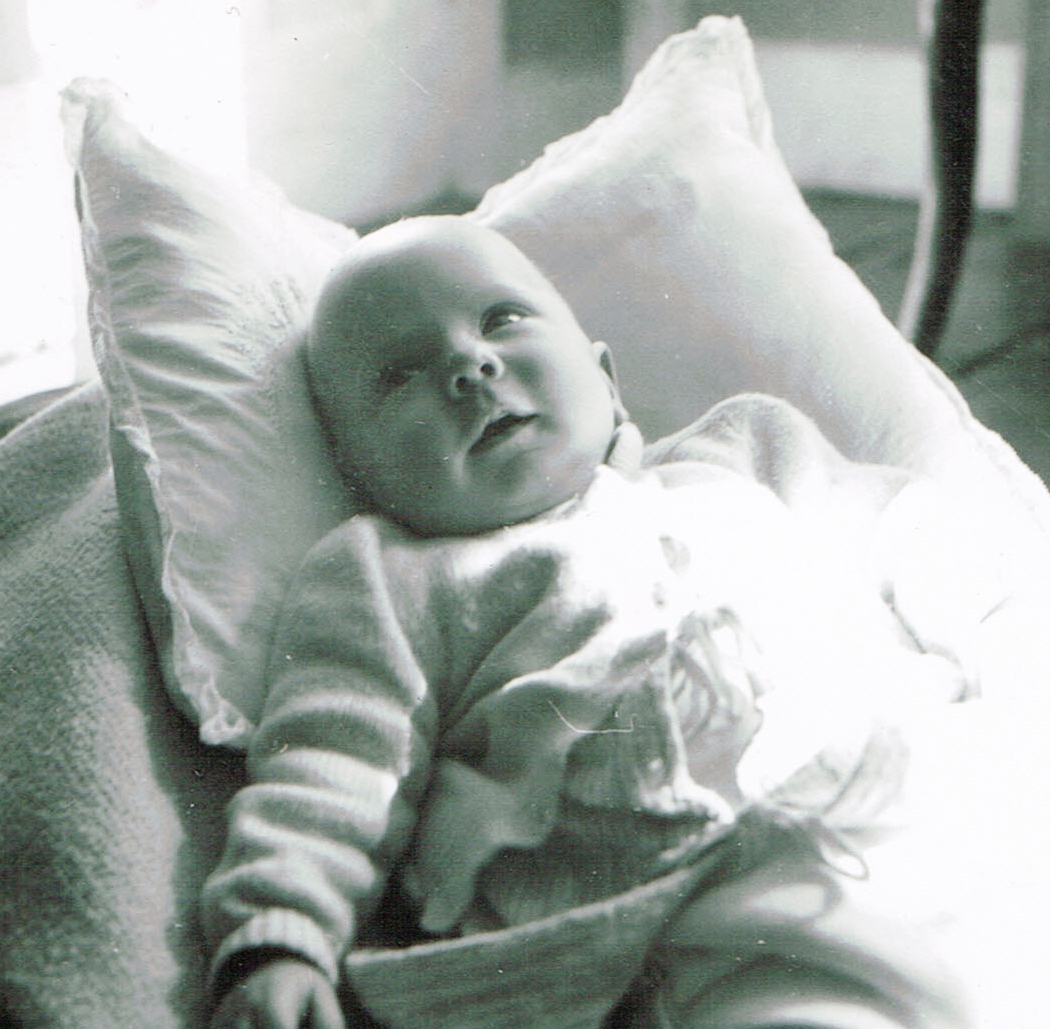 suddenly, competition appeared and it had a penis which, according to Freud, is the only thing that women really envy. I don’t particularly agree with Freud, though, and truly believe that if it had been a girl my reaction would have been the same: competition is competition. Now, most six-year-old girls probably would look on this event as a marvelous opportunity to play little mommy with a real life doll, but dolls were not my thing and –according to my mother- I wouldn’t even go near him, much less hold him, feed him, change or bathe him. There was an alien in the house and I was not about to abet it. Nevertheless, and in spite of my brother, my memories of New Canaan basked in the glory of love lost and ever longed for. I was convinced that nothing had disturbed the peace of those afternoons spent walking in the woods with my father, playing that we were fighting the Indians and protecting my mother, who was home cooking our dinner; or sneaking out to the kitchen garden with the sugar bowl to eat strawberries picked right from the plant; or earning 25¢ for filling a quart jar with blueberries from the field across
  the way (the “way” being a dirt road with no cars practically ever) and then getting to eat the blueberry pie which was my favorite; or playing in the carriage house with the wind-up Victrola and a 78 Caruso record I must have listened to 100 times; or helping my father cut the hay in the field; or climbing the apple trees to pick their fruit and eat it straight out; or watching the deer come into the orchard in winter looking for rotten apples under the snow; or rolling a snowball until it got so big it wouldn’t budge any farther and seeing how it had left a trail clean of snow behind its progress; or walking to the reservoir with my father to fish for sunfish and singing “Fishy, fishy in the brook, Daddy catch ‘em on a hook, Mommy fry ‘em in a pan, Brianda eat ‘em like a man;” My fate, however, was decided one evening even before I went away to camp, as I was to hear it over and again much later in life. My father had come home with the news that he would be travelling to Mexico frequently in the coming year because of the business he was setting up there. My mother, for whom it was a great frustration not being able to belong to the New Canaan Country Club because the parents of her ex-husband had blackballed her, suggested that they move there. They were sipping a martini when this conversation took place. My father stood up and prepared a second martini and by the time the glasses were empty, the decision determining my fate without my consent had been taken. So notwithstanding the fact that a plane trip to San Antonio and then a car trip from there to Mexico City had all the promise of adventure that a 9 year old girl could wish for, I must have had my misgivings about what I was leaving behind. Furthermore, according to modern psychology, between 9 and 10 is a very important time in a child’s development. It is when she begins moving out of the protected area of the family and forming new relationships outside the home that seem more important to her at this time than those in the home. Family relationships, and the home space, constitute a safe base to return to after each ‘dangerous’ sally forth into the world. So just as I was beginning to figure out “who” I was and daring to exercise that identity in my circle of friends at school, the security of the known was pulled out from under me along with my budding “identity”. It would take me a long, long time to form another one I could count on and call my own. Gone were the roots I had put down in my school, in my aunt, uncle and cousins, in my friends and my grandparents, in the first house that I had recognized as my home,in my unlimited tramping grounds, the carriage house and Caruso, the barn where jumping from the rafters into the hay was a daily game, snow and the change of seasons, blueberry pies, and the woods I wandered through with my father. I was being moved to a
 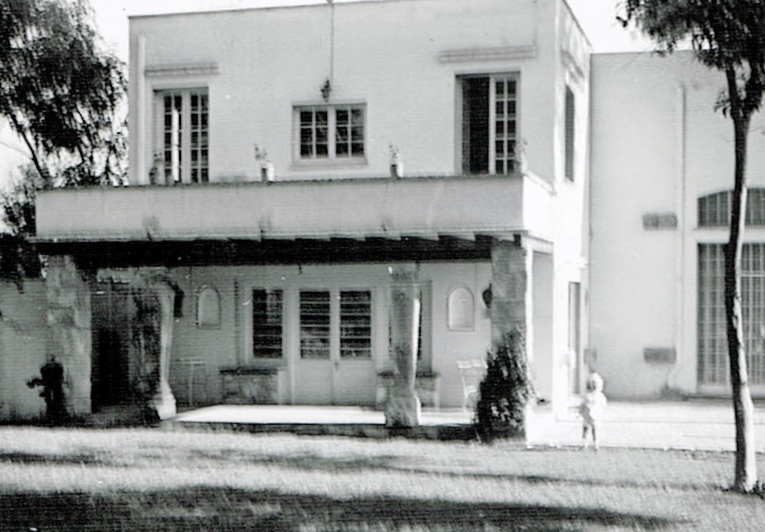 city -not as populated then as it is now- where there was only a dry season and a wet one, where I would attend a new school, learn a new language and be cared for by maids who prefered my brother because he was still “cute”, a place where feeling earthquakes was more possible than finding blueberries, where most children were not blond with blue eyes, where my parents would spend more time socializing and playing golf than taking care of their kids, and where I would for a very long time feel like a foreigner in an unknown land.
  There was only one thing that made the trip not only bearable but actually desirable to a certain extent. The week before our departure, my parents had thrown a going away party for their friends, among them a couple called the Foxmartin’s. I was supposedly friends with their daughter who came along, but truth be told, I didn’t like her at all. She was about a year older and tended to be very bossy –something I considered my prerogative especially in my own house. Besides, she had the biggest collection of “trading cards” I had ever seen. In those days, the rage was to collect trading cards, playing cards that had beautiful pictures on them and a blank side where the numbers
 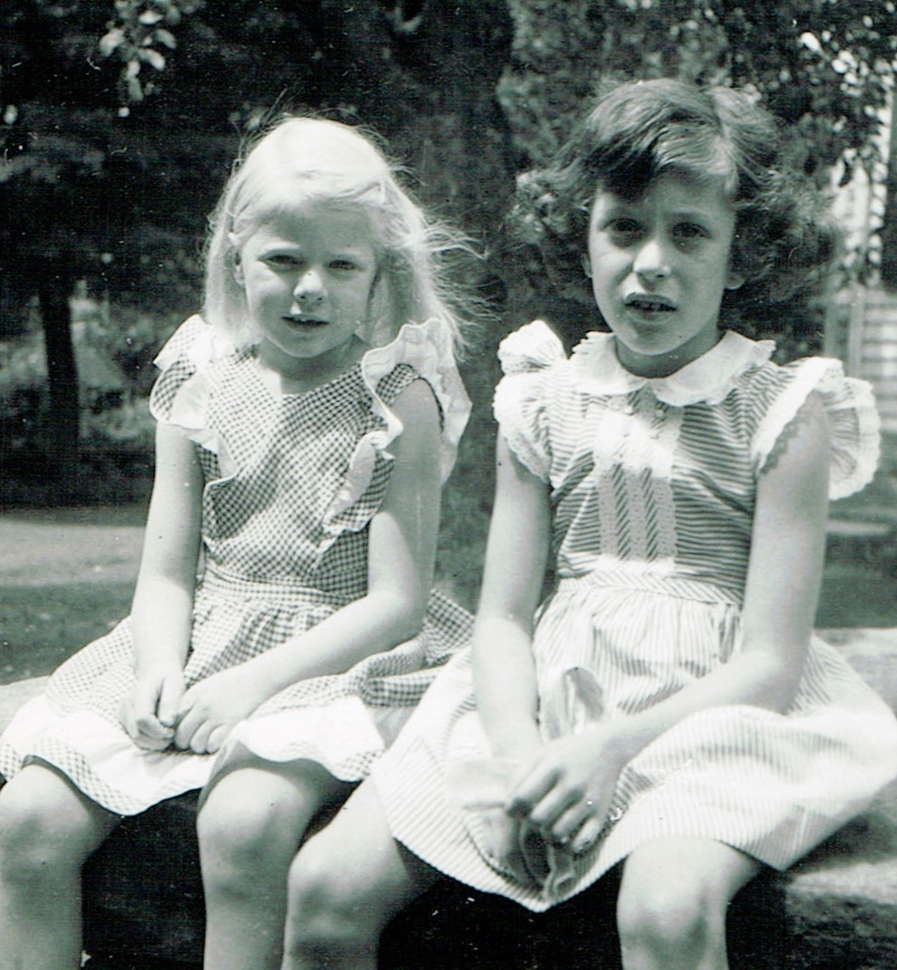 and figures usually went. I craved that collection of cards, especially the horses. In comparison, my collection was paltry and I had very few “repeats” that I might trade for her “repeats” because she had almost all the cards that I had. Every time she would come to my house, she would bring her collection and show it off. She was odious. That night, though, we ended up going to sleep before her parents were ready to leave so they must have come up to the bedroom and carried her down to the car and forgotten the suitcase with the trading cards in it. The following morning, to my extreme delight, I found it. When her mother called and I was asked if she had left the suitcase, I lied and from that moment on I couldn’t wait to be off to Mexico with my stolen goods. Obsessed with the thought that I would be the Queen of Trading Cards in my new home, I didn’t notice how much I was losing with the move. So it wasn’t until arriving at our destination that I began to realize I
 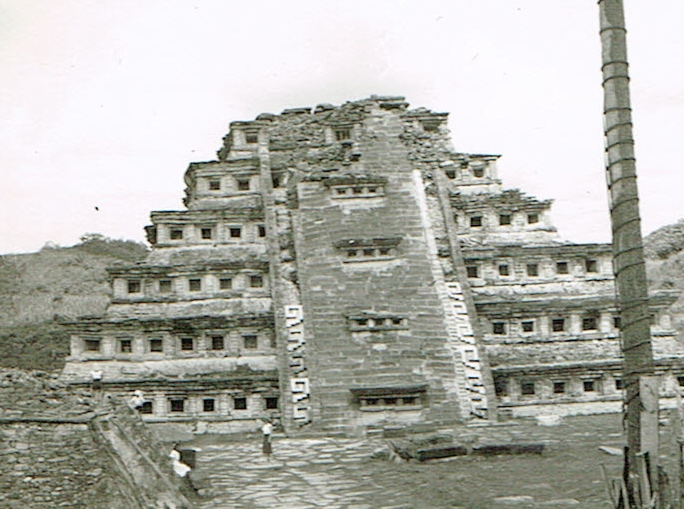 had lost my friends, my school, my beloved house and grounds and my native language, and had moved to a country that had never heard of trading cards. Suddenly, I was the queen of nothing, and my life had turned up-side-down. From that time on, the sensation of being rootless only increased because, as fate would have it, I did not put roots down in Mexico either. My parents had not decided to stay permanently in Mexico at that time and, thinking they might want to return to the United States, they placed me in the American School. We joined a golf club where there were mostly American members, and they made mostly American friends in the beginning. So I was living on what would culturally be seen as an Island of the United States. I didn’t make Mexican friends, I didn’t listen to Mexican music, I didn’t watch Mexican movies and even the television programs that I viewed later were in English with Spanish subtitles. Yes, I learned Spanish because I had a class in school and because I spent a lot of time in the kitchen with the maids who had now substituted my mother who took to playing bridge, playing golf, attending the Garden Club, and working with the Junior League. My father worked more than before and was tired when he came home; our times together, the stories and the walks were gone. Weekends were for going to or organizing social events. I know now that we might be called “expats” for moving to a new country and trying to replicate the life lived in the original one. But I wasn’t old enough to have a life to replicate, so I lived on this half-baked replica of the States where nothing was the same, and nothing was different either. Rather it was like a faded photograph where the lines are difficult to make out. My father’s work took him travelling to South America and my mother often accompanied him, leaving us with a guardian, usually an elderly woman named Mrs. Lamb who I ran circles around. I missed my grandmother –usually the one in charge of caring for us when our parents travelled- and although I began immediately writing her letters, in those days mail took a week to ten days and by the time she answered I had forgotten what I had written. For the first time in my life I felt truly alone and that, instead of subduing me, sparked my rebellion. I became unruly, contrary and sneaky, and dedicated myself to growing up faster than my parents probably would have wished. But above all, I became rootless, incapable of identifying as an American but in no way a Mexican, other than having learned Spanish. When I returned to the States a few years later for a visit, I realized how foreign I felt there, just as I felt foreign in Mexico. I knew of none of the things my cousins were into, I had no bubble gum in Mexico, or Bobby sox, or moccasins; I didn’t dress as they did or think like they did or enjoy the things they did. I hadn’t gone to camp in the summer, or visited the beaches they had. They saw me as “Mexican” and introduced me as their “Mexican cousin” asking me to speak Spanish to impress their friends. But I wasn’t Mexican, I knew nothing of Mexican culture or customs and wouldn’t for many years. I was a fake, I was a neither-nor, I was rootless and it would take me a long, long time to discover the advantages of this strange new state and begin fully living the “rootless” life I had suddenly been dealt.
AFTER THE BALL IS OVER….
After the ball was over, Bonnie took out her glass eye,
Put her false teeth in the water, hung up her wig to dry;
Placed her false arm on the table, laid her false leg on the chair;
After the party was over, Bonnie was only half there!
(Parody, that my father used to sing, of the original song)
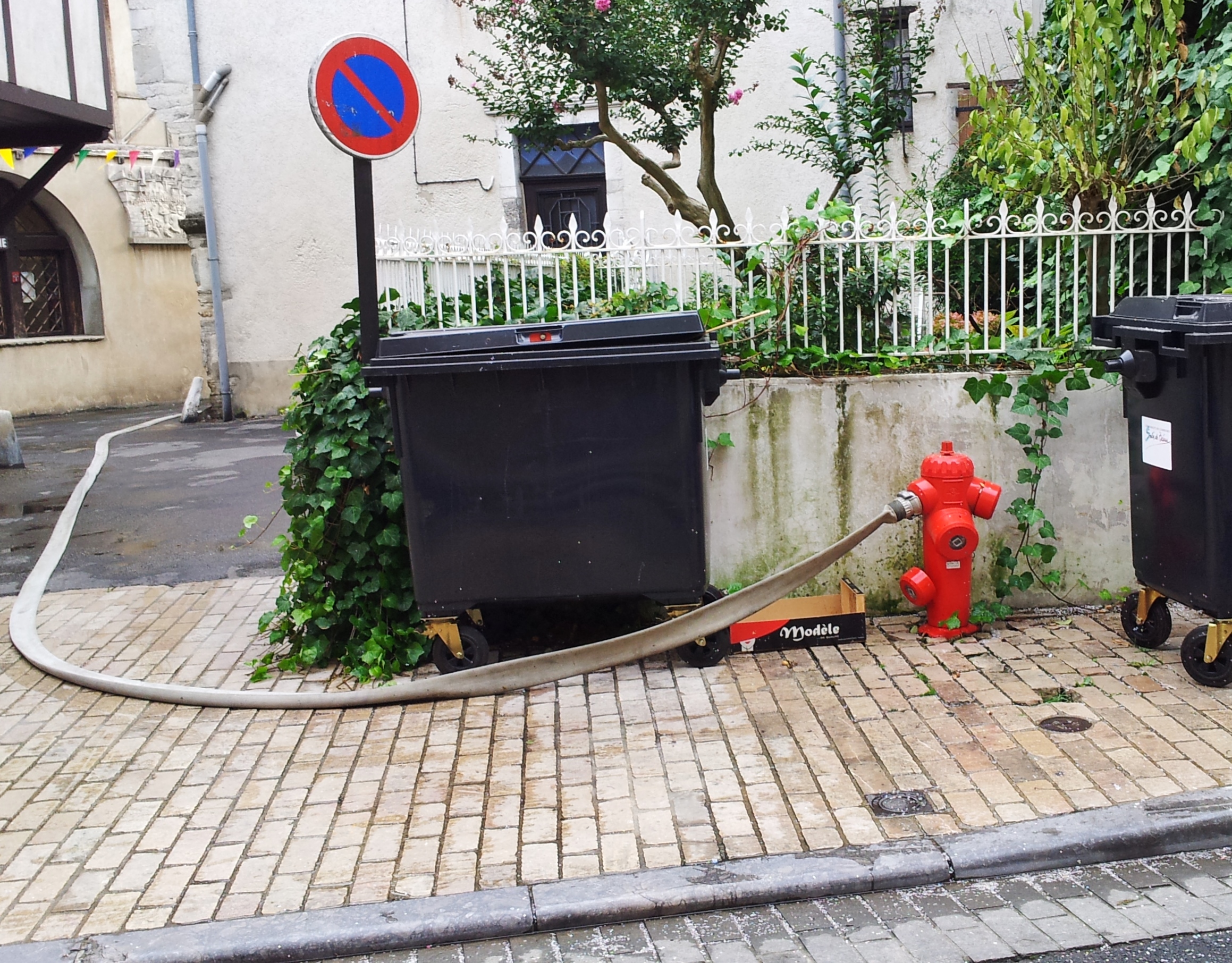
It is Tuesday morning and Salies is still in the process of cleaning up the mess. “Mess” is what “fun” is called after the party is over. The last empty plastic glasses, the last multicolored streamers, the last vestiges of confetti are being swept away by water;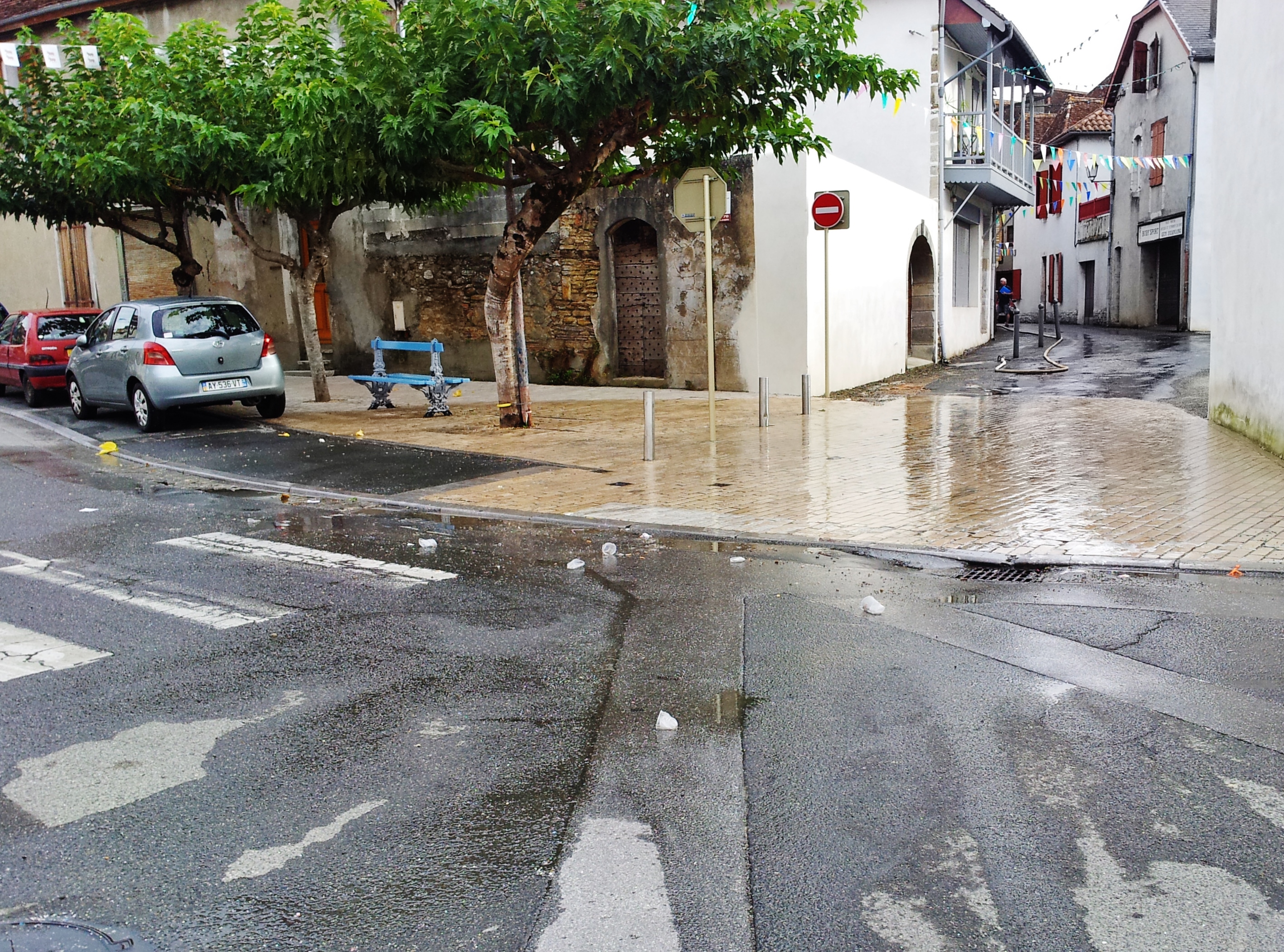 the streets are being hosed down by water from the fire hydrants and it looks as if it had just rained. So much so, that Josée, one of the ladies I have coffee with every morning who will be 92 this November, took one step outside and rushed back upstairs to get her umbrella; it wasn’t until she got 10 yards from her house that she realized something was wrong because her neighbor was cracking up with laughter. It made for fun as we
  sipped our morning brew.
The Fête du Sel had passed and would not be resurrected until next September.
The Fête wasn’t the only thing that had passed. A lonely bell in the church tolled solemnly announcing the demise of a local faithful. I listened to the measured dongs and remembered the verse of John Donne: Therefore, send not to know for whom the bell tolls, It tolls for thee. Hemingway popped to mind as a borrower of the verse for his book, For Whom The Bell Tolls. Donne, Hemingway, the unknown person from Salies… one is inevitably led to contemplate the body’s mortality.
I remember when I was about 50 noticing that I had arrived at what I was given to call the “Rice Crispies” age, when everything started going ‘Snap, Crackle and Pop’; some years later I left the cereal’s music behind (probably because things inside stopped moving) and arrived at a time defined by the somber thought that if you wake up in the morning and nothing hurts, you probably died in your sleep. So far, I’ve had no problem: if it isn’t my hip, or my back, or my neck, or my ankle, or a knee, or the ear that’s been crushed against the pillow too long, then it is usually the hangnail I pulled the evening before because I was too lazy to go for the manicure scissors.
I tend not to pay much attention to these things as the beating I have given this poor body would merit much worse, so I am generally grateful. This morning is no exception. I can feel my left ankle which means it will probably start hurting before I have arrived at the Café. A muscle in the front part of my upper right leg has been cramping up at night since I can’t remember when, probably due to a pinching in my lower spinal column, and is sore this morning. The good news is that I am alive and, so far, nothing is out of the ordinary.
Nevertheless, I am led to think of mortality, my own to be more specific. More than fear, this awakens curiosity in me. When and how will it happen? Where will I be? Will it be sudden or will I have time to say my goodbyes and distribute or destroy my possessions? Will I live to be 92 like Josée? Will I have all my marbles, or gradually lose them like my mother?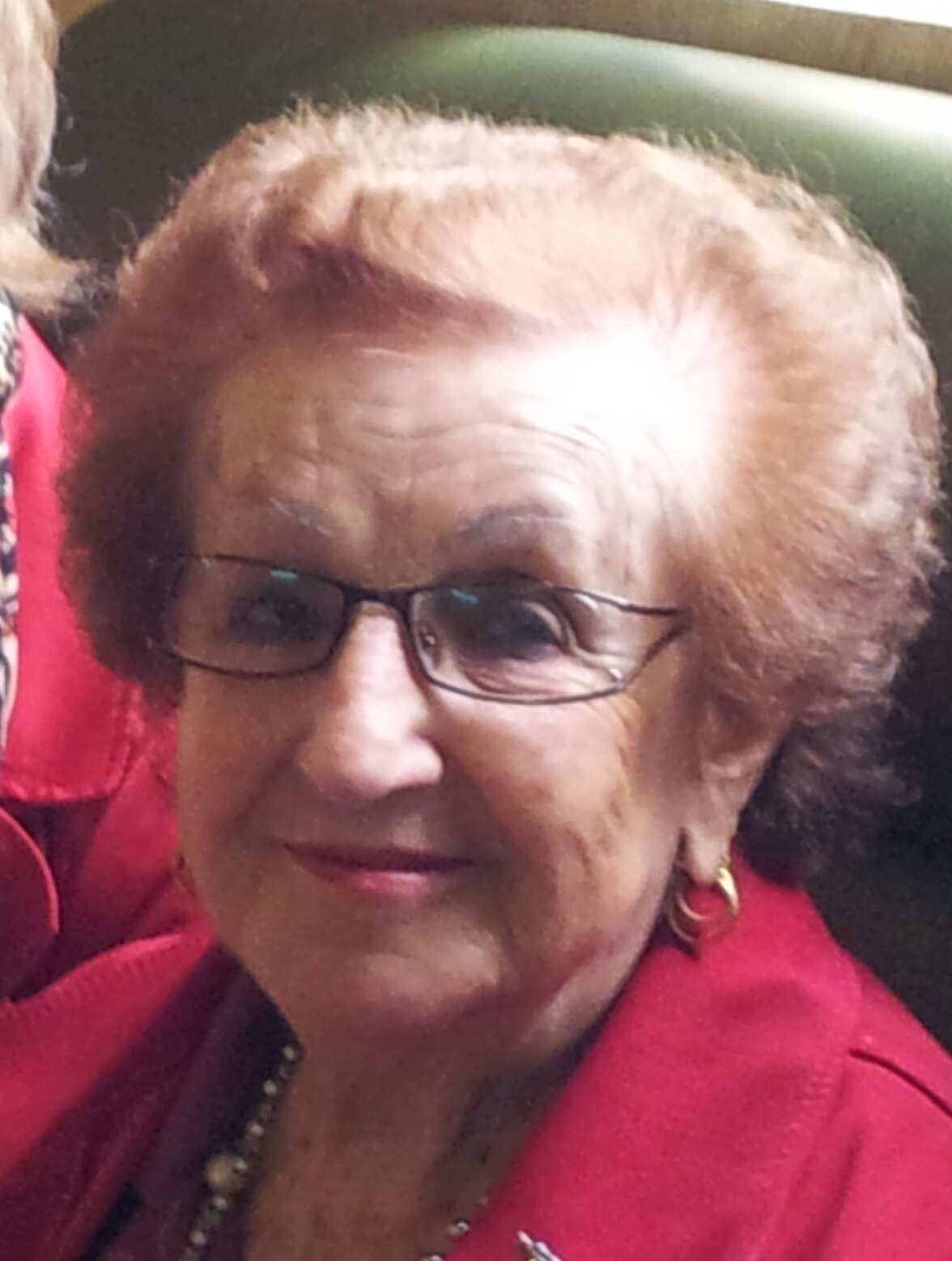
As with all else in life, these questions will only find their answer when it is too late to do anything about them. I have heard some people voice a desire to go quickly, without any forewarning. The wife of a friend of my mother died this way: she went in her sleep, an anorism, and never woke up. I am not sure that is what I would like. Immediately I think of my things, my papers, my books, diaries in which I have written things I would prefer no one read…private things that I would really like time to get rid of before exiting.
Last year my half brother who lives in Jerez de la Frontera in Spain had a stroke; he survived and apparently recovered all his faculties. This year he has just published his memoires, dictated to a good friend who authored them. Will I be that lucky? Will I live to see what I am going to do with all this information on the family that I have dragged up and put in my computer? And, what in the world will I do with it if I do live that long?
And there you go, in the interem of thinking all these thoughts I have arrived at the Café. My friend Josée is there, without her umbrella that she has returned home before coming, and my friend Eliane one, and Eliana two, and Isabelle, Bibi and Gegé 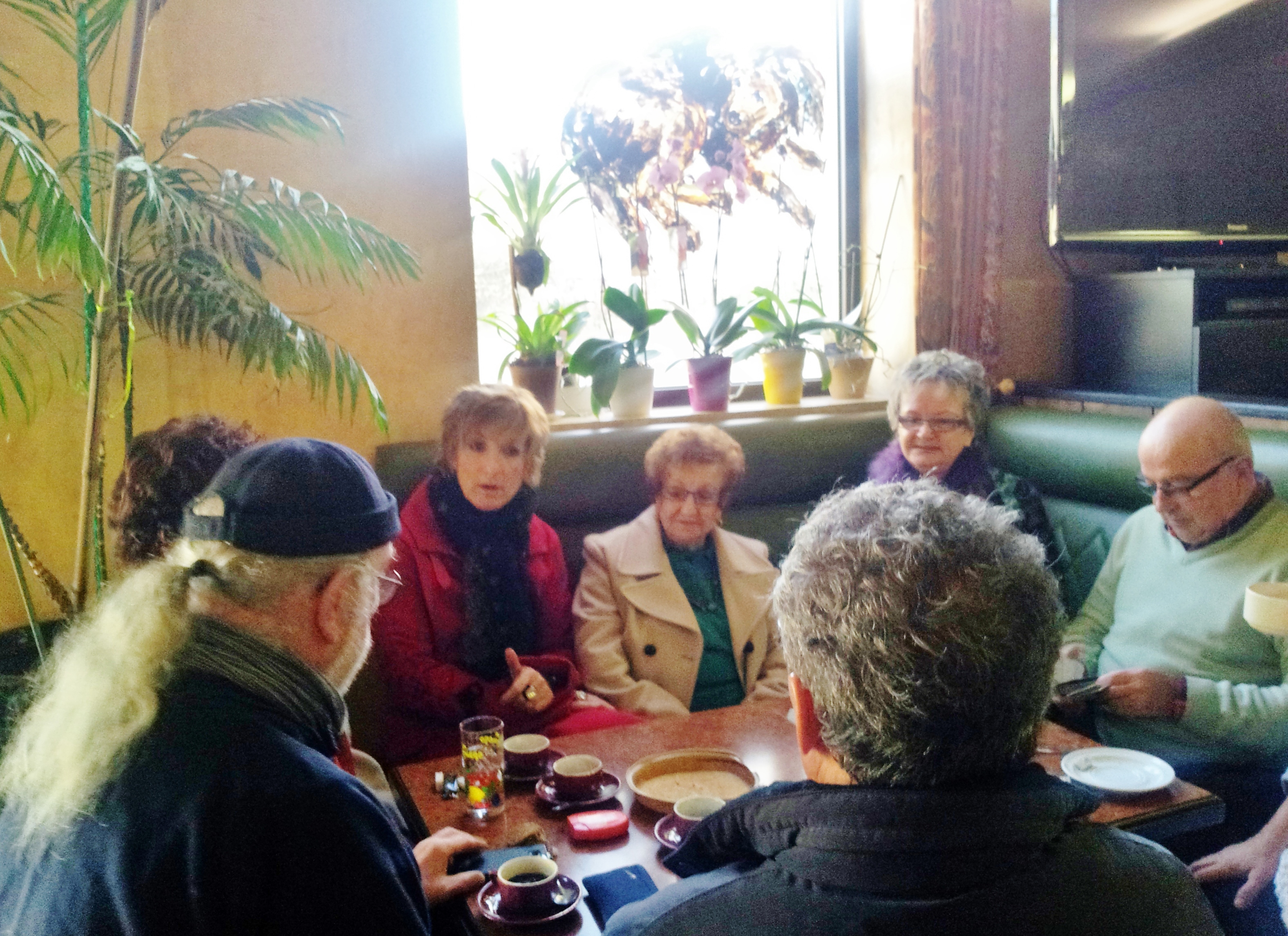 and Jean. I sit, releasing Salomé to make the rounds of the tables hoping for a croissant and receiving at least a caress. Bernadette brings a cup of steaming coffee and a glass of water that she places in front of me.
Jean is telling a joke. Usually I don’t understand jokes, but this one I get; it ties into my theme for the morning: mortality. It seems that three youths save the President of France, François Hollande, from being killed, so he tells them that each can have anything he wants. The first asks for an expensive car and Hollande immediately orders one for him; the second asks for a Kawasaki motorcycle and it is produced, but to Hollande’s surprise the last youth requests a State Funeral with all the trimimings. Hollande, puzzled, asks him why. “Because when I tell my father that I saved Hollande’s life, he is going to kill me”. I laugh heartily, not only because I am conscious of how unpopular Hollande is politically, but also just from the joy of being able to understand a joke. I look around the table at my friends; they are all laughing and they are all very much alive. There is no doubt that NOW is much, much better than anywhere I can ever travel in my mind, and NOW is all there is anyway.
AND THE BELLS WENT WILD…
“To be empty, to surrender, to be lived by the Tao
—this isn’t some lofty goal that can only be attained
after years of spiritual practice. When you really go inside
yourself, for the love of truth and question even one stressful
concept, the mind becomes a little saner, a little more open.
And you begin to see that there is no objective world out there.
It’s all projected. You’ve been living in your STORY of the world.”
-Byron Katie
Eleven o’clock Saturday morning, September 14th, the bells in the ancient church in Salies de Bearn go wild with joy. For fifteen minutes, without stopping, they proclaim that the world is wonderful and festive and ready to enjoy the Fête du Sel, the Celebration of the Salt, in the town where salt has been a way of life for centuries. That means that the traditional Mass sung in Bearnaise (the ancient language spoken by the people of the Bearn which is like a mixture of French, Spanish and something totally unknown) has finished and the faithful will be exiting the church and joining the already festive crowds in the street.
According to the legend, some hunters were chasing a wounded boar but couldn’t find him. A few days later they returned and came across the dead boar who had fallen into a swamp and become encrusted in salt. Thus the source of the salt was discovered and began being exploited over 500 years ago, and the town of Salies grew up around the Source (which today is under the paved over Place de Bayaa).
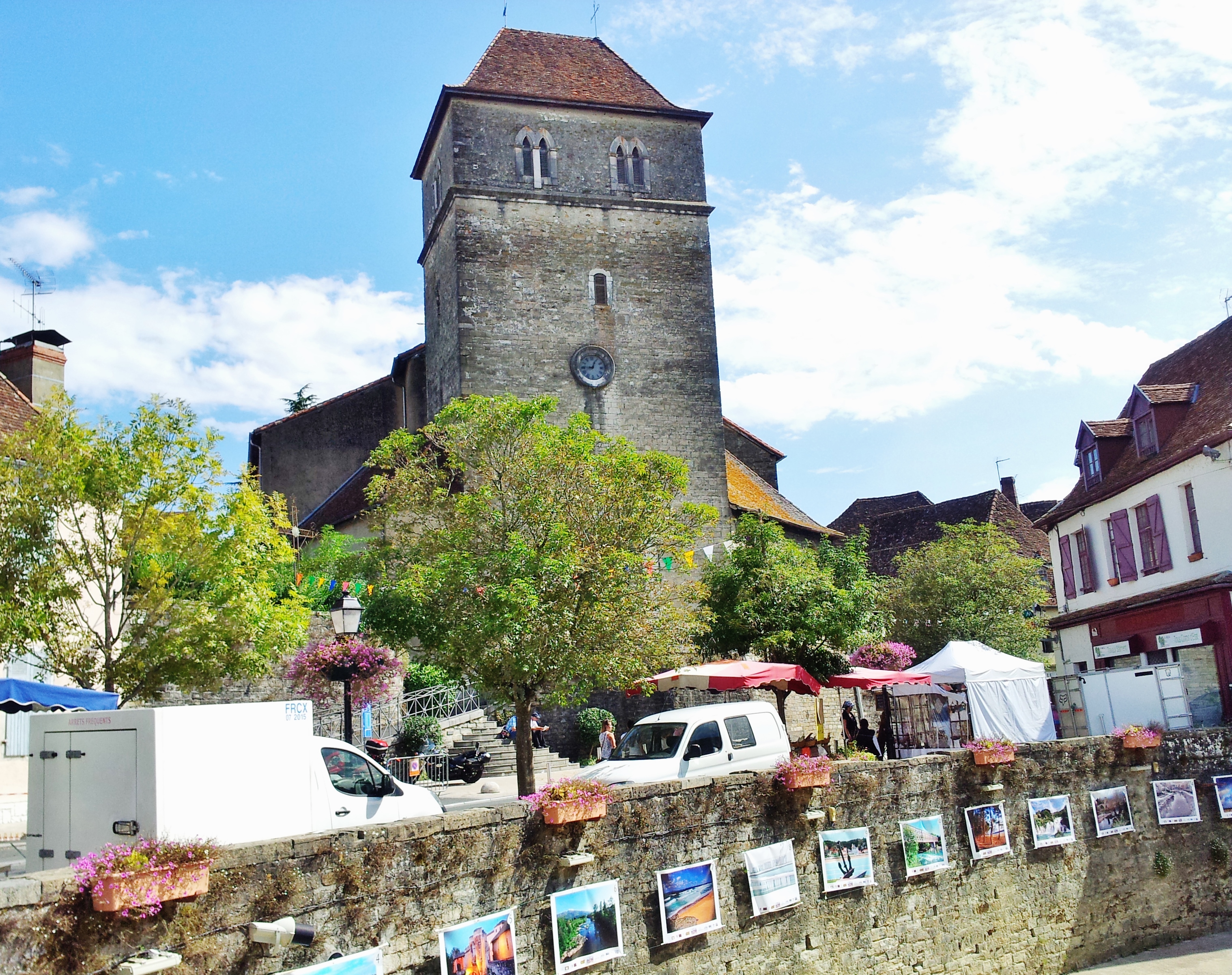 No sooner have the bells begun to chime, ringing out over the countryside, than youth bands -dressed in the traditional white with light blue trimmings- begin to play the Bearnaise march for the spectators that have been arriving in waves since nine a.m. this morning.
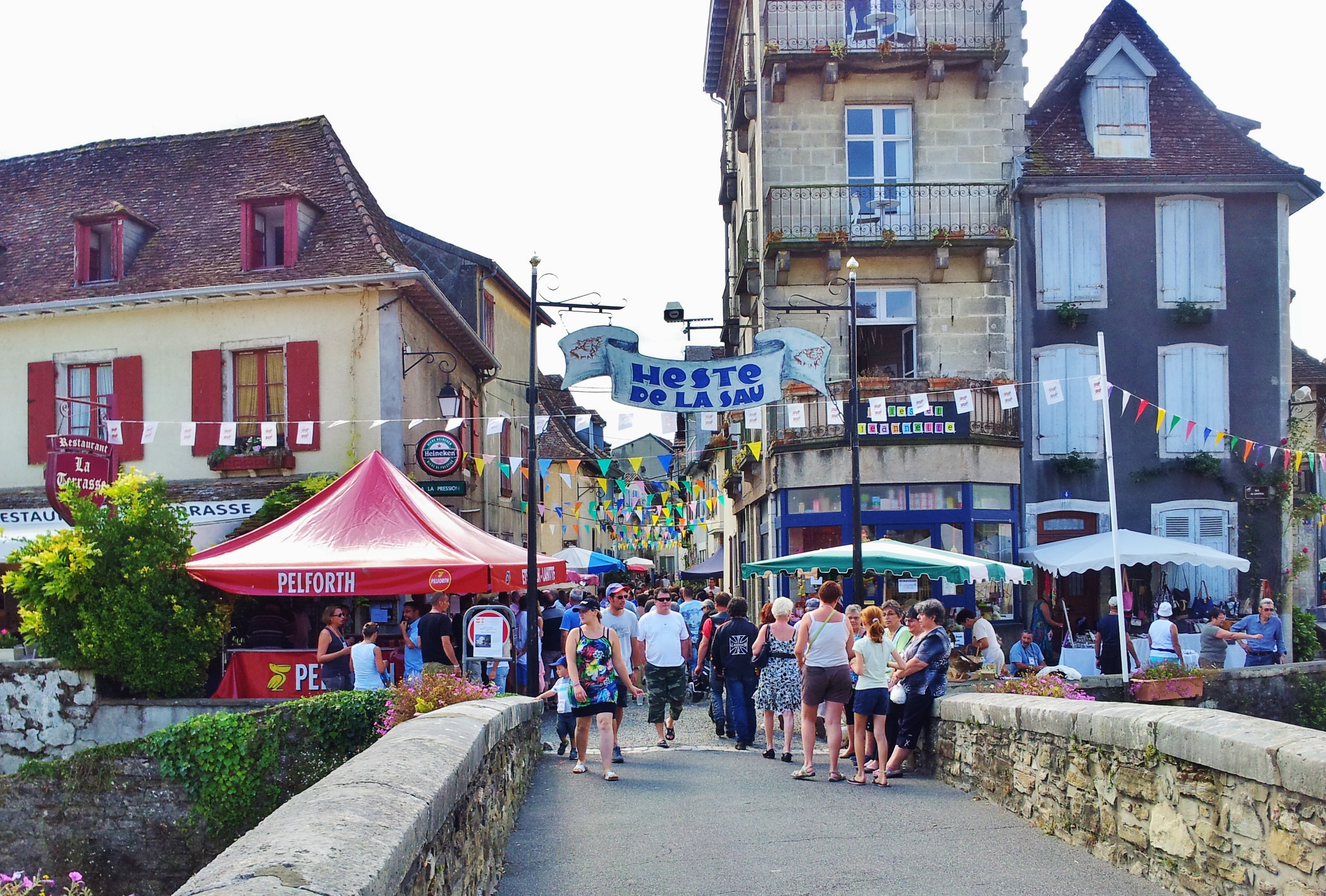
We’re having a late summer. The sun is already beating down, scorching the skin; the sky is blue and nary a breeze rises to cool the perspiration that begins to form. It is going to be hot, but the Fête does not risk being rained out, which is something to say for a year that has been the wettest in the last half a century.
Since yesterday, the streets and alleyways that wind their way to the Place de Bayaa (the central plaza, where the original source of the salt was) are filled with artisans hawking their ware.
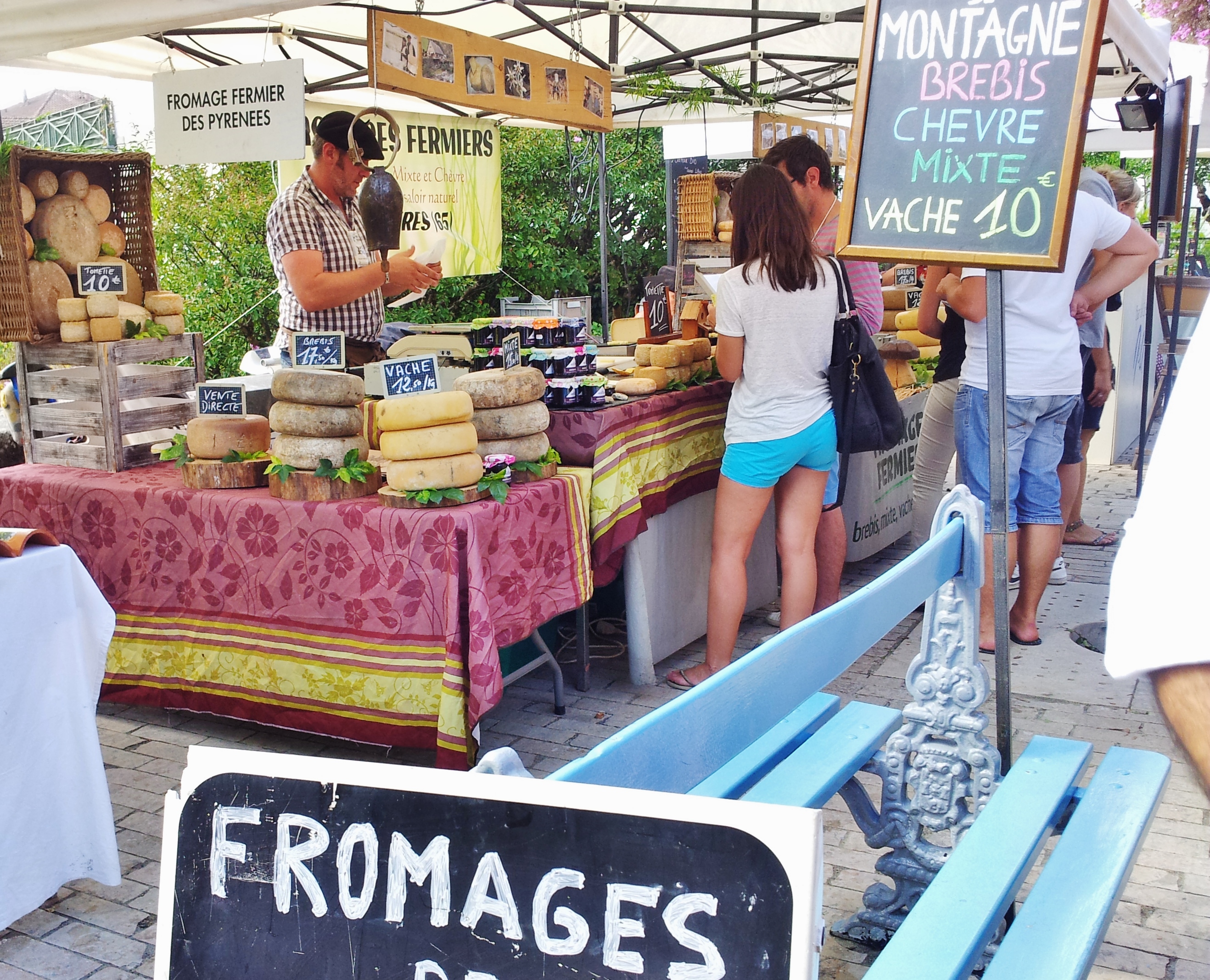
Tables offering up spices and local pottery, knit goods and copper kitchenware, wooden scuptures and fancy wire jewelry, homemade bakery and typical berets, foie gras and fruit flavored nougat, barrels cut for use as side tables or flower potts and every shape and smell of cheese imaginable, household decorations and knives for everything from hunting to use in the kitchen line each and every passageway.
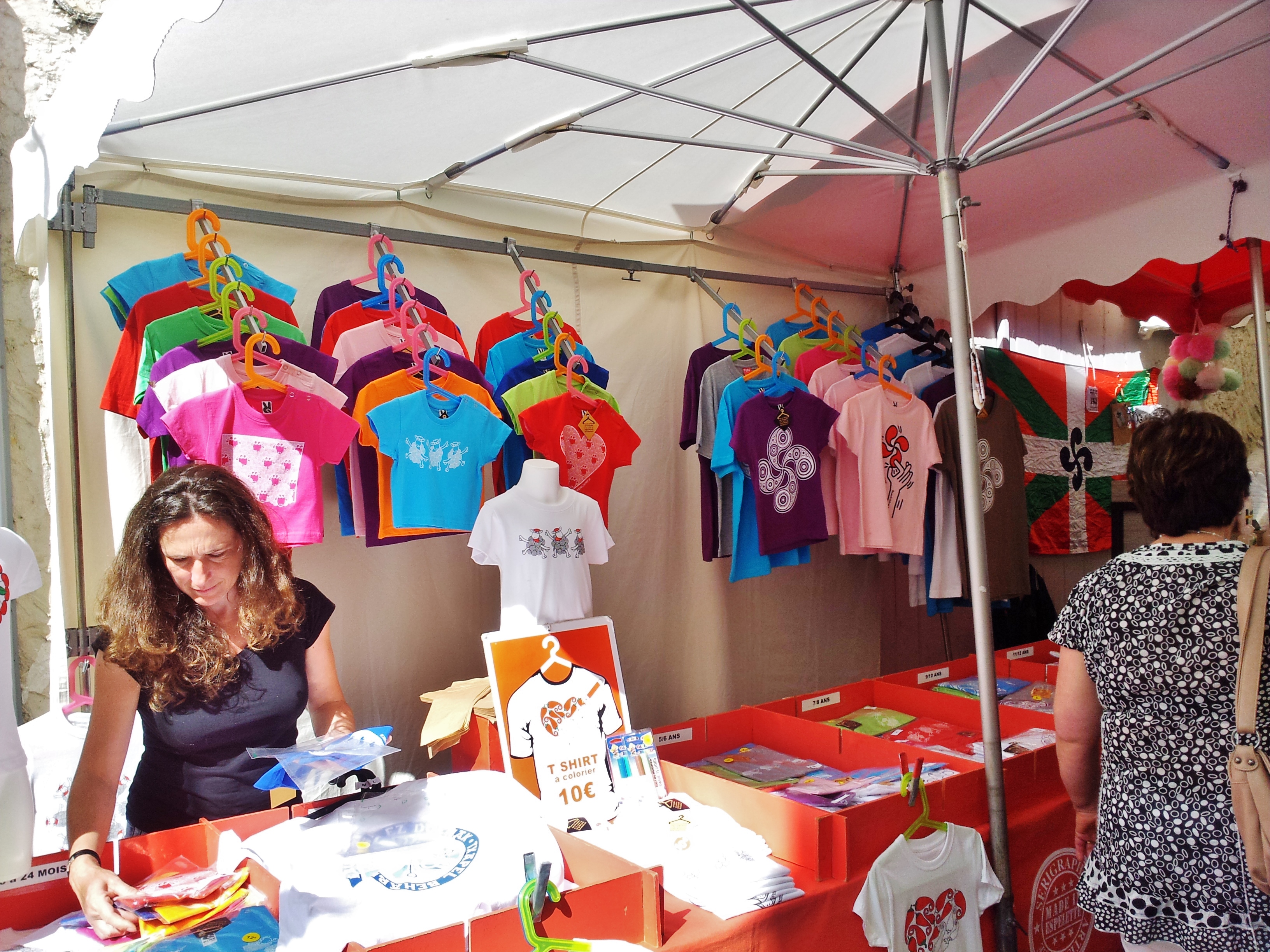
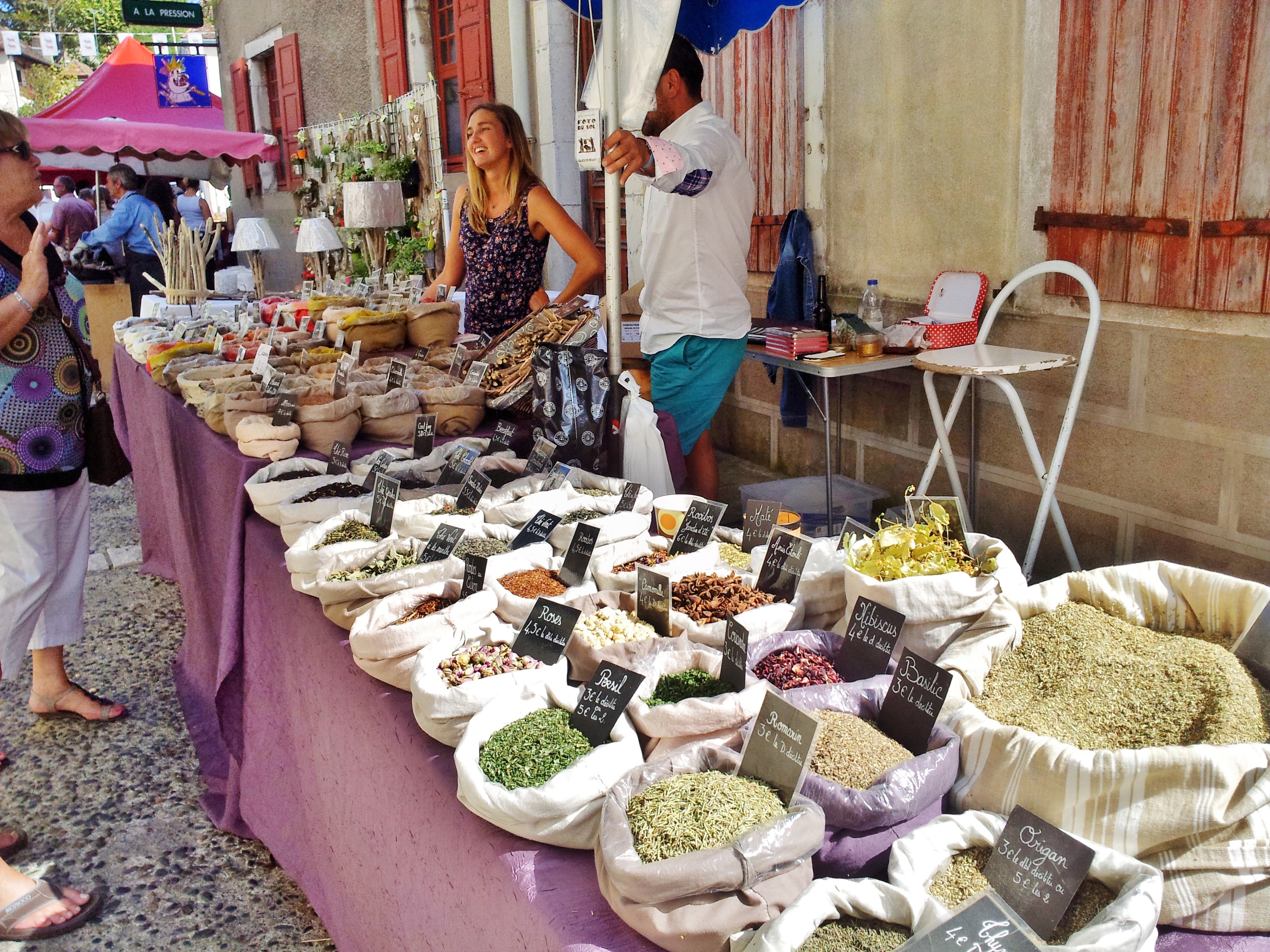 And people, people that have walked, or bussed, or biked or driven in to be part of the Fête, mill around stopping here and there, buying something or not, listening to the bands, drinking a morning beer, having a breakfast of raw oysters and “frites” (the inevitable french fries) or simply standing on a corner, leaning against a wall, trying -as I am- to take it all in.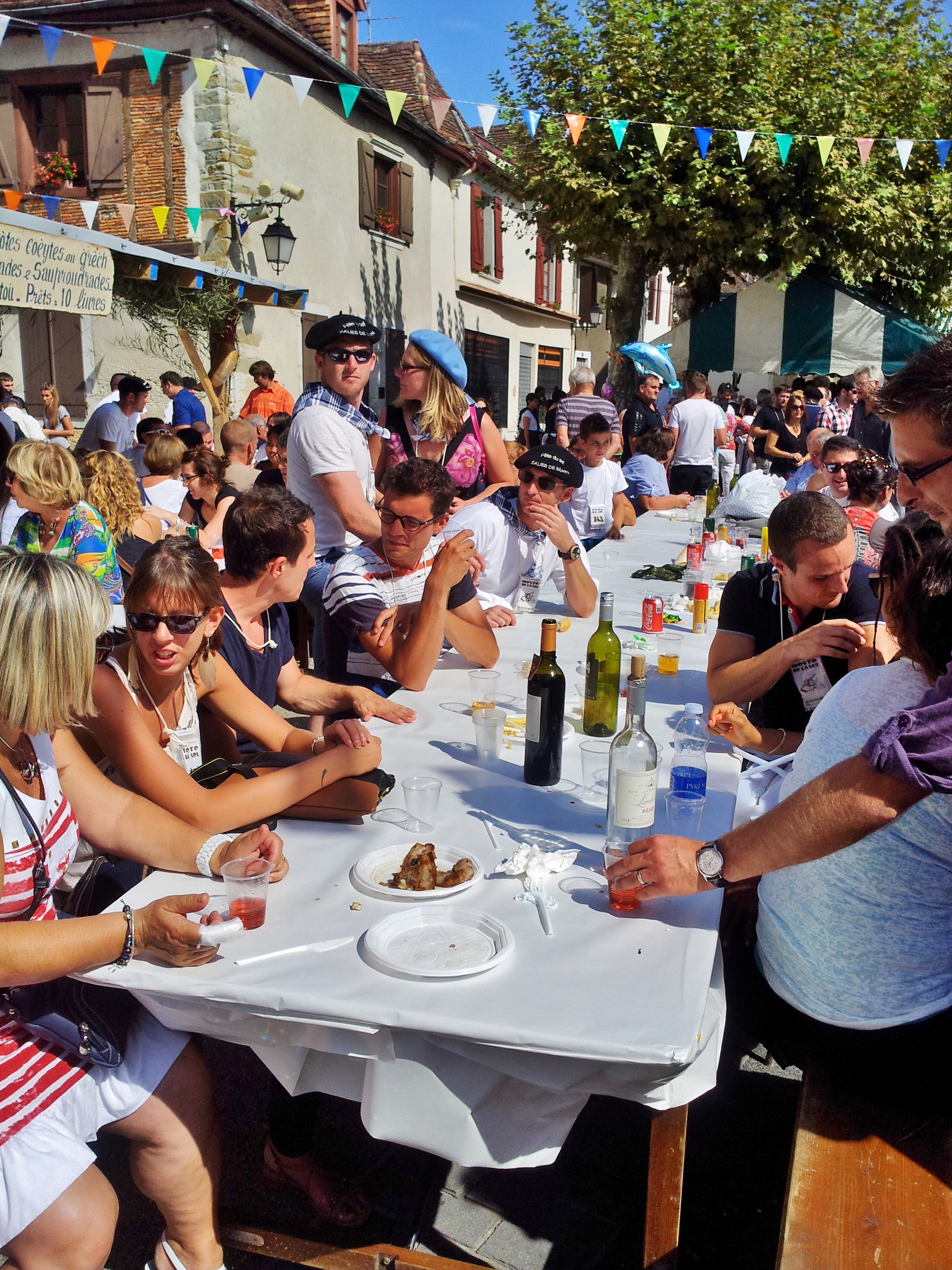
I stand in a shower of sunlight, stopped in my tracks by the joy of the bells and the youthful cheer of the band. I can hardly breathe as gratitude wells up in my chest and bursts forth as tears that I don’t try to wipe away. How could life ever be sweeter? And I remember a phrase of Byron Katie: “Just when you think it can’t get any better, it does”. Oh yes, I can vouch for that.
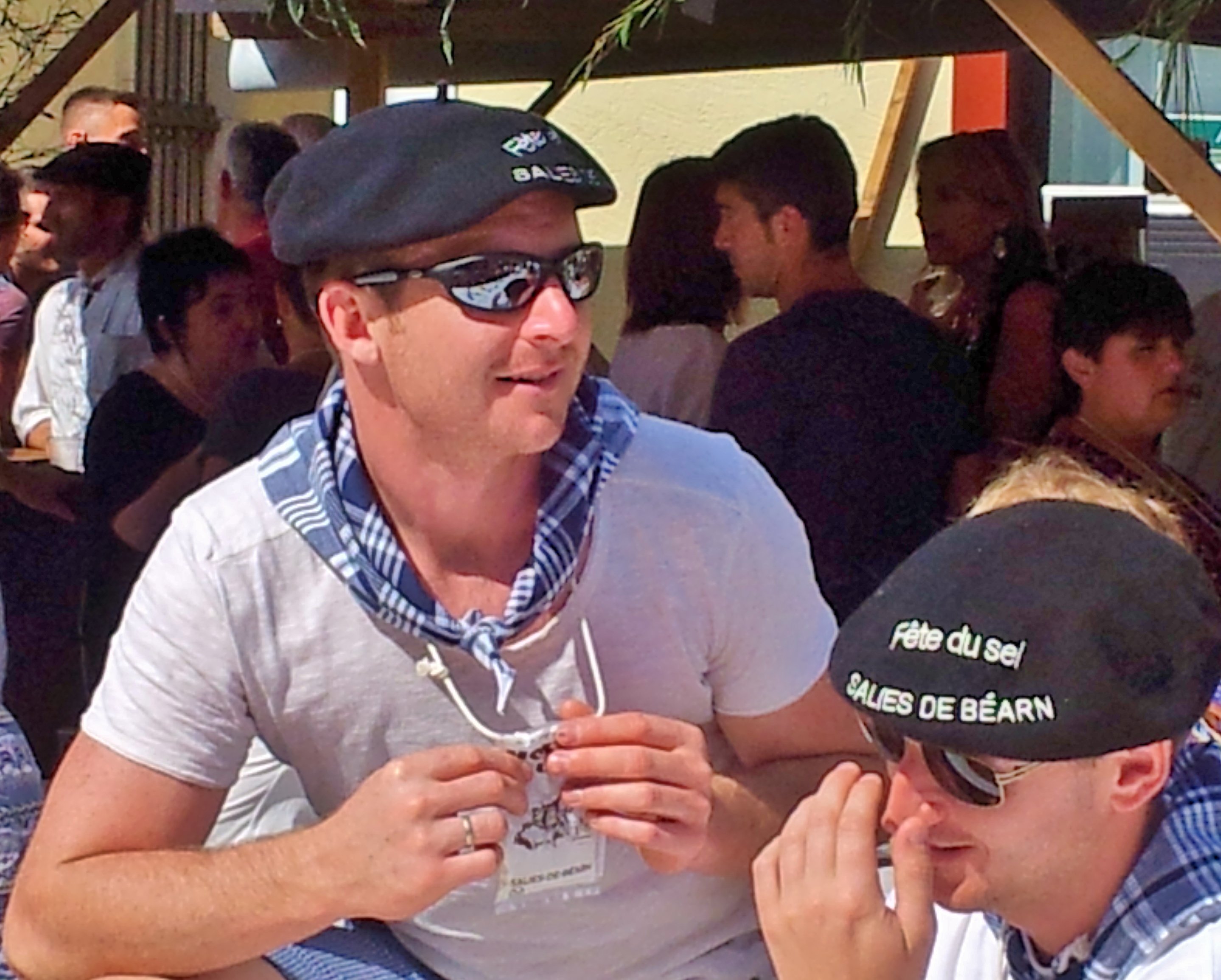
Salomé tugs at her leash, leaning in the direction she knows to be home. Poor thing; she doesn’t like parties of any kind and a “fête” is the worst kind from her small and vulnerable viewpoint. 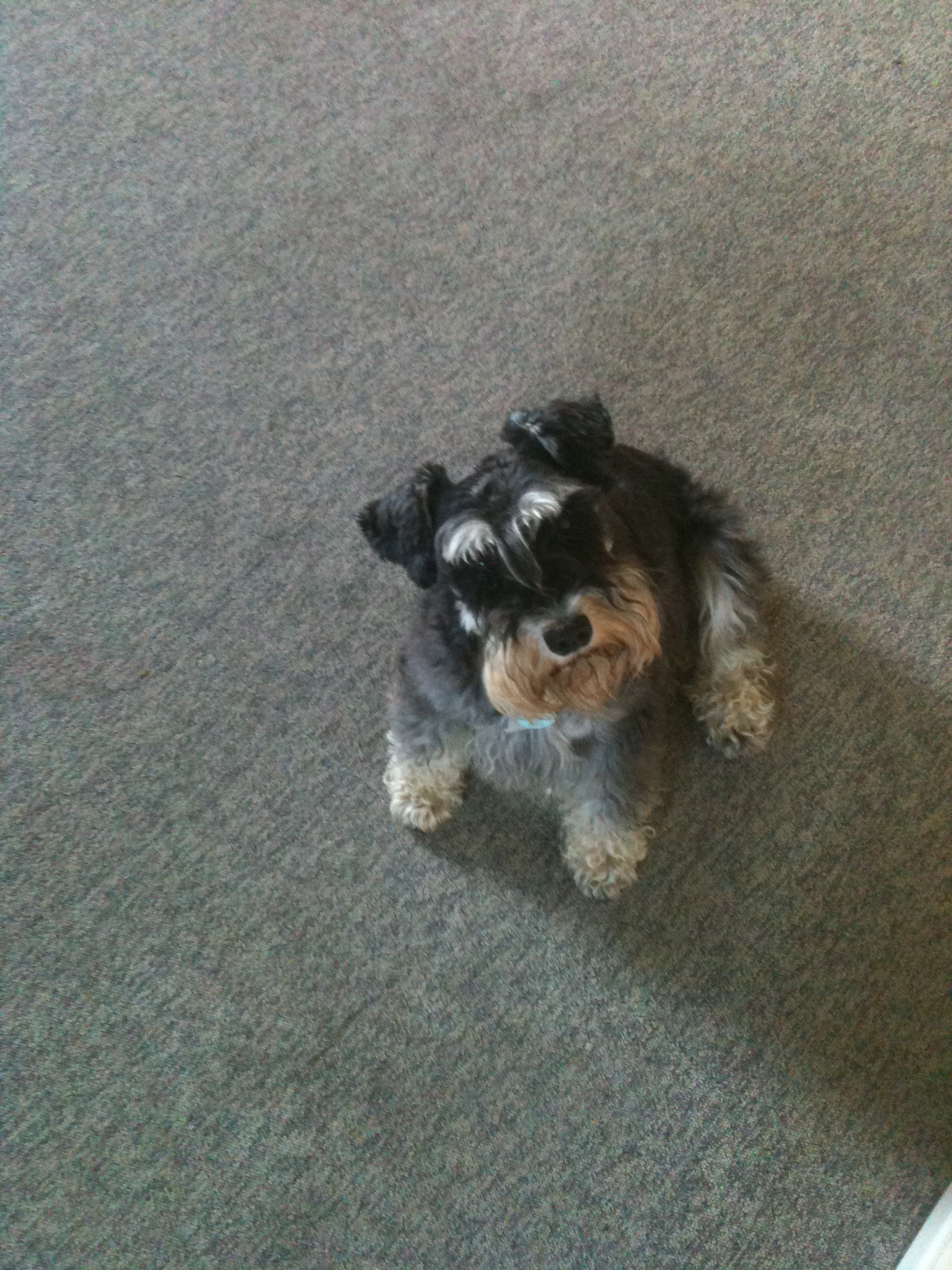 So many feet to step on her, so much noise to wound her delicate canine ears… nothing could make it worth while, not even the variety of new doggie smells.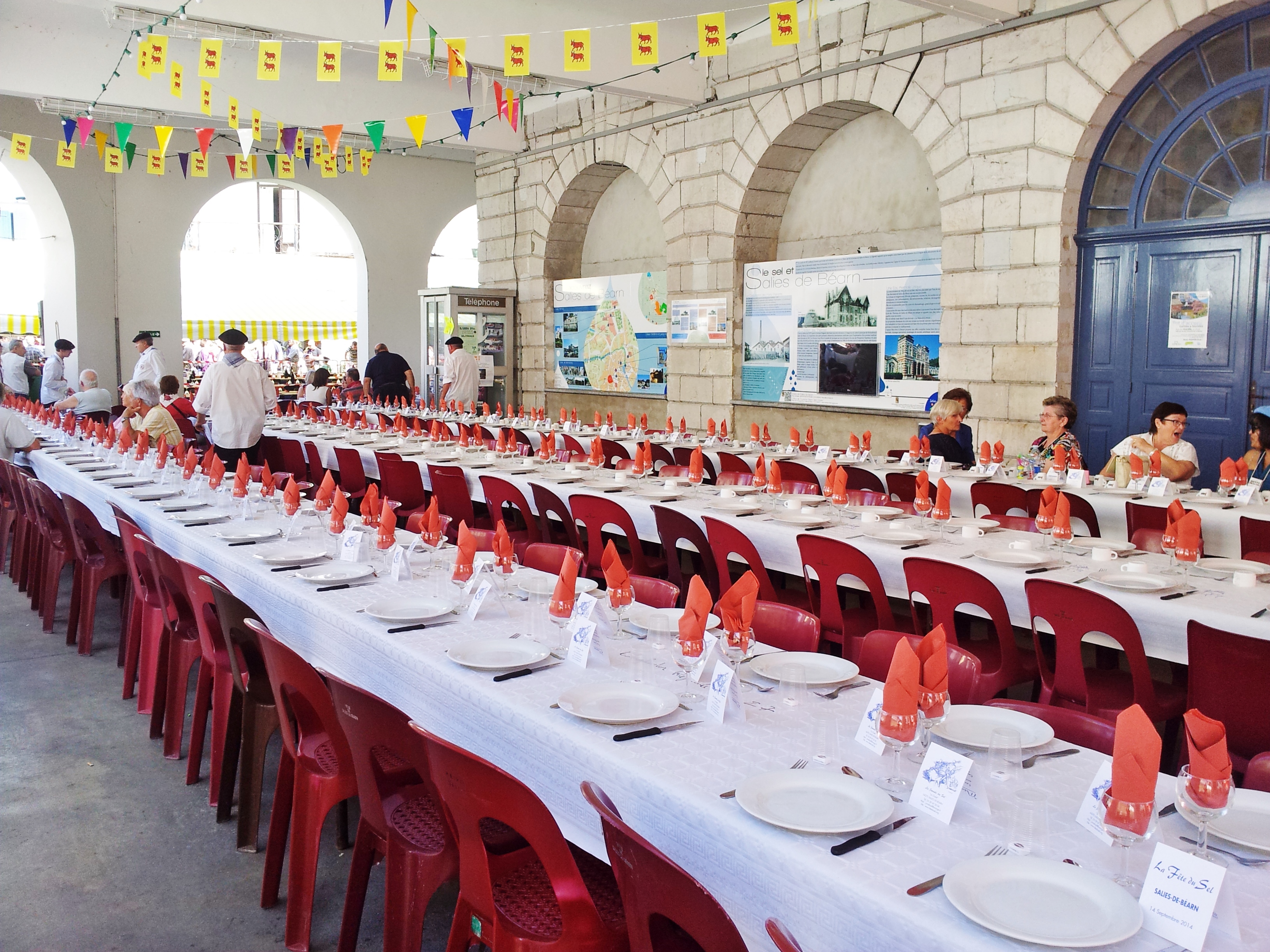
So we walk home, wending our way between people and stalls, out of the noise, past the meters long tables in the Bayaa being set for 800 people and then some, past the Grignotine where I will lunch with a group of friends later in the day, up the narrow passageway that leads to the parking lot of the Place de Temple and down the avenue to our house.
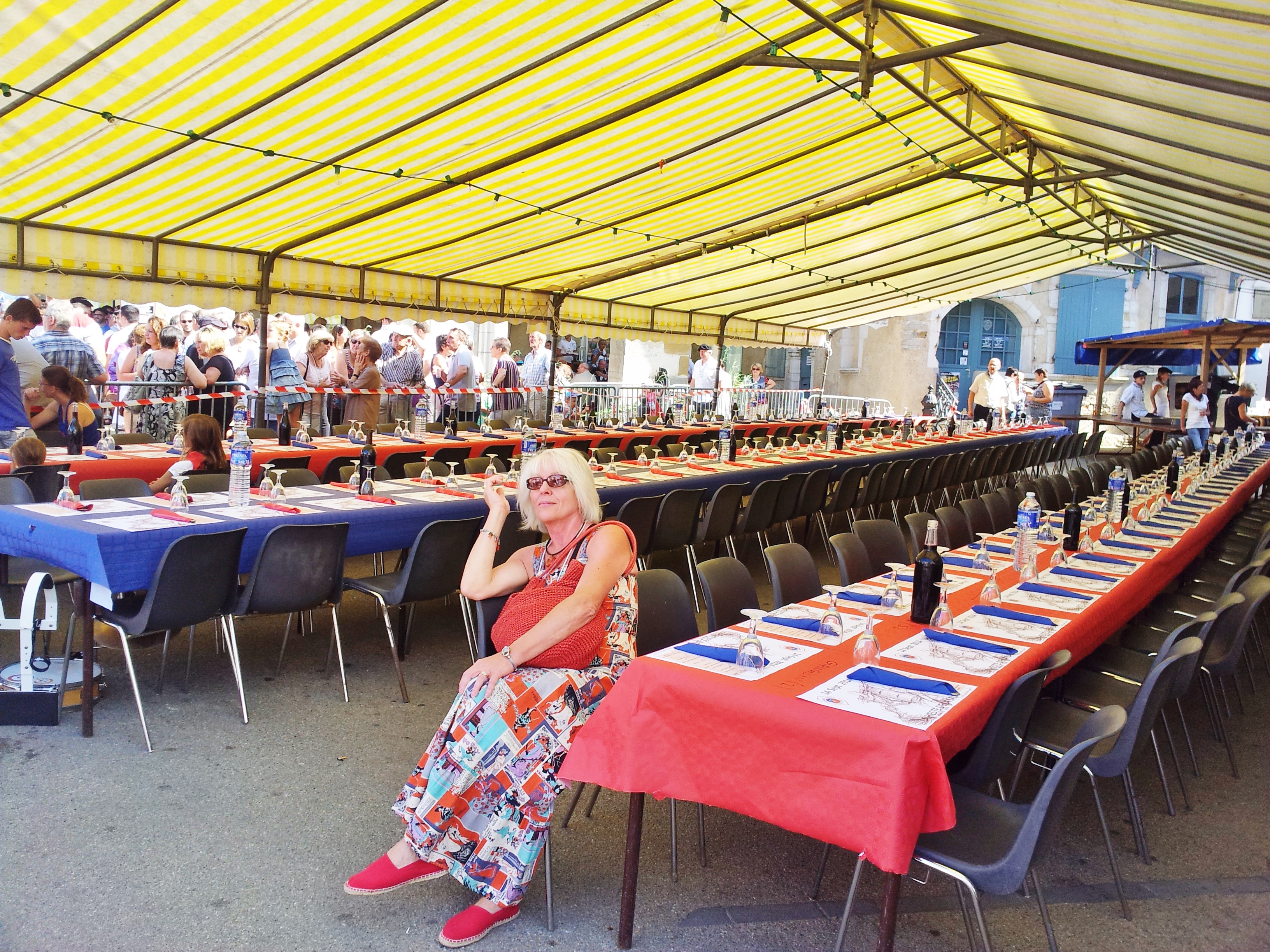 Later, after Salomé has been fed and informed that I am leaving and she should take care of the house while I’m gone (upon hearing this she lowers her ears, turns around and struts off in a dignified but offended manner that tells me she is anything but pleased), I return to the merriment which has grown into a humongous crowd of people of all ages milling about the Bayaa (the main plaza) and adjacent streets to the brass and percussion instruments of half a dozen bands all playing at once in different corners.
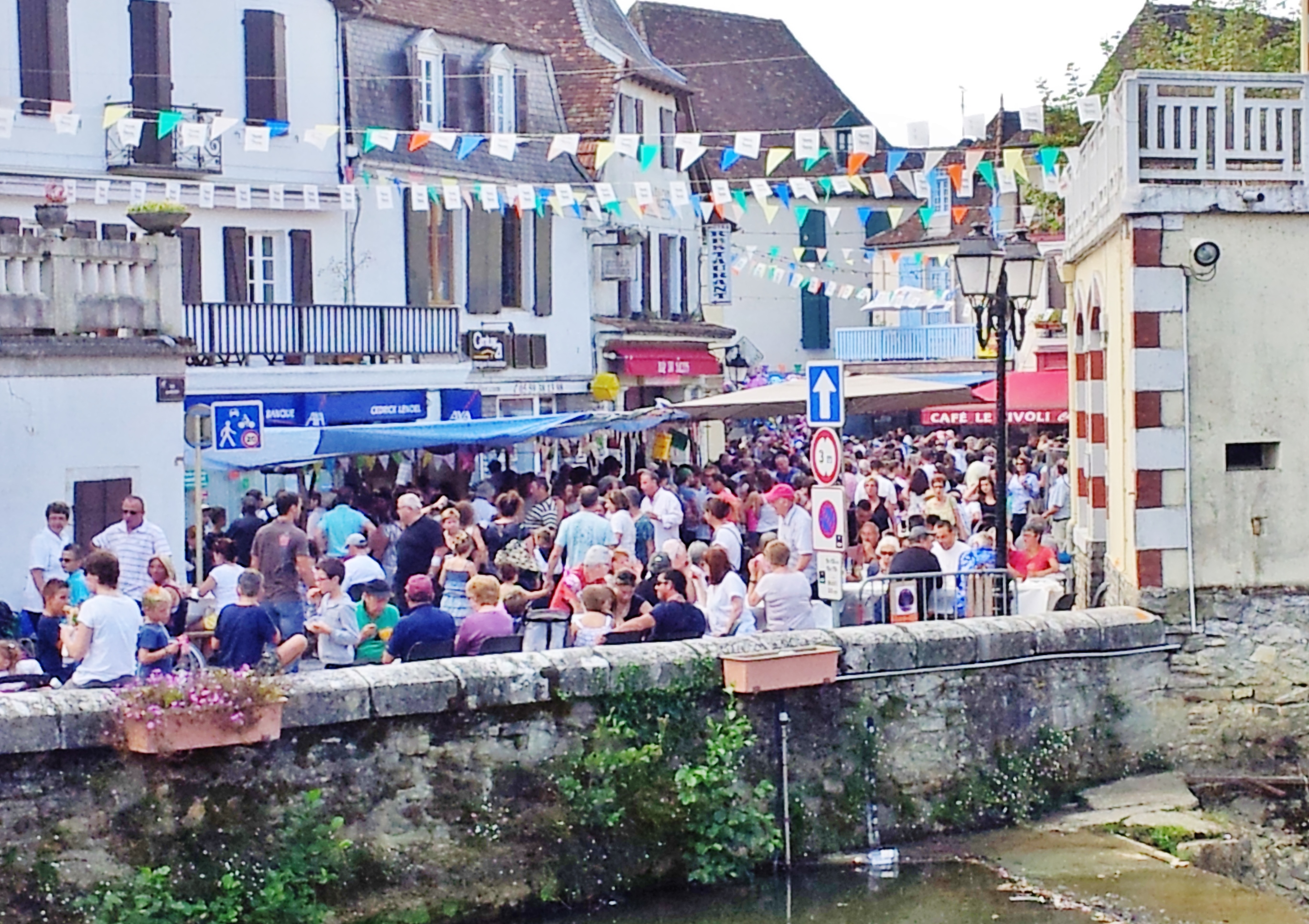 A human circle has formed in the center around a group doing one of the traditional dances. I skirt around them and make my progress going back and forth looking for tiny spaces in which to advance between the bodies.
 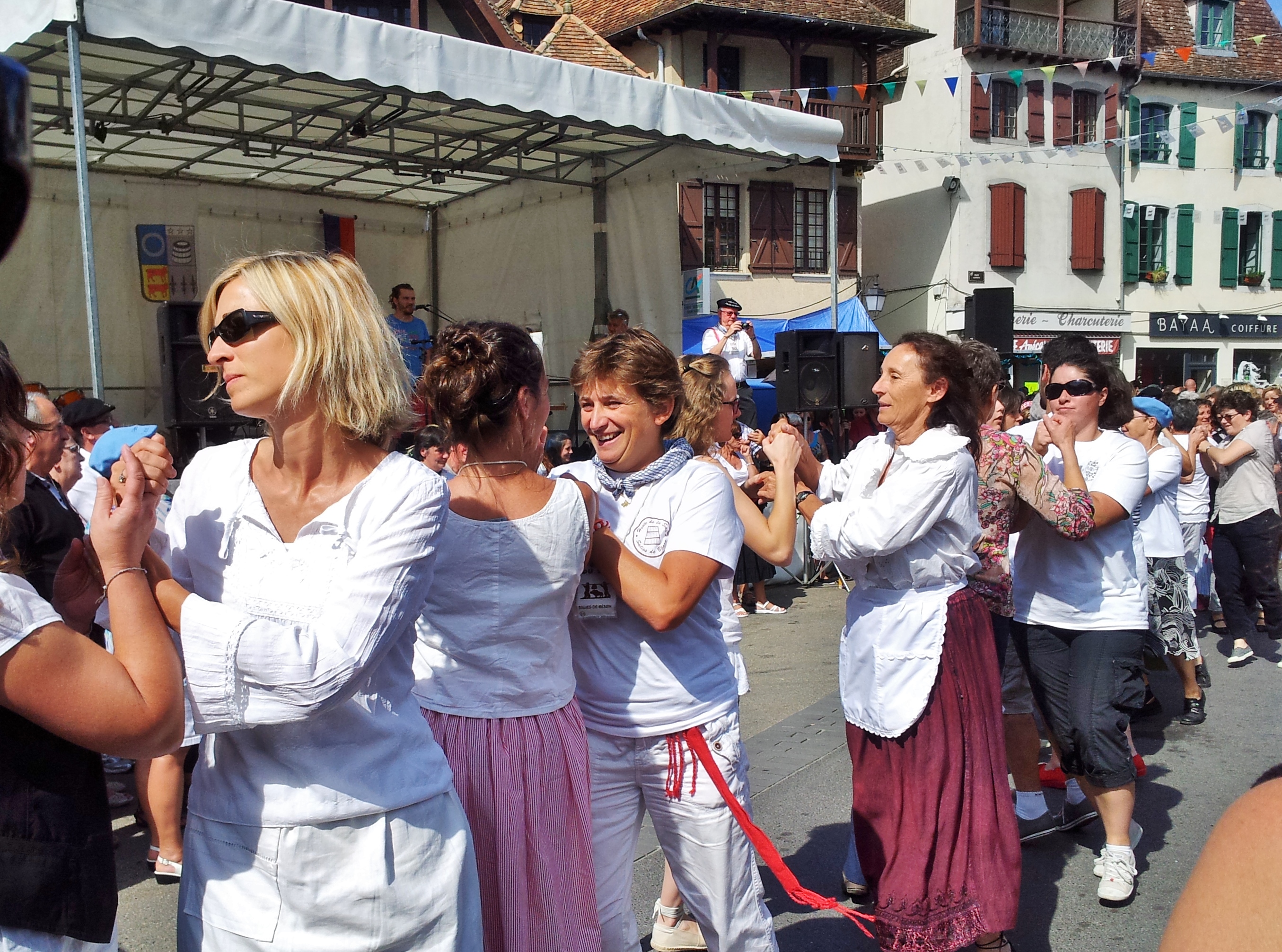 Most people have a beer or a glass of wine in their hand and are merrily talking away to someone else who also holds a drink.
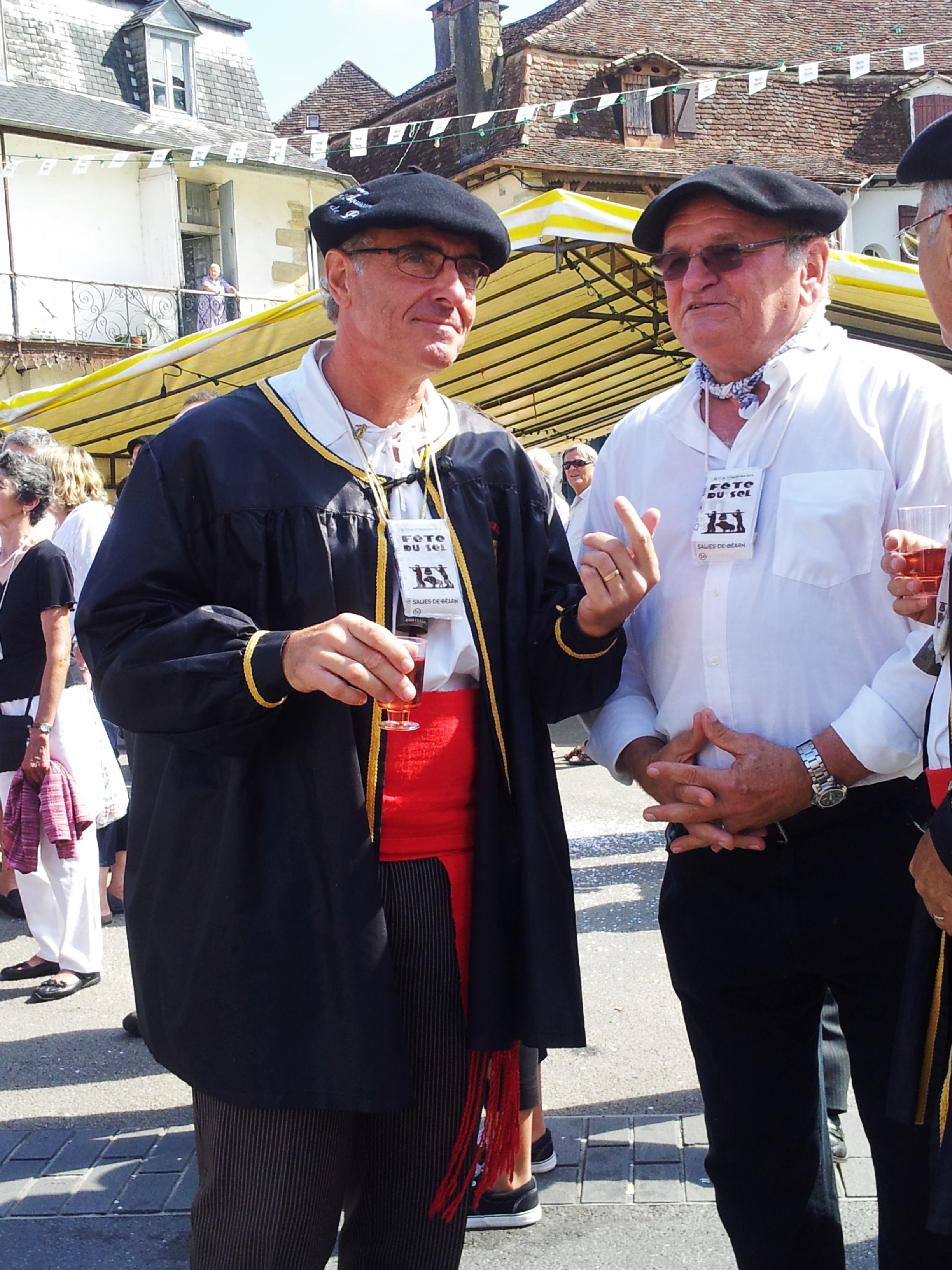 In a while, I will meet up with a group of friends, half English, half French, for lunch. We will be thirteen, a number that includes two English couples, two French couples and two gay couples (one masculine and one feminine both duly married now that France passed the law allowing gay couples to marry) and me, the thirteenth which, in my book, is good luck (my parents married on the 13th, my husband was born on a 13th and so was my daughter).
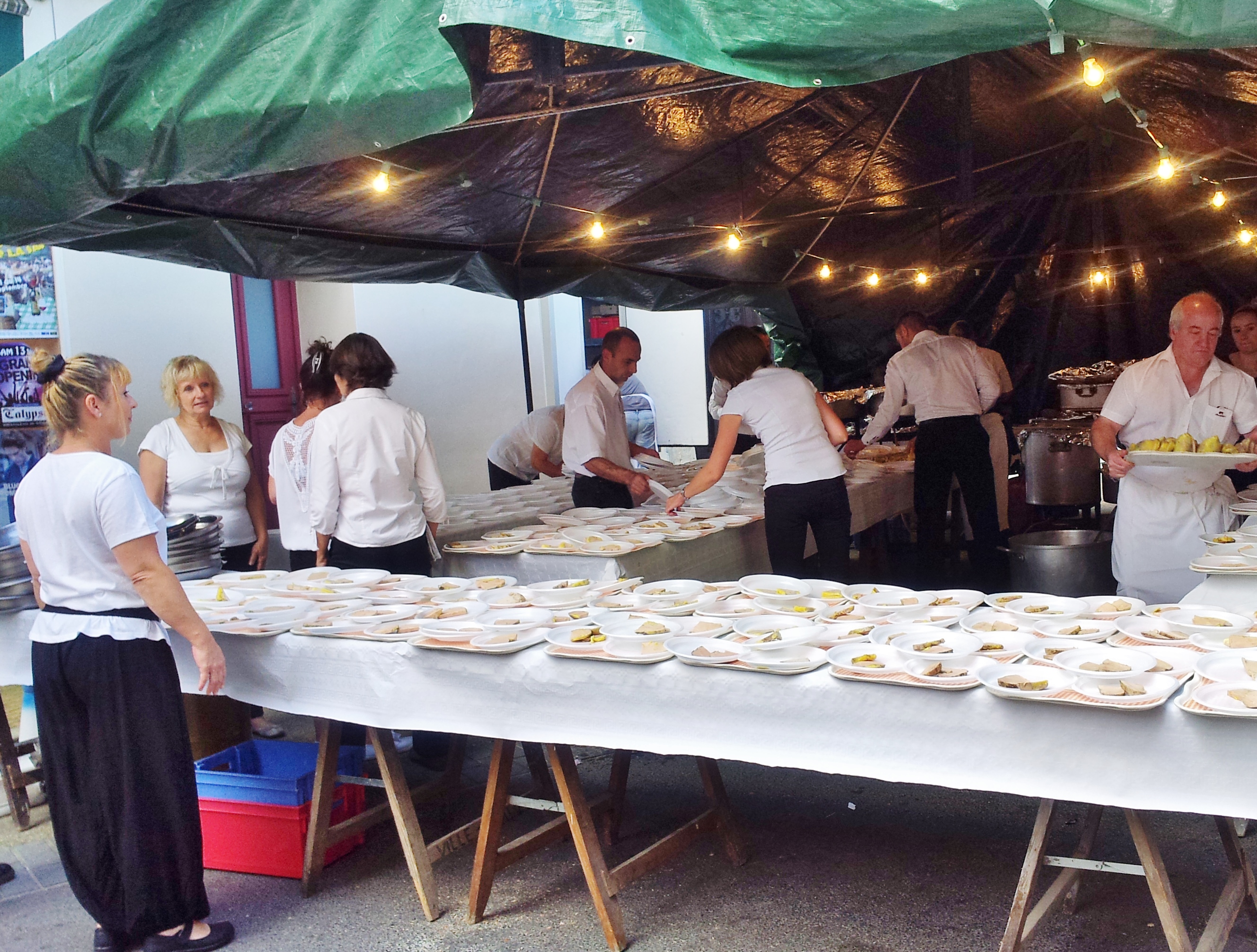 Dozens of youngsters of both sexes, guided by master chefs, hurriedly prepare the meals of their guests in the makeshift outdoor kitchen. The serving of three courses to so many hundreds will go slowly, of that there is no doubt, but today no one is in a hurry. With the music and the wine and the food which will arrive -probably later than sooner- the voices will become louder and louder; one will have to shout to be heard. There will be singing, and even dancing on the chairs before the meal is done. Ohhh, it will be merry.
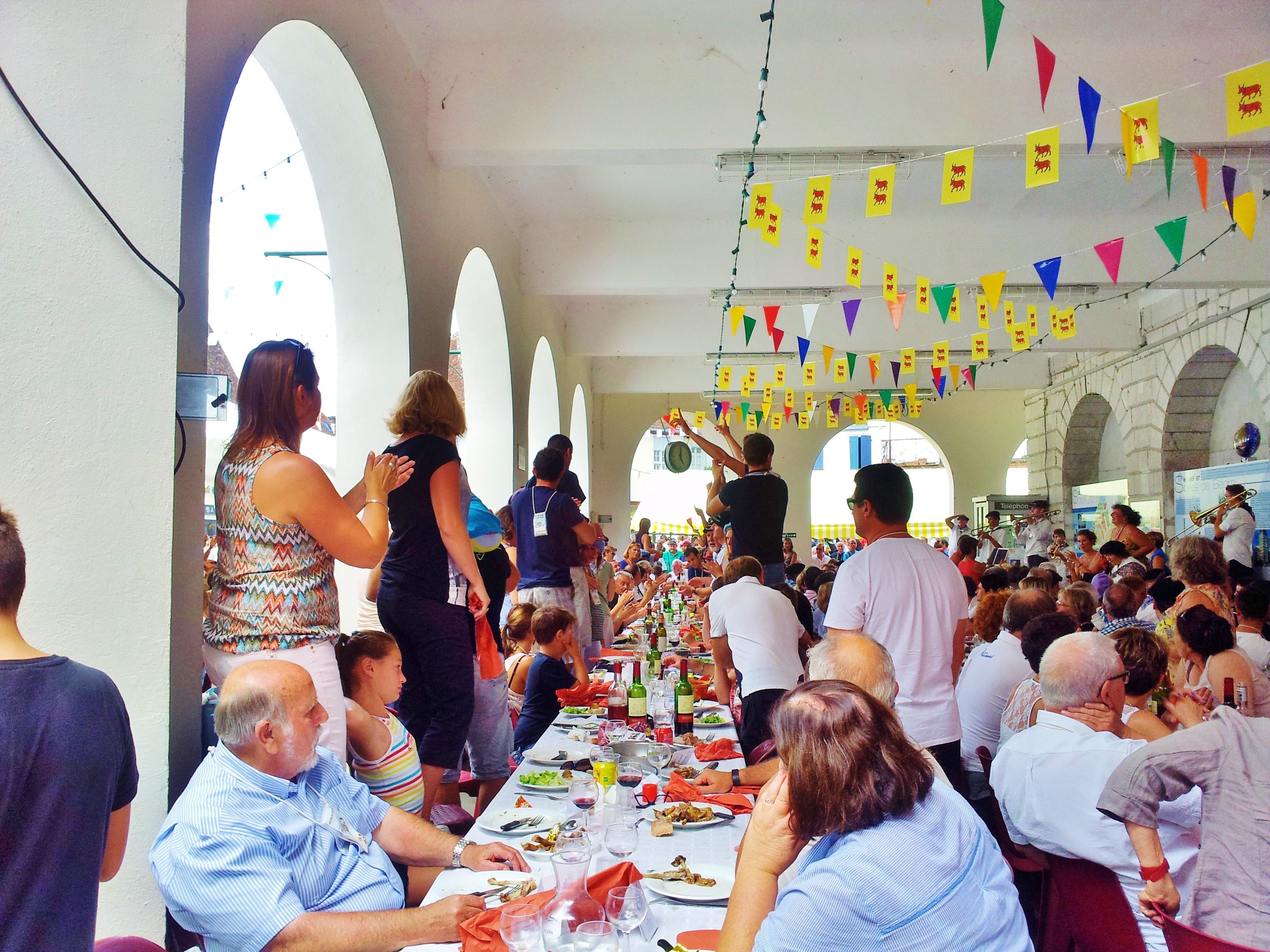 And when the last piece of cake has been eaten and the last glass of wine emptied and the final cup of coffee consumed people will begin to leave. Slowly the long tables will be emptied as the guests wander slowly out of the Bayaa and towards the surrounding streets. There, looking for shade from the afternoon sun, they’ll lean against a wall and chat while they wait for the parade of floats that circles through the streets of Salies showing off the imagination and creativity of the surrounding towns. Each float is pulled by a tractor from a farm nearby the town; each float has chosen a theme and been adorned (tractor and all) in accordance, with all its occupants dressed in the motive of the theme. This year there will be floats representing the Cannes Film Festival, a festive town wedding party and a night out in Paris under the Eiffel Tower. The children that accompany their parents on the float are in charge of showering everyone with confetti as the procession progresses down the street in front of the standing audience.
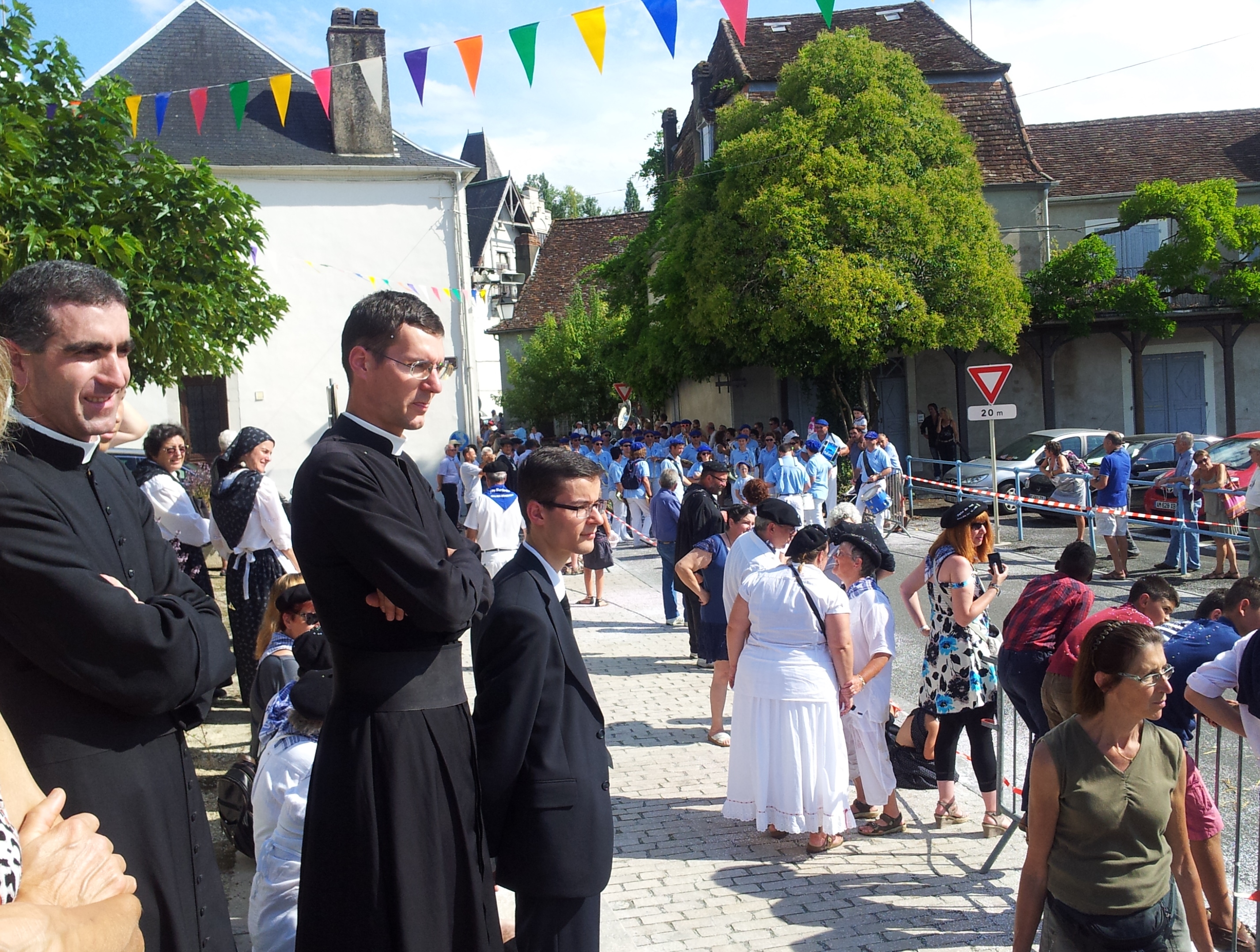
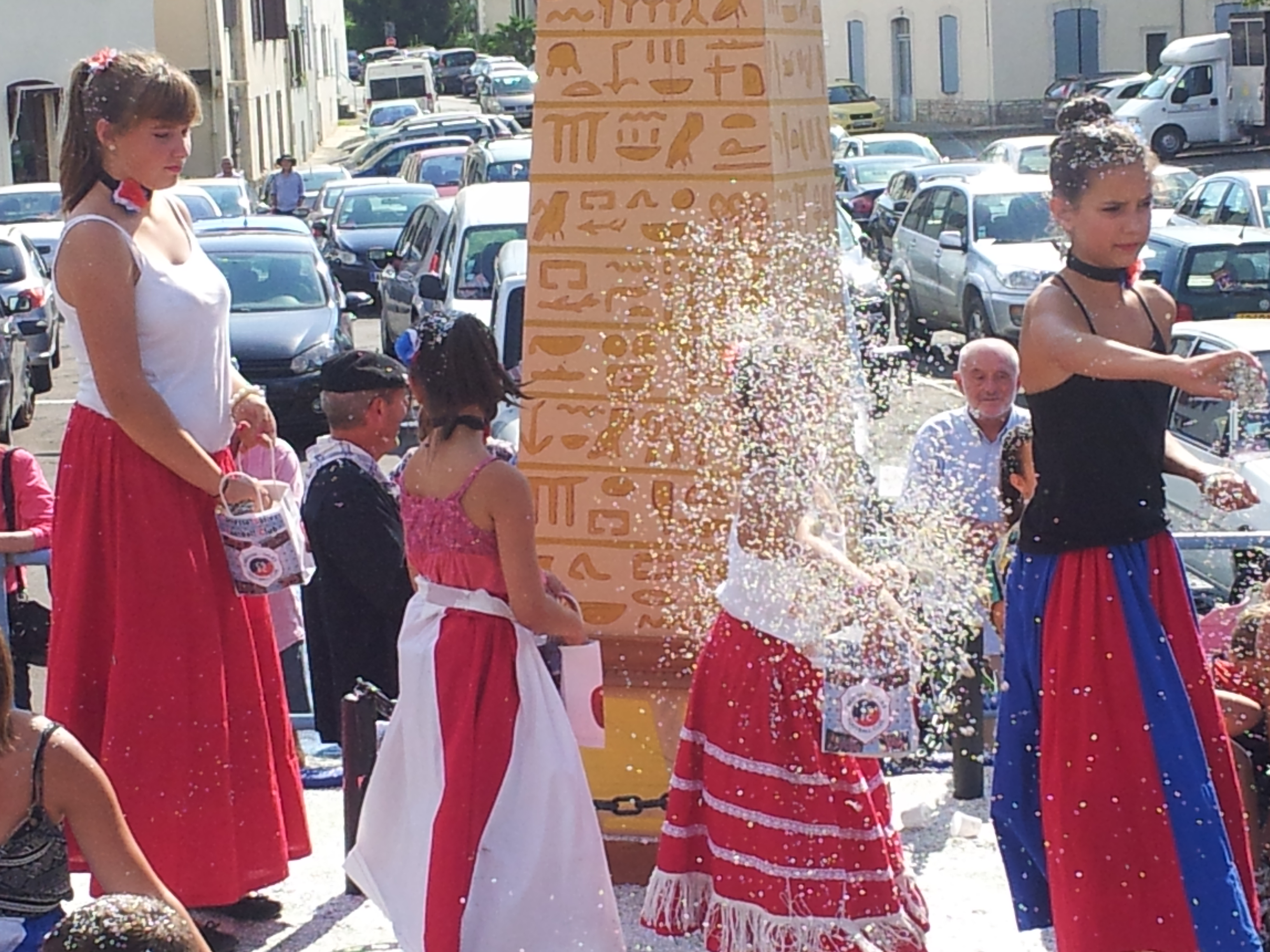 Absolutely everyone will come out to see the floats; they are considered the most important regional festivity of the year and a tremendous amount of planning and money goes into creating the best and most ingenious display.
The floats take, usually, three to four hours to go around the whole town, so it will be dusk before it is over. I will not stay for all because Salomé is home alone and I will be tired from having celebrated all day long.
It will have been a good day, of that I am sure, and by tomorrow the town will have been swept clean of everything but the confetti which will continue to give testimony that Salies once more celebrated the salt of its soul.
A MIND OF HER OWN
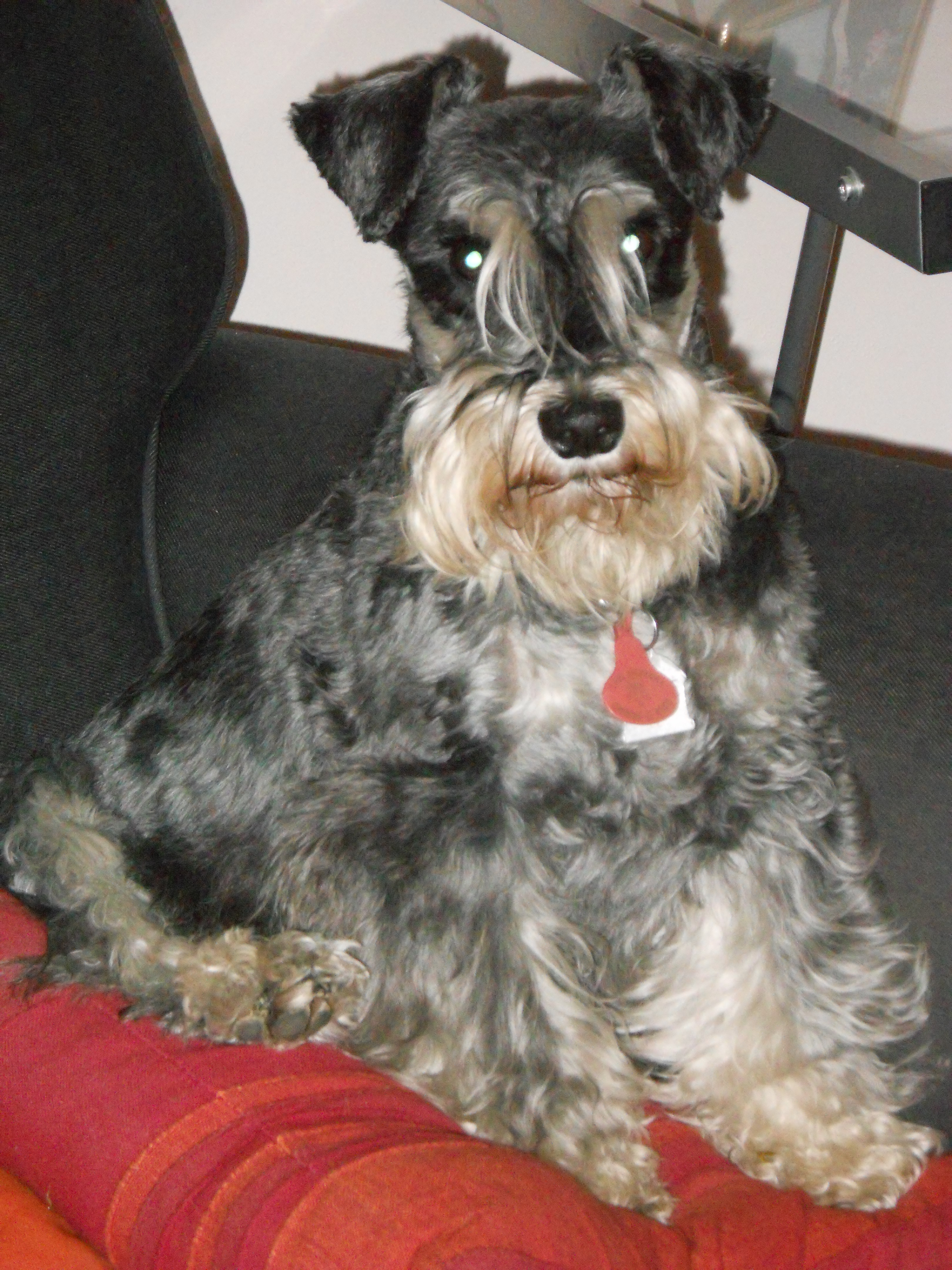
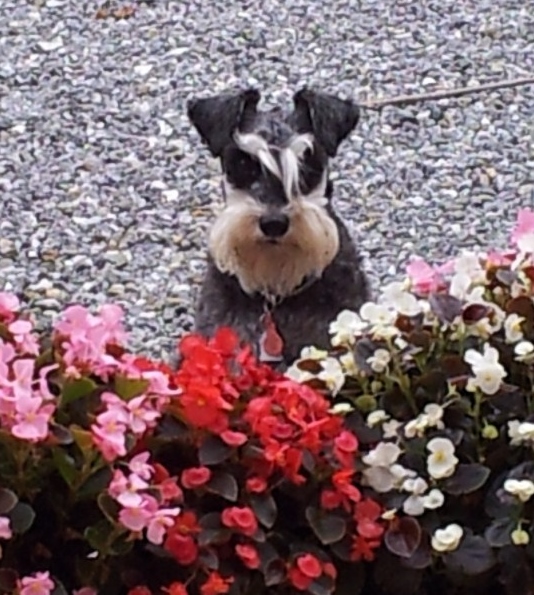
Dogs are not supposed to have a mind of their own! They are supposed to think, want and feel what their owner thinks, wants and feels. Their will should not only be pliable to their human’s will, it should anticipate it most of the time. Well, someone forgot to inform Salomé of the rules. She not only thinks for herself, she has a very definite opinion about the whats, wheres, whos and hows of her existence. Let it be said and held in my favor, that I have no problem with that… as long as it does not interfere with what I think, feel and want at the same time. The problem is that very often it does.
For instance, when I decided to wake up early (6:30 most days) in order to work on my genealogical project before the day’s interruptions and busyness begins, Salomé decided that any time before the sun rises is an ungodly hour to circulate, so she stays in bed. Now that is fine with me, because I am not ready to take her out for her morning wee until around 9:45, so if she sleeps until 9, there is no problem. She not only sleeps, mind you, but snores loudly enough so that I can hear her all the way in the living room where I am working. She does not snore at night -as far as I know- nor does she snore in the morning when I have opened my eyes but before I begin to stir. No. It is only when she finds herself queen of the whole wide bed that her sleep becomes as that of the free and innocent and she loudly lets me know that she sleeps much better when I leave the bed to her. No problem. I can live with that.
It is a little more difficult to weather the fact that she believes she has the right to sleep smack in the middle of the bed. My bed is only 1m40cm wide and she is not only in the middle every night when I arrive to get in, but sleeping crosswise. She measures 50cm so that leaves exactly 45cm on either end of her. Of course, she does not get her way in this matter even if only by question of size: I measure 1m62cm long when stretched out and, even though I have not recently measured the width, it must be at least 60cm at the hips when lying on my back. So each night I have to drag a limp, uncooperative, dead-to-the-world hound up and over to the other side of the bed while I rapidly occupy my place before she can shift. Needless to say that by morning she has managed to snuggle her way almost into the middle again and I am lying on my side, very close to tumbling over the edge.
Then, of course, there is the it-is-time-to-play ploy. Even though she spends quite a bit of time napping on one or the other of my two 
big black armchairs there is a moment when she decides that enough is enough. At that time, she’ll begin bringing me her toys: the black sock with a ball in it, the small blue mouse that squeaks, the tennis ball and anything else in the toy basket that meets the fancy of her jaws. Each toy will be carefully deposited close to one of my feet so that I might appreciate how fascinating it is and be irresistably tempted to leave my uninteresting occupation and roll around on the floor with her or chase her as she runs with the ball in her mouth.
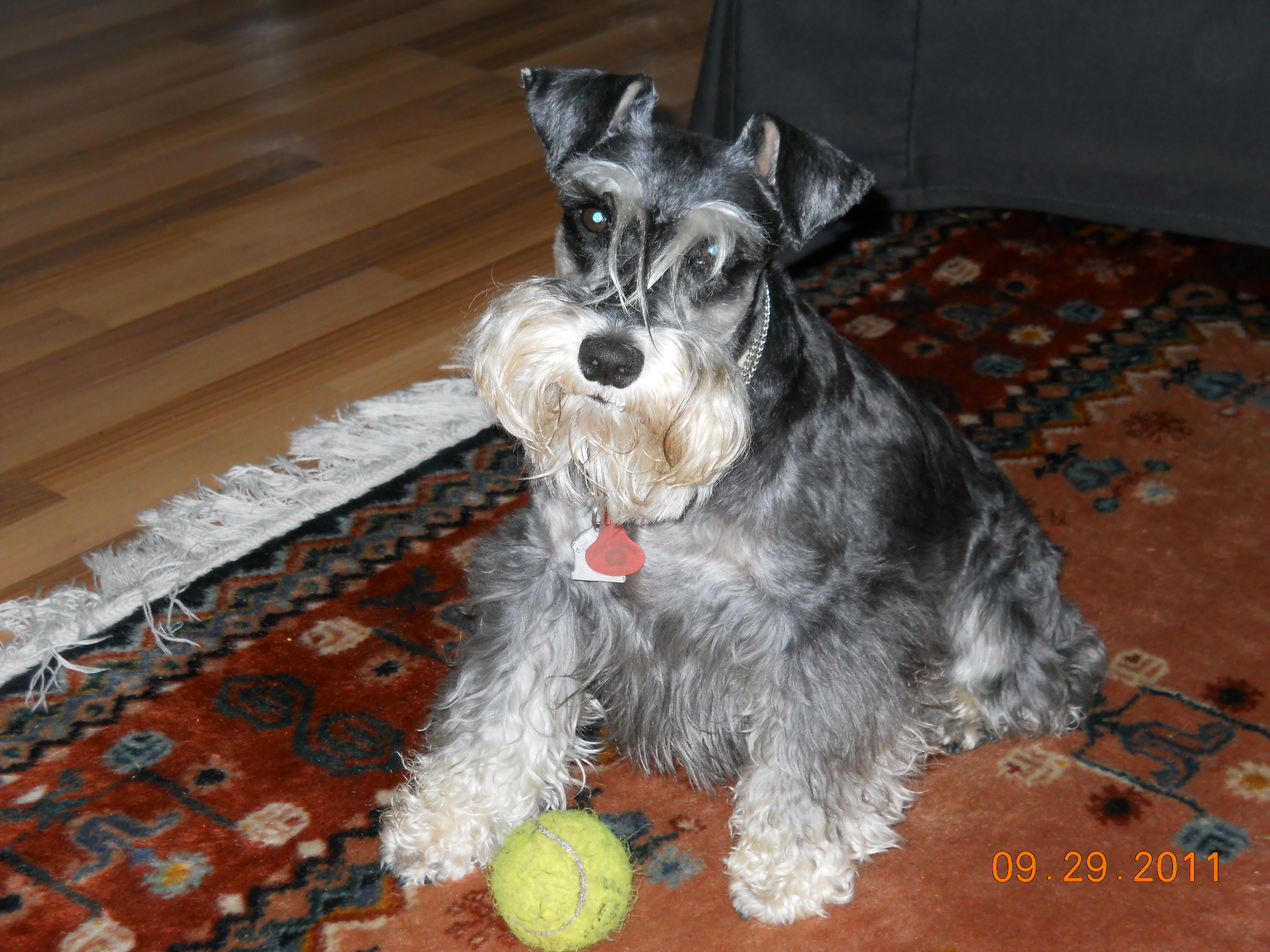
Furthermore, Salomé’s inner clock is infallible. It is never more than two minutes before noon or before 6pm when I will suddenly be extracted from my concentration by a muzzle between my knees and a pair of sharp black eyes looking hopefully up at me: feeding time. One would expect that after I have dutifully performed my nuturing obligations, she would allow me to return to my work, but no. After she has consumed everything in her dish and licked umpteen times to make sure not even a nano-morsel is left, she’ll trot over to wherever I am and look sternly at me until I follow her into the kitchen, gaze at her dish and exclaim in my most admiring voice: “Oh, Salomé! You have eaten everything!”
Five minutes later, as soon as I have settled down once more to continue whatever I was doing on the computer, I will once more be interrupted by the presence of a canine mammal gazing up at me from between my knees and gently knudging the side of my leg with her snout. I know damn well what she is trying to tell me: it is time for me to go to lunch, so I should get moving because she might have finished everything in her plate but she is far from full and wants all those tasty morsels that I pass down to her from my own luncheon plate.
Going up and down stairs is another way for Salomé to impose her way of doing things. We live on the second (top) floor of a building that has no elevator, so we are obliged to go up and down the stairs several times a day, which is -by the way- considered almost as good an exercise as making love (something I do not do very frequently… umm… never, as of several years ago so thank goodness for the stairs). Salomé, however, has a very definite opinion as to what stairs are for and it has nothing to do with exercise. Going down stairs is her favorite game, or rather, that I should go downstairs first is her favorite game. As I descend, she waits at the top of the stairs peering through the bars of the banister. I am supposed to stop and look up every once on a while as part of the game, and say: “Come on, Salomé, come down;hurry up, run, let’s go…” and all my other verbal encouragements which she proceeds to ignore.

When I arrive at the bottom, it doesn’t matter how much I plead, or beseach or scold, she doesn’t budge until she hears the door open and then she races down as fast as her little feet will carry her, past me and out the door that I stand holding open for my dog. We play this game every single day; she never tires of it.
Up until now, that was all I had to put up with and to tell the truth I enjoyed the communication and playfulness of our relationship. But recently, Salomé has decided that she wants what she wants and she is going to let me know about it every time. For instance, when I leave the restaurant where I have lunch almost every day and turn to head for home, she will stop dead in her tracks and look at me, her ears cocked to attention.
“Come on, Salomé” I’ll coax, “we’re going home now.” She won’t budge, looking at me with that very determined angle of her head. “What?” I’ll insist. “You don’t want to go this way?” Still she stands like a statue. She is obviously not going to follow me, so I turn and as I walk towards her, she also turns and begins to walk in the opposite direction. She does not want to go home; she wants to take a stroll around town, smelling every dog pee along the way and receiving the salutations and caresses of all the Saliesiens who know her.
Or, we will start home after my morning coffee and, upon reaching the fork in the road where I always take the right hand one to go straight home, she will stop, perk up her ears and stare at me until I understand that she wants to take the left fork because the smells on that street are different than the ones she already smelled on her way to the Café.

The determination in her expression is such that most times, I accomodate her wishes and we take the long way around, or the other way home; but occasionally, I have something I need to do at home and then I must drag the unwilling dog the way she does not want to go. But, afterall, who told her she has the right to an opinion on where we go, when we go, what way we go and all those things that are supposed to be up to the human being in CHARGE of the situation? I suppose soon some animal psychologist will be accusing us of traumatizing our pets when we make them do things they absolutely don’t want to do, but until then… well, sometimes Salomé gets her way and sometimes I do. That is only fair, right Salomé? And, anyway, as I recently read on an internet cartoon: “Life without a dog is a mistake”.
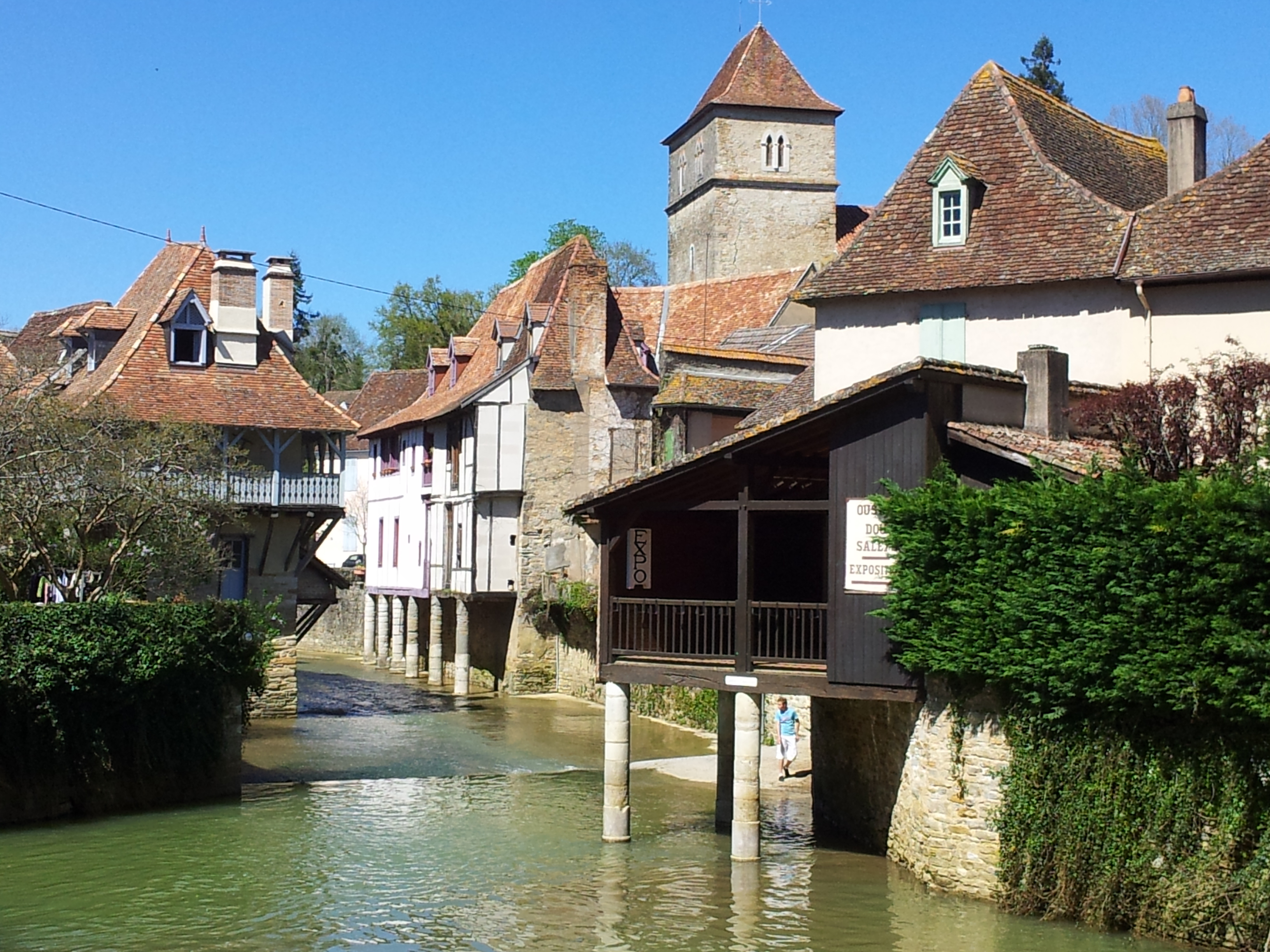
SALIES ON THE FIRST SUNDAY OF SPRING
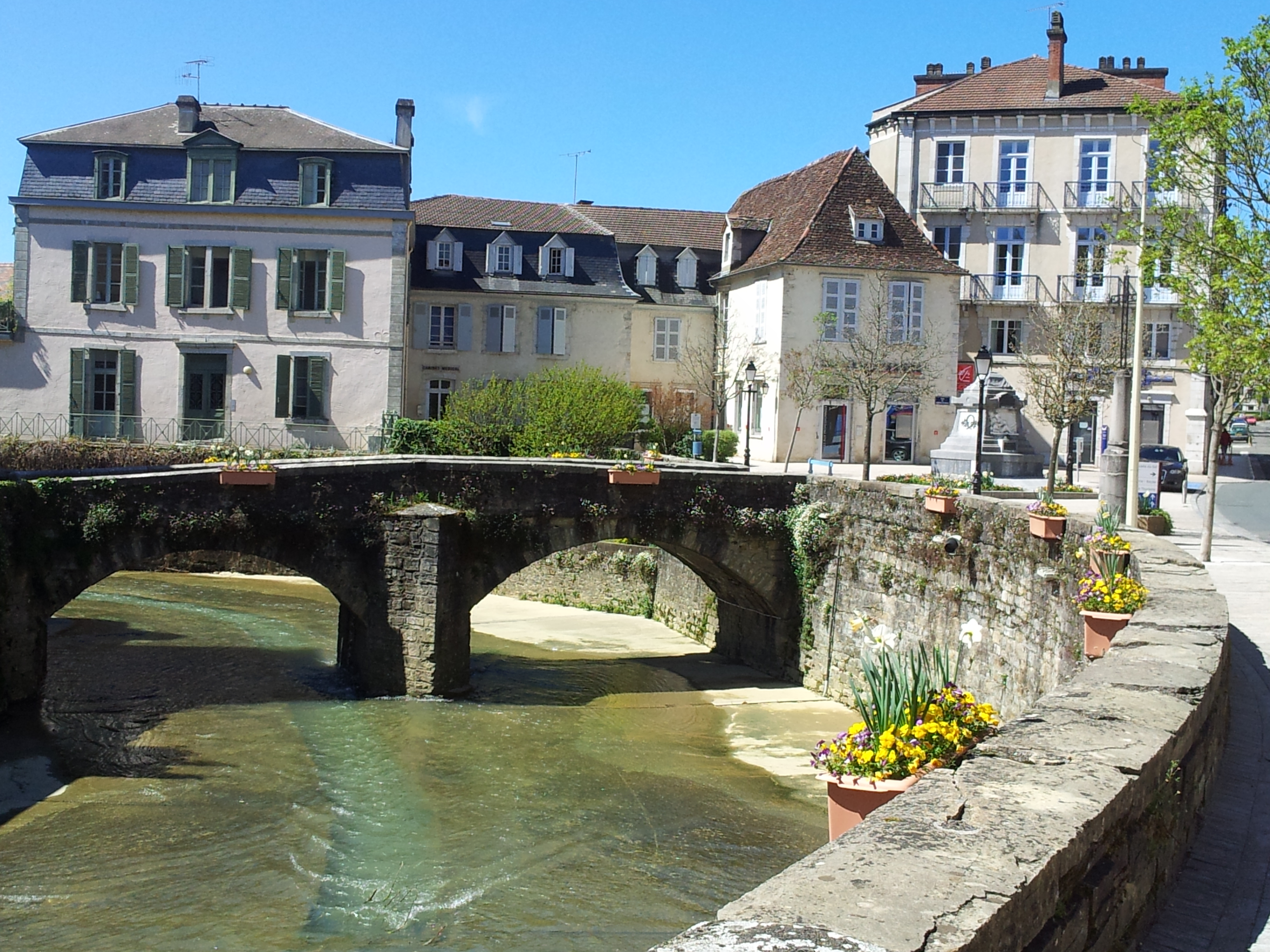
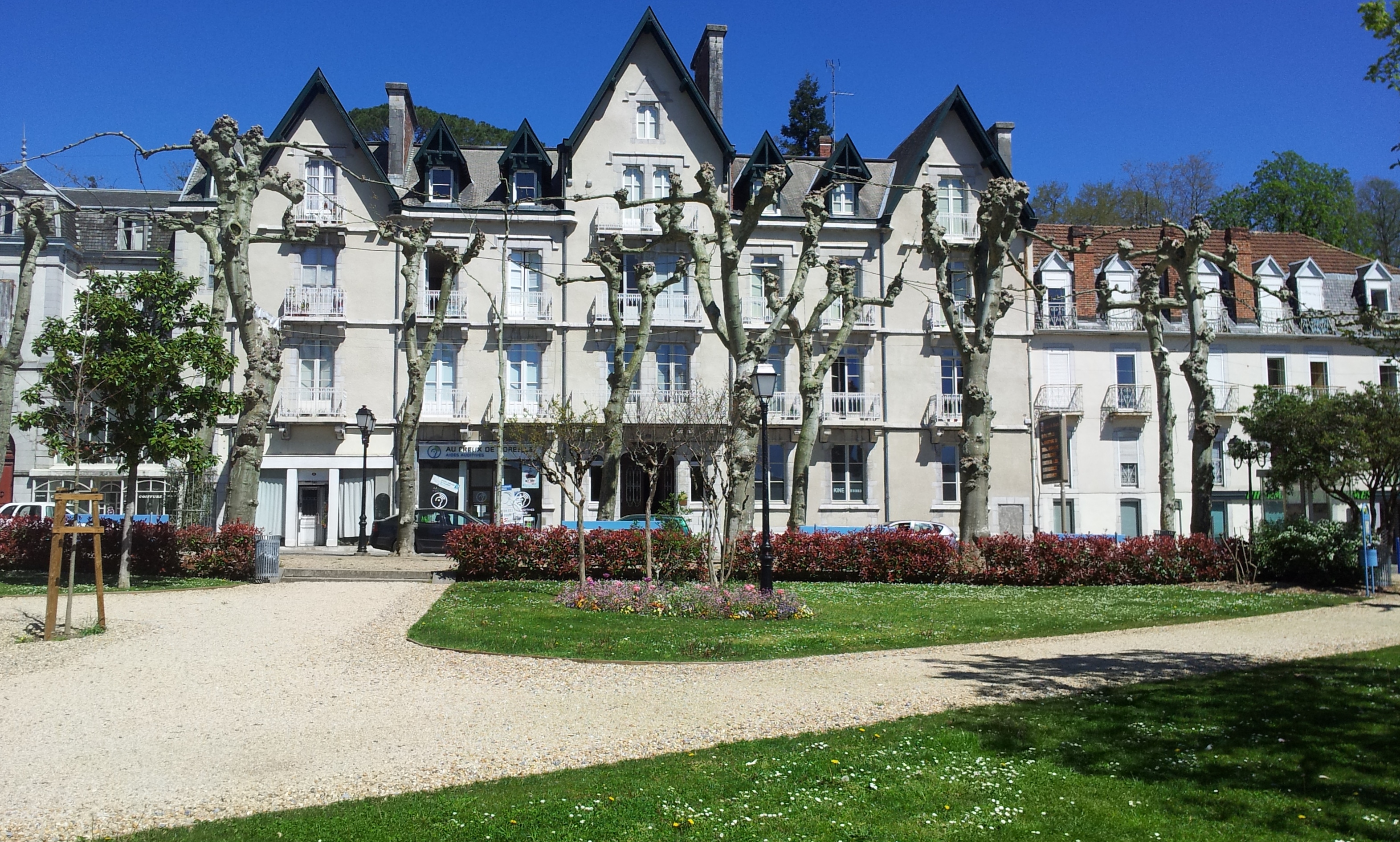
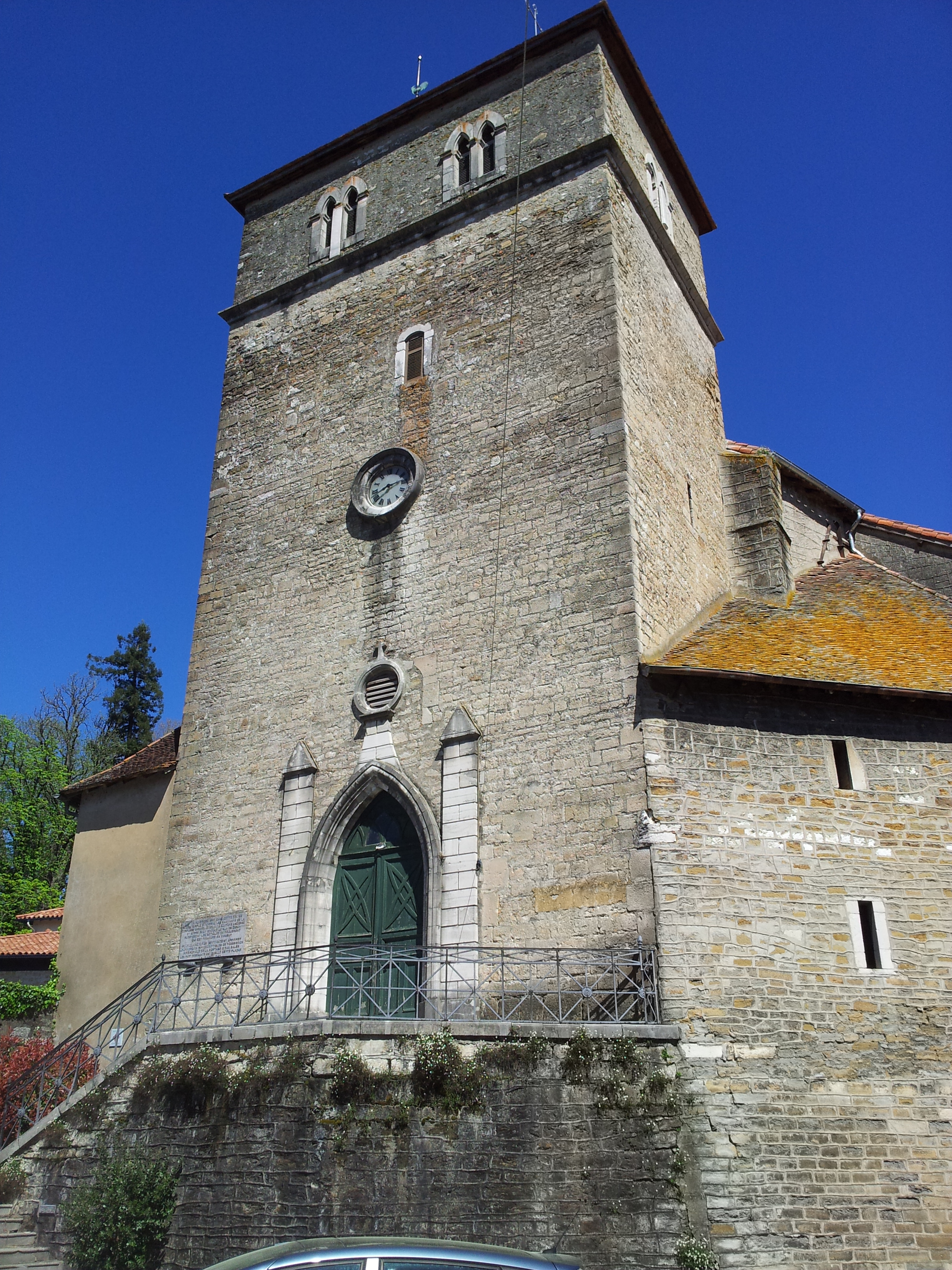
Salies this Sunday
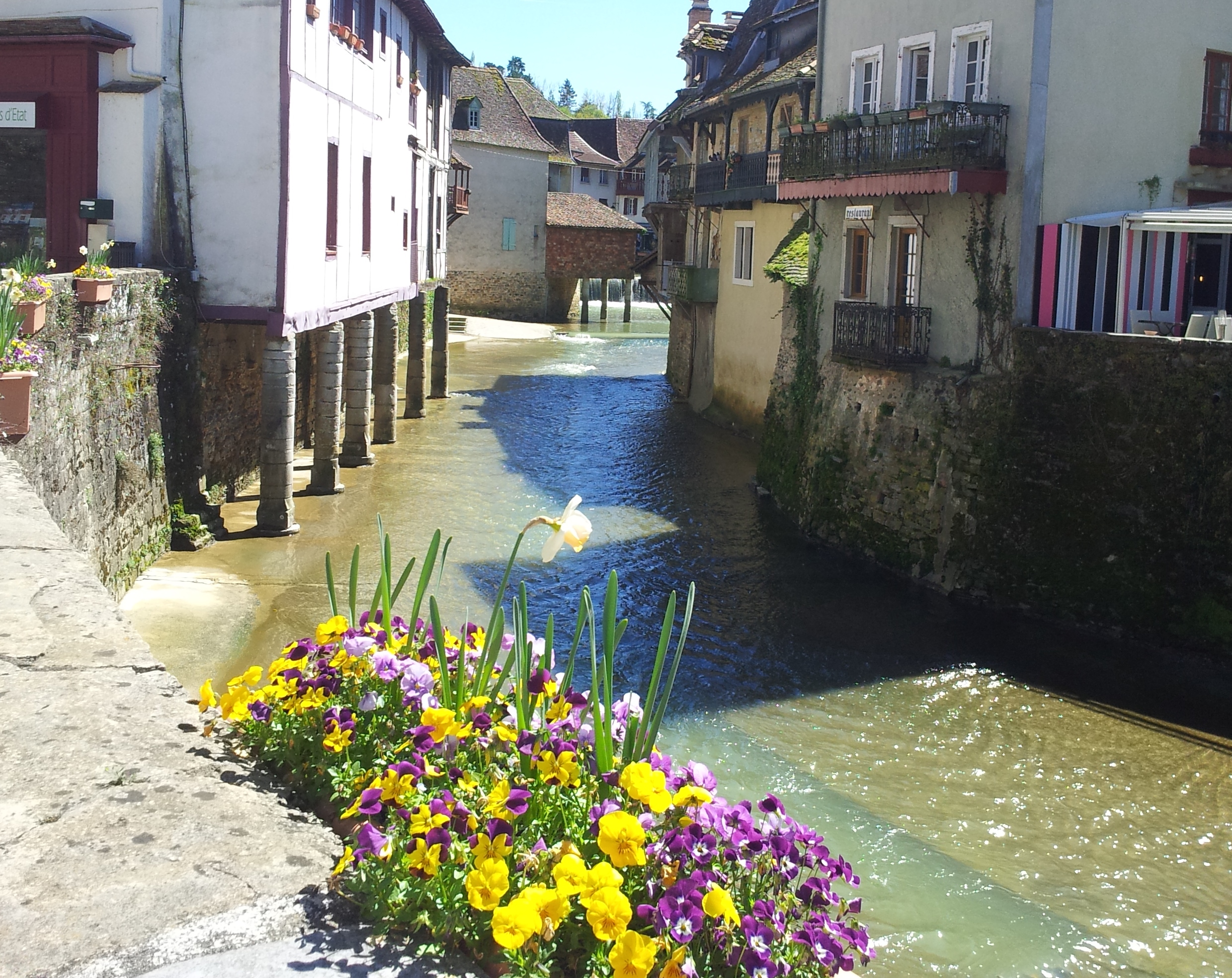
Ok, so it isn’t the first Sunday of spring, but it is here. The sky this morning was soooooo blue! Naturally, it has been washing itself clean for the last five months with industrial amounts of water, how could it not be blue? So, after having lunch I took a long walk about town just tuning into the beauty one blink after another and, of course, recording it in bright technicolor on my smart phone. 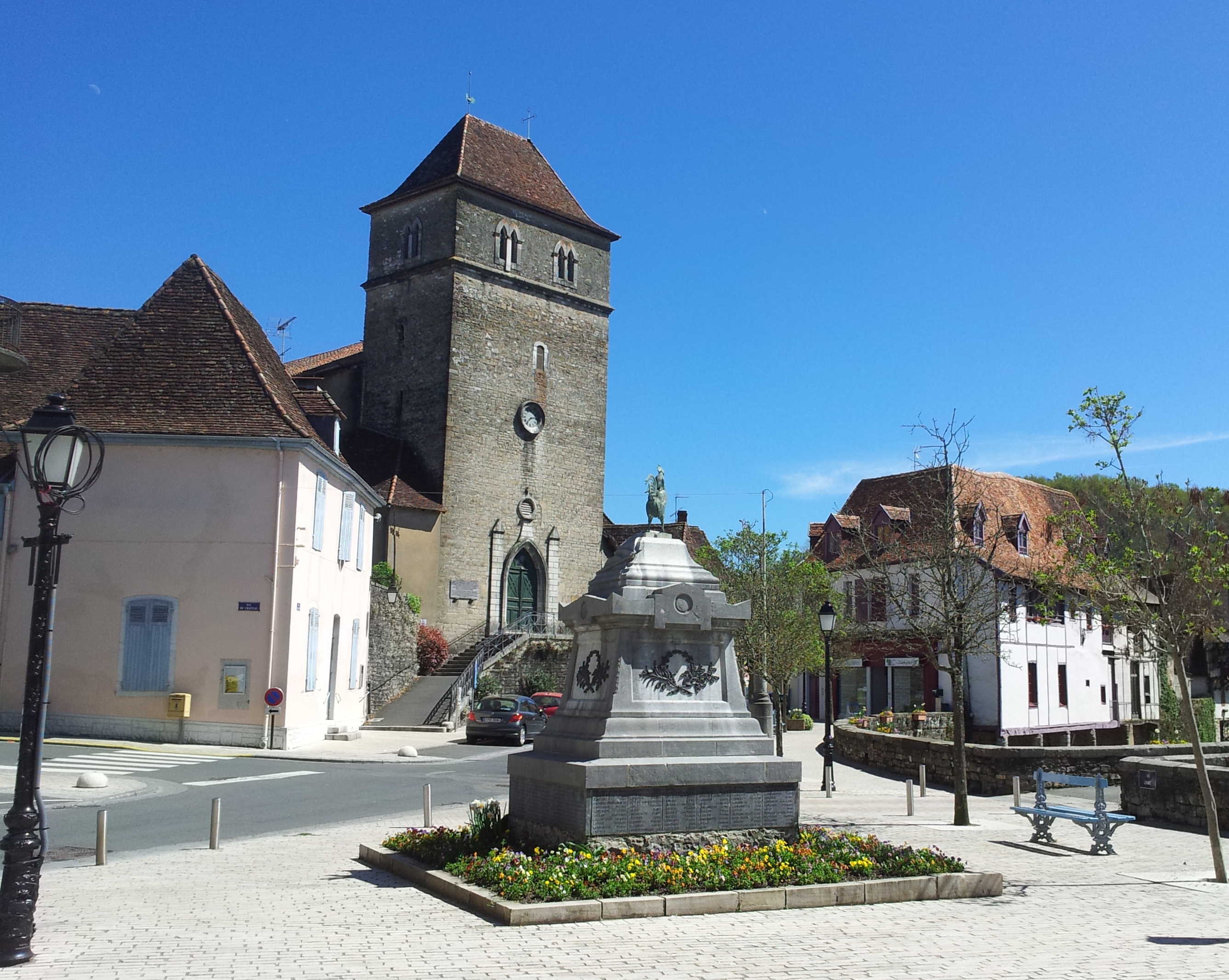 When I got home, the desire to share these pictures made me think immediately of my (sniff, sniff) long forgotten blog. Oh, I have so abandoned this space… I would like to say “I’m sorry” and I would if it were true, but it isn’t. I have been up to my eyebrows in research, rising every morning at 6 a.m. in order to have at least 120 minutes of concentration time on the computer before the day’s occupations and duties begin to fragment the expanse of hours.
  Recently, however, when I am walking down the streets of Salies, or washing my dishes, or standing in the shower, or applying my makeup before leaving for coffee in the morning an idea for a blog-post will pop into my mind, the first sentence will begin writing itself as it always does, I will feel the longing to sit and once again take up the long silenced voice that some years ago found itself in this oh-so-kind-and-welcoming space… but immediately the mind will say “No! Concentrate on the task at hand, don’t take the time now to write other things; get on with the work undertaken or it will forever vanish and you shall have spent the time in vain…” and I will believe my thoughts, and lay aside the inspiration for a better moment (with which it will vanish like drawings in the sand), and promising myself there will be time later on, whenever later-on might be.
 And the truth is that, until this moment “later-on” had not come. But today it was impossible not to share the photos on this post so I came home, sat down at my computer and… REALIZED I HAD COMPLETELY FORGOTTEN HOW TO CHECK INTO MY BLOG AS THE AUTHOR!!! I could open the page as a visitor (and be asked if I would like to subscribe to my own blog) but I had no idea how to access this page where I might add another post, or a picture, or look at the info as to visitors or past posts or anything. I sat here, my head full of images and empty of code name, pass word or even the magic click that would get me to where I could check in. IT HAD BEEN THAT LONG!!!!
  Finally, I did the logical thing which was to open Explorer and write WordPress.com and “enter”. Of course, that was what I needed to have done in the first place and the friendly space to fill in “user name” and “password” opened up. That was a relief, but I still had to remember or guess the two items to type into the open spaces. It took three tries to finally find myself inside.
 What a relief! I was home again! And… not surprisingly “home” had completely renewed itself and was totally different from the last time I checked in. Better I am finding, for it is easier to add photos which was the whole purpose of this post,
 and I don’t have to figure out how to arrange them amongst the words of the text. It is like coming home again, like being in a so familiar and loved (and loving) space. I don’t want to go away for so long ever again… but then…
 there is still so much to do on my new (well, no so new any more) project. But I will, I will… I want to promise myself not to stop this again, even though now that the sun has once more dained to shine on this beautiful corner of the earth I certainly shall want to go out more, and walk-abouts will be a requisite for the soul… but I shall write, even if only briefly, even if only to share some of the beauty that my eyes are so gifted with every day. I promise myself this I will do.
2013 in review
The WordPress.com stats helper monkeys prepared a 2013 annual report for this blog.

Here’s an excerpt:
A New York City subway train holds 1,200 people. This blog was viewed about 5,800 times in 2013. If it were a NYC subway train, it would take about 5 trips to carry that many people.
HAPPY NEW 2014 and AN EXPLANATION
It has been so long I have posted anything I feel guilty, but I do believe that at least, in closing the year, I owe an explanation if not an apology to the people who have so constantly followed this blog. The explanation is this: I am not writing on the blog because shortly after posting the last post, a new project was born. A project is something that absorbs all my attention, it is a passion that takes over my life, it is a full time dedication and there is usually no creative energy left over for anything else. For a long time I believed that I would have no other project than this blog, that my writing had dwindled to a post a week or less and that nothing major would ever again come out of my creativity. It may be that this is true, but I was grabbed, suddenly, without thinking. It was so unexpected that I can’t even remember how it happened. I think it was that I started to put together a family tree on Genealogy.com or something like that, because I am in a region where there are so many Domecqs. Then I pulled out a Pedigree Chart that a cousin had done on the maternal side of the family; a while later I began jotting down dates that corresponded to people in my family tree, and doing some research on internet; then I joined Ancestry.com and the info began pouring in. I found a time line someone had done on their grandmother or something, and thought that would be interesting so I began one. Then, I decided that I wanted to expand the information on the time line to include the historical events that had taken place and might have influenced or interested the person of the time line… The project began to take shape, and the excitement grew. I found myself getting up at 6a.m. every morning and working till 8:30 or 9; sometimes I couldn’t stop. Suddenly, my grandmother’s time line had 50 pages and was still growing. I consulted with my cousin who had done the Pedigree Chart and we began sharing memories and finds on internet. By then I was hooked.The plan had begun to take shape in my head. The Research will have two branches: the female branch from my mother back, and the male branch following my father’s male ancestors. This means the “tree” will have an American-German-Jewish branch and a Spanish-French-Catholic branch. Once a project such as this begins, the information increases exponentially; it seems to literaly seep out of the computer pages or spring to life in books, albums, letters or other people’s memories. So far I have time-lines for my great-great grandmother, my great grandmother and my grandmother. I am about to begin with my mother.
The next step is to begin with my father’s family. For that I am sitting on a gold mine. Already, I have contacted a Jean Pierre Domecq who has kindly sent me a fat folder filled with documents about the French Domecqs. I have visited the original hamlet where they lived and migrated from, and I have found their names on streets and war monuments throughout the region. Of course, I will have to go to Jerez where they migrated to when the did around the beginning of the 19th century. Just the thought of all that lies ahead makes me tremble with excitement and impatience.
And then, of course, there is exactly what I am going to do with all this information. To tell the truth, I haven’t a clue. At the least, I will pull together a coherent account, with photographs, for my children; but I do not believe this will end there. There is a wealth of material and too many skeletons in the closet to be ignored. My writer’s what-ever-it-is is itching. There is a long way to go, but something of weight (kilos of it) will come of this, I am sure.
In the meantime, all my creative activity is going into this, so I beg your pardon, you patience and you continued support (please check over the blogs and see if there is any you have missed or would like to re-read), until the time when whatever is gestating sees its natural birth.
Hope 2014 is as exciting for all of you as it promises to be for me, thank you for being there at the other side of this page. Love, Brianda
PEACOCKS
 I heard them the moment I arrived yesterday, in the not too far distance, making a racket with their mewling-squawking cries that rang out over treetops and buildings. Continue reading
SMILES
Today, as I walked back home from coffee, through the path that runs by the river and then cuts around to pass the communal vegetable gardens, ends on the road that takes us past Salomé’s beauty parlor (called the 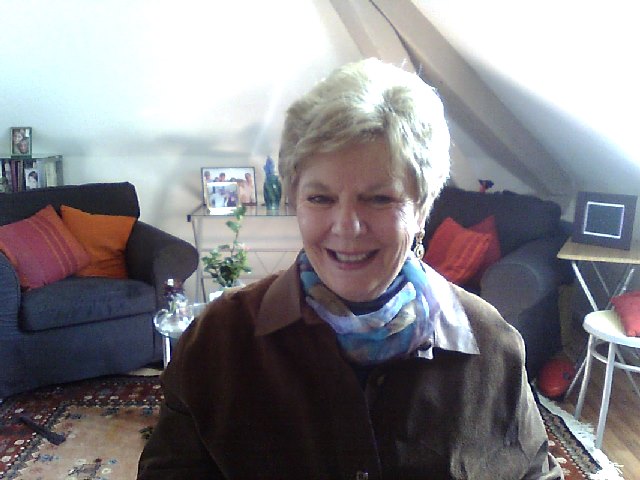 Toutou.net)… Continue reading
21
Twenty one years ago today was my first day of sobriety, the first day of a new life, the first twenty-four hours in more years than I care to remember when I didn’t have a drop of alcohol. It came after a night that was a nightmare and a godsend. Continue reading
 Writing a life