What a birthday!!! Let’s do it again!!! I am still savoring it. 
Not too long ago, birthdays were usually celebrated with family and maybe a few friends. Today there is INTERNET!!! Skype tells everyone on your Contact list that it is your birthday and invites them to help you celebrate by –what else? – giving a gift of Skype credit for phone calls. Facebook sends all the people you have ‘friended’ an email reminder that you are celebrating a birthday and then sends you a notice of those that congratulate you. Afterwards, Facebook tallies up the final score on your FB page so that everyone can see how popular you are or aren’t.
 Thanks to Whatsapp, saying Happy Birthday with many smiley faces and clapping hands is more than easy and can be done in less than a minute, so the phone just keeps whistling all day long to let me know another message has been received.
And to top it off, when I sat down at my computer and opened Google, lo-and-behold, my search page sported a series of birthday goodies. For a split second I thought it might just be a coincidence so I placed the cursor over the display and clicked: “Happy Birthday, Brianda  appeared on the screen. Now that is a first! I truly must exist if even Google thinks so! It makes me feel soooo connected! All day long, if I wanted to check to see if I was real, I could return to the Google page and get another birthday greeting.
Then, of course, there were the advertisements: websites that I have visited and registered at that sent me all sorts of invitations to give myself their products for my birthday. So kind of them to think I  might need something on this special day.
All this attention helped me to understand the ease with which people become addicted to internet. If someone feels lonely, they can click on internet; if they are jilted by the love in turn, they can turn to internet; if there is a celebration they wish to share and nobody around seems interested they share it on internet… Then they get responses from people they can’t even remember or perhaps have never met, but who are there (apparently), loving them (apparently), thinking of them (for at least a few seconds) and the momentary feeling is of no longer being lonely or left out of the world. And, of course, they are there even if –like me- you don’t feel lonely or left out of anything.
It was absolutely fascinating and I spent most of my day saying thank you (in three languages) to so many people that sent me wishes and pictures, not only thanks to the Social Media on internet, but also because I had made no secret of the fact that it was going to be my birthday. Many years ago, I decided that waiting to see who might remember my birthday was an exercise in self-torture. Since then, I celebrate my own BIRTHDAY, after all it is MY day (and I could question that belief!!!), and I enjoy letting everybody know. I don’t expect them to remember: I remind them when I see them. It is kinder to them and to me.
 My group of morning coffee friends organizes birthdays for everyone. The plan is always the same: the birthday person brings the goodies (a cake, a pie, croissants or whatever) and pays for everyone’s coffee (everyone who is sitting at the birthday table, of course). In return, the celebrated one receives a lovely card filled with 10€ bills collected amongst all the celebrants and gets to spend it on a gift of her choice (only the girls get celebrated, but the boys get to put their money in too, heh-heh). This year, one of my friends had already taken my usual offering (lemon meringue pie) so I settled on petit-fours and they were a great success. And when I went to pay for the coffee, the owner –Rose- told me that no, she was paying as a birthday present for me. What a generous world!!!
And the fun kept on going. On the way home from coffee, a trio of my favorite people sung me Happy Birthday right in the center of Salies. When I got to my apartment, my kids and grandkids called or sent messages, and I received the most beautiful letters from a few friends thanking me for things that have given me so much pleasure to do that I certainly never expected any gratitude in return.
And the surprises continued! At lunchtime, I went to my regular restaurant and ordered exactly what I felt like eating: a hamburger. When I was finished, I checked my body to see if there was space for a birthday desert. There was a little so I considered a “Café Delice” which is coffee with all sorts of sweet tidbits. I could ask which ones were served  and only order it with one or two tiny sweets. I was considering this when the owner and chef, Melanie, came out carrying…. a Café Delice with four tiny replicas of my two favorite desserts on it: crumble with caramel ice cream and lemon meringue pie (her special recipe). She then proceeded to sing me Happy Birthday in French and everyone in the restaurant clapped. When I went to pay
  the bill, there was no desert or coffee on it.
So, there it was: gifts left and right, more birthday wishes than I had ever gotten or that I would ever have imagined getting in my whole life and a very happy, happy birthday with Google to keep right on reminding me all day long!
Can’t wait to see what happens next year with the big

 certificate. Personally, I can’t vouch for it. As far as I know, I was born this morning and my mind has this movie called “Brianda’s life” that it projects for me all the time. I just play along.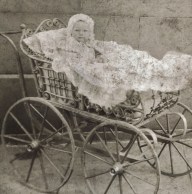
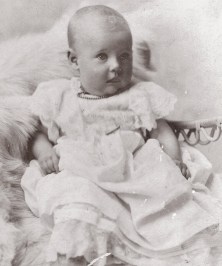 wandering back and forth between New York (where she lived) and Mexico (where we lived at that time). As it turned out, she came to Mexico for her 75th birthday.
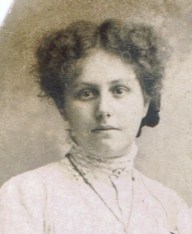 She went on, certainly, but it was that phrase that struck me so hard it glued itself to my mind and has remianed all these years. I remember writing a poem that began something like: ‘To be 75 and not know where life has gone’. That was a long time ago and has either been lost or thrown out (I have never been able to write poetry: no sense of rhythm), but to this day I can see her sitting on the edge of the bed shaking her head sadly and offering up this devastating summary of her time on Earth.
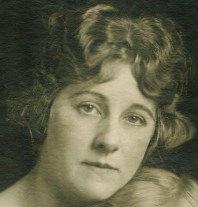 the marriages (2), the friends, the relations, the trips, the moves from house to house, and then from country to country… The whole movie is here, in my head as clear as it was while it happened day by day, minute by minute. I can see the path I have followed and the times I have not followed it (and that is not true: one is always following one’s path, it just doesn’t always go where we think it should). I can see the goals I sometimes set out, and those achieved or not. I can see the struggles and the conquests, the beds I’ve slept in, the boys I`ve kissed. I have kept diaries of my dreams, of my confusions, of the things I believed and then didn’t, of my spiritual paths.
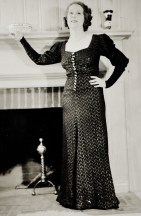 Perhaps, when I heard that phrase from my grandmother, I believed then that I had to make a life that was important to me and to others; I remember wanting be a famous writer, to have recognition and applause and leave a definite footprint on some field of endeavor. But life itself has shown me that that was not my path, that the applause I did receive for the few things I have done publically, did actually nothing to enhance my existence; quite the opposite. It inflated an ego that could do nothing but lead me down paths of self-destruction.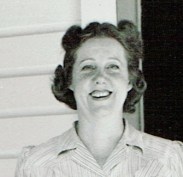
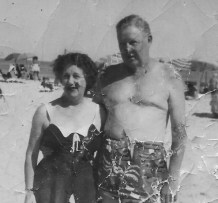 I remember not long after my shock at my grandmother’s assessment of her life, I made a decision, a decision that I now can see has shaped everything I have done even though many times I have been unaware this. I decided I wanted to understand, to know what it was to be a human, to be a woman, to be alive and the only way I could know that was being my own laboratory rat, was observing my life, was becoming a conscious being living a conscious life in the deepest sense of the word.
 country and from language to language. And every step of the way has been worth whatever I have known of pain and suffering, of joy and serenity, of turmoil and peace. I doubt I’ve done it My Way, but I certainly know today the way I have done it for all 74 years.
 dangers of living an unexamined life. She was, without a doubt, my second mother, because thanks to her example I have lived what would seem to be the opposite of her experience: a life I never could have imagined even in my wildest dreams.
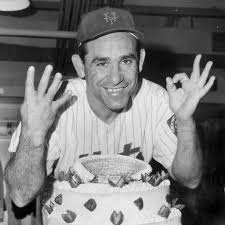 The other day I sent my son some quotes –some very funny ones- that I had just discovered were things said by Yogi Berra, the baseball player. My son wrote back: You mean Yogi Bear, don’t you? My son is in his 50s (and that sounds horrible because it puts me 20-some years ahead of him). I wrote back and explained that, no, I did not mean Yogi Bear. He had never heard of Yogi Berra.
 Yogi Bear made his television debut in 1958; Yogi Berra had made his baseball debut in 1946, and by the time the cartoon character hit the screens, the baseball player was a household name. That would
  explain why people in my generation (born in the United States) would have heard of Yogi Berra. According to Wikipedia, Berra sued Bear (Hanna-Barbera Cartoons) for defamation, but Bear cried coincidence and Berra ended up dropping the suit. As Berra quipped afterwards: “Half the lies they tell about me aren’t true”, to which Bear would have answered: “I’m smarter than the av-er-age bear!” just so people would know who had won that argument.
 Another coincidence, as long as we are on that theme (that is where we are, isn’t it?): both Yogis, Berra and Bear, lived in Parks. Berra lived in baseball parks and Bear lived in ‘Jellystone Park’. So if one day in the 60s you happened to be in the USofA and you said offhand to someone: I’m going to the park to see Yogi, you’d have no idea what image ran through the other’s head!
 Just how far the Generation Gap can go was proven in September of last year when the Associated Press reported the death of Hanna-Barbera’s animated character, Yogi Bear who, they went on to comment, ‘was also a Hall-Of-Fame catcher with the Yankees’. The headline reads
 Yogi Berra once said: “If you don’t know where you are going, you’ll end up someplace else”, and I guess he knew what he was talking about because today everyone thinks he still lives in Jellystone Park and he didn’t even know he was playing there.

 after a few false starts, I came to a dead stop and haven’t been able to write anything since. I seemed to have lost the way to Inspiration.
 pretended for a while that a fork in the road is nothing but that: just a fork in the road. Still there was no going forward.
 Well, I guess not, because in spite of the walks and in spite of doing exercise three times a week with my personal trainer, in spite of my morning coffee with friends and my progress in speaking French, in spite of reading through volumes 1 and 2 of the Century trilogy by Ken Follet (in hopes of finding inspiration)and beating the computer’s best player at Scrabble I was not happy.
 quote from Yogi Berra. It said, in no uncertain terms: “IF YOU COME TO A FORK IN THE ROAD, TAKE IT,” and I was blown away. During the two days it has taken me to finish the series and decide to go cold-turkey on not starting another one; in the 48 hours it has taken me to limit my game-playing to early morning wake-up hours and just before bed finishing-the-day time, the phrase has repeated
  10 zillion times in my brain: “If you come to a fork in the road, take it”. So that is exactly what I have done!
 Twenty-four years ago today I woke in the morning and my first thought was: ‘I’d rather be dead’. Then, I remembered what had happened the night before. This was the miracle. It was the very beginning of a new life; I didn’t know it then, but I had just been reborn.
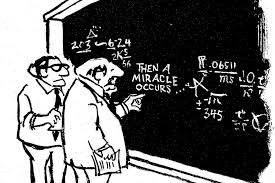 Why do I say that the miracle was remembering the horror show of the previous evening? Because, given all my past experiences, I shouldn’t have: I had had a blackout.
 had gone out. But the lights do not go out, not for you or for anyone else; the movie continues being projected, but the memory screen in your mind does not receive the images. This may happen
  while you are sipping your umpteenth cocktail before dinner or just as the dessert is placed in front of you on the table. At that moment, whatever it is that, in your brain, receives the movie so it may project it back for you the following morning, shuts down, blacks out, so to say. But you continue functioning as if nothing had happened; you are not aware that the receiver of memory has shut down. You finish your dessert, you converse or fight with someone, you thank your hostess and leave as if you were fresh as a daisy and then you insist on driving home because it is clear that your husband has had too much to drink.
 The following morning you remember that last instant, say, when they put the dessert in front of you and then nothing, absolutely nothing, until the moment you wake up; there is a black hole in your personal history which you will never fill, a stretch of time during which a chapter in the story of your life is omitted. You have no idea who you fought with, how you managed to drive home, if anyone noticed. There was not one morning after a blackout that I did not awake terrified of asking what I had done the previous evening. Sometimes it was terrible; sometimes –surprisingly enough- no one had even noticed that I was drunk. But even on those luckier occasions, the horror of having a black hole in one’s existence is no less. I had long since given up the hope of ever recovering even a second of that lost time.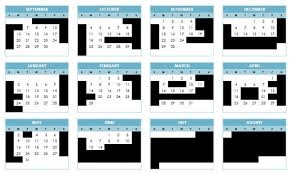
 Around 3a.m., for reasons I will never be able to explain, I suddenly snapped out of the blackout and saw myself. I was standing on one side of our king-size bed, glass in hand, vomiting insults expressed in the vilest language possible from my mouth. My husband stood on the other side of the bed and I will never forget the pained look of despair on his face as he reached for the gun he kept under the mattress. I ran from the room, locked myself in the bedroom that had been my son’s when he lived with us, and went to sleep.








 cake, that’s selfish of you.” “You never think of anyone else… you’re so selfish.”
 cafeteria (which meant, market for the coffee service, make sure everything was washed up and put away after each meeting and serve coffee to newcomers). Somehow, this sounded just like what I had done during all the years of my marriage and finally, I balked.
 men and that the program had been made for men based on a religion that was basically paternalistic. Men, with women taking care of them, beginning with Mother, then Wife, then Daughter, had developed quite an ego. Women, I believed then, had not developed an “ego” (at least, I thought that I hadn’t), we had not learned to say: I, I, I, me, me, me. So I set about developing my own ego (I was 50, mind you) which in my mind was: learning how to be selfish.
 whatever you want. What I discovered was that I didn’t even know what my wants and desires, my likes and dislikes were. I didn’t have the habit of asking myself anything! I was accustomed to ask other people: Where do you want to go? What movie do you want to see? What would you like to eat? But… ah yes, there was a big BUT… I expected other people to think of me first, know instinctively what I wanted, and choose for me. Now if that’s not a Lose-Lose proposal, I’ve never seen one! Fastlane to frustration!
 What movie were you thinking of?
 After about a week or so during which I really checked with myself every time there was a choice, I discovered that I did have likes and dislikes and that some of them were very definite. I also found that when I knew what I wanted it wasn’t so hard to get it for myself or to convince the other to give it to me. I also found that when I had satisfied myself with what I had chosen one time, it was easier and felt better letting the other person have what they wanted the next.
 when the whim hit me; watched the movies I enjoyed, left the room and went to read a book elsewhere if I didn’t… I was unflinchingly selfish in every possible way, determined to grow a good (male) ego before facing the inevitable chore of undoing it.
 versa).
 prerogative. Being responsible for my wants and likes and giving them to myself whenever possible, also opened me to the unexpected pleasure of being unselfish whenever I felt like it, something that suddenly was much more frequent than before.
 I stood for a moment looking into his eyes and then a very wide smile crept over my face.
 In the spring of 1616, William Shakespeare died. He was 52 years old. Although most of his work had already been published in editions of questionable quality, it wasn’t until 1623 that two of his friends and fellow actors finally published a more definitive text called the First Folio. In the preface, Shakespeare was hailed as “not of an age, but for all time”. Today, his complete works are free on Internet and few of us have not been touched by Shakespeare; I for one have so often been amazed at the depth of his knowledge of the human mind and heart as to be convinced that after William, there is nothing new under the sun. So many things that modern psychology has allowed us to see, he already knew. I recently quoted him in relation to my work with the method of Byron Katie: “There is nothing either good or bad, but thinking makes it so” (Hamlet, Act II, Scene II) and his phrases have become so commonplace that we no longer remember they came from him. “It’s Greek to me”, “In my mind’s eye”, “Can one desire too much of a good thing”, “Forever and a day”, “But love is blind”, “The world’s mine oyster”, “As good luck would have it”, “He will give the devil his due”, “I’ll not budge an inch”, “I have not slept a wink”, “Out of the jaws of death”, “The game is up” and so forth. Shakespeare is so much a part of our everyday language that it is hard to believe anyone could find fault with him, yet the Puritans did along with theater as a whole. The Puritans, it seems could find fault with almost anything that was entertaining, exciting or just downright distracting except –that is- sex… as long as it was practiced within marriage (and with your partner, of course).
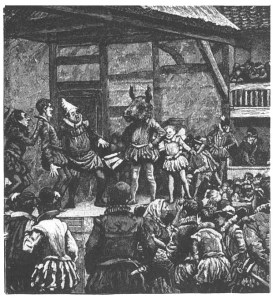 In part, the problem was that the theater had grown out of a tradition of enacting religious dramas that was popular amongst Catholics so for the Puritans, who rejected every physical representation of the Divine, it would be suspect from the very beginning. Theaters, public houses, halls where music was played and dancing encouraged were all places that invited vice, drunkenness, gambling and prostitution. Above all, they implied having fun, and fun was considered a dire distraction from the building of a better and more moral society, the only worthy goal here on Earth. Preachers complained that their flock could sit through a couple of hours of theatre and then fall asleep during a one hour sermon. Actors were to be “taken as rogues”, and plays were described as being ‘sucked out of the Devil’s teats, to nourish us in idolatry, heathenry and sin’.
 Puritans, and therefore Elizabeth, were brought up reading the Bible, not Shakespeare; she would have been instructed to take every word of the sacred book literally, never doubting that there were snakes in Paradise as surely as there were in Hadleigh. She was shown to avoid wearing colorful clothing or using adornments of any kind –even buttons- which were considered expressions of self-pride, a dreadful sin in itself. She wasn’t allowed to dance, heaven forbid! and the only music to be heard was in church. If she had ever questioned these Spartan rules, which is very doubtful, her father surely would have explained that these earthy occupations excited the imagination and sometimes the body and could do no good for a young woman entering her adulthood. Elizabeth might have thought that having her imagination excited sounded rather… exciting and that her parents seemed to have a peculiar dread of young girls enjoying themselves. Could it possibly be true that all that seemed delightfully enticing was no more than “a waste of time that spent the soul in frivolous pursuits” as her father, no doubt, had emphatically pointed out.
 In 1620, Elizabeth turned 18. On the 6th of September of that year, the Mayflower sailed for the New World with 102 passengers and 30 more between officers and crew, but probably no one in Hadleigh heard about it or cared for that matter. It may seem strange for us to think today that such a signal event could be totally ignored at the time but that is how history is: we go about our daily lives ignorant of the fact that someone in the future will either make up a story about how important we were or pass us over entirely.
 Elizabeth, apparently in no hurry to wed, sat out the year without a beau. The Mayflower, on the other hand, hurried to its destination arriving around the middle of November after a gruelling journey. They had been lucky: only two passengers had died during the crossing. They were not, however, to fare as well during their first winter which turned out to be an extremely harsh one. Obliged to sit it out aboard the ship, the 100 surviving passengers found themselves decimated by disease; a combination of pneumonia, scurvy and tuberculosis left only 54 passengers and 15 crew members to
 disembark the following spring. Those are numbers; they sound dire, but they don’t tell us anything about the families that made the voyage, about the mothers that watched their children die and could do nothing about it, of the children who lost their parents, of the men who stood helpless as their wives succumbed to disease or starvation. Numbers don’t speak of pain or sacrifice; they are just finger-counts of tragedy. And even more sad, the names of those that died were not remembered as the new settlers founded the future Nation.
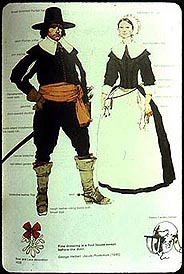 It must have been sometime between the end of 1623 and the beginning of 1624 when Elizabeth Smyth met Samuel Smyth from Whatfield, a somewhat smaller village lying some two miles north of Hadleigh. If these two young lovers had lived in Spain where children kept both parents names, their offspring would have been Smyth and Smyth, and heaven forbid any of them should also have married a Smith of whom there were myriads, much to the dismay of future genealogists. Fortunately, they lived in England, so Miss Elizabeth Smyth became Mrs Elizabeth Smyth without even having to change her signature.
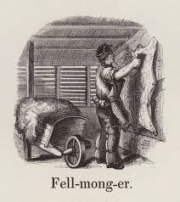 Samuel Smyth, like his father before him, was a fellmonger, a dealer in hides and sheepskins which he prepared for tanning. Exactly when Elizabeth began to notice him, or him her is not known at all and much less for sure. They might have seen each other in the Hadleigh marketplace or in church, or strolling along High Street, and perhaps Samuel, after seeing la belle Elizabeth spoke to his father who in turn would speak to Elizabeth’s father who in turn would speak to his wife who would in turn speak to her, or the other way around, but what is known for certain, without the smallest doubt and absolutely, is that by May of 1624 they knew each other quite well. I will refrain from wondering if this levity
  of morals was passed down through the generations for I consider that each generation is responsible for its own, shall we say, de-generation.
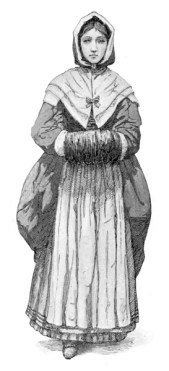 “full”, so to speak, in order to cover any untimely fullness there might be underneath. However that may be, in Elizabeth’s case appearances were kept, at least until the following year when little Samuel was born on February 7th, just four months after the ceremony.
 Yet all was not conjugal bliss and family; there was “double, double toil and trouble,” in more than just Shakespeare’s Macbeth, as the Century of the General Crisis became each year more worthy of its name.
 Meet my Best Friend and my own True Love. She is someone (or something) that has been with me from the moment of my conception and will continue with me until dust do us part. She is less than a heartbeat away and nearer than the breath that joins us. She has been there during every single experience, both conscious and unconscious, and she lets me know the instant anything goes wrong (when a finger gets too close to the fire or a toe meets a table leg, or my mind is conjuring up a terrifying nightmare).
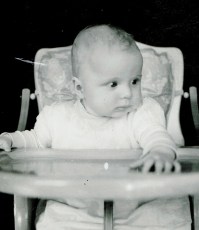 le should look like, and soon –if not already- she will begin the opposite process until once more becoming minuscule and disappearing. I know that you’ve guessed by now that I am talking about My Body. Hmmm, is it mine? Perhaps, in the sense that a rented car is ‘mine’ as long as I have the use of it and then goes back to being agency property when I am through. Therefore, it is my ‘Best Friend and own True Love’
 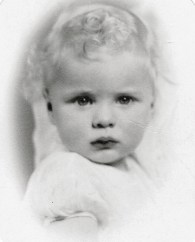 on loan.
 (and was made to wash her own sheets); she wet the beds in every hotel she stayed in and even in her grandmother’s house when we slept over. My Body turned 7 and 8 and 9 and 10 and continued wetting the bed. We moved to Mexico and turned 11 and she still insisted on emptying her bladder as soon as deep sleep moved in.
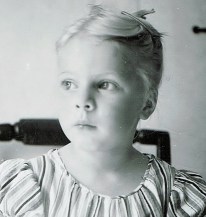 an alarm clock that would wake the dead, and a set of instructions of how to plug the whole thing into the lights in the room. That night My Body was introduced to its executioner. Of course, by that time she had been peeing in bed almost every night for about 5 years and I didn’t think there was anything that could stop her. We were both in for a surprise.
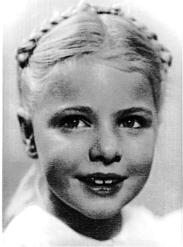 gave My Body an electric shock that sprang her out of sleep and convinced her that if she continued in that direction she would be electrocuted; it set off the alarm that woke my parents in another bedroom and probably the neighbors, and all the lights in the room went on.
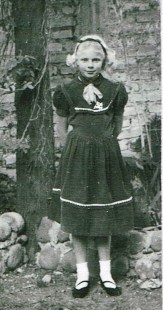 However, five years at the mercy of My Body’s shameless behavior had taught me not only a total mistrust of the traitor, but also that I was completely powerless over her: she was going to do what she was going to do whether I liked it or not. That meant future endless torture especially in my teen years: an oversized bottom half with an undersized top endowment; pimples always in very visible places and right when there was a big dance or party to be attended; a frame made for a taller woman thanks to one leg that insisted on growing faster and had to be stopped; a nose that in boarding school earned me the
 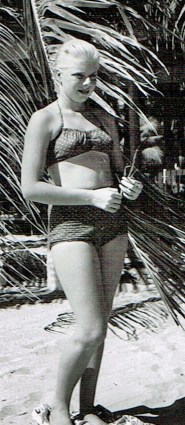 nickname of Dome; a mother that was to me the most beautiful and perfect woman ever created; and a grandmother that said “round eyes, round nose, round face” every time she looked at me and, when I was 18, suggested I have my nose fixed (by that time I was arrogant enough to respond: “It gives me personality” and not do it).
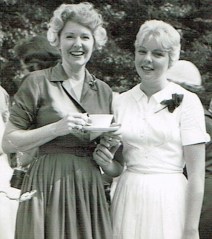 where that led me and I am not going into it again!
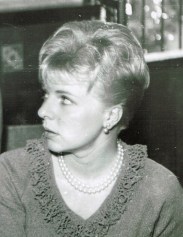 realized that if I didn’t start appreciating the beauty that she did have, instead of thinking she should have a different kind of
 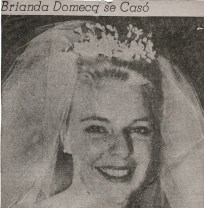 beauty, more like her mother’s for instance, I would some day in the future look back and realize how attractive I had been at that moment. It was then I knew that I had to accept My Body for what it was and make the best of it.
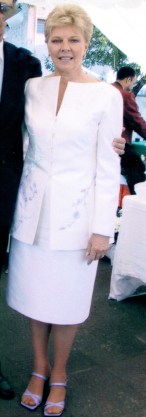 helpfulness, honesty, kindness, etc. And every day I would stand in my dressing-room contemplating the pictures of My Body and finding her more and more acceptable. I did not, however, love her.
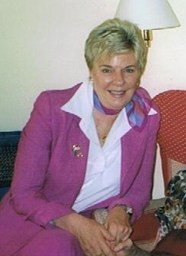 treat My Body at least half as lovingly as I treated my dog’s body. How could I love her body and not mine, when her body never even looked for mine unless she wanted something, and mine had been at my beck and call every second of every day since the beginning of my time? I understood the injustice I had committed and I looked down at My Body for the first time with tenderness, the same kind of tenderness that Salomé’s body had awakened in me.
 flows over me that I smile and hug My Body, and tell her that she’s doing fine, that we’re doing just fine.
 Writing a life