Two things: I haven’t been writing and it has been raining almost non-stop for more weeks than I care to count. Yes, we get a sunny day in-between weeks of rain and everyone rushes out and basks in the sunshine with faces of just having won the grand prize. We all walk through town smiling at each other as we pass and I find myself saying to everyone “What a beautiful day!” (in French, of course). To which most people feel obliged to respond: “Yes, but it is going to rain tomorrow again.” I wonder why… it’s like raining on your own parade.
As I said: I haven’t been writing, and I have been reading. At least that is a good thing. Strangely enough, I ended up reading two books about radical Islam back to back: The Looming Tower (by Lawrence Wright) and The Girl Who Beat ISIS (by Farida Khalaf co-authored by Andrea C. Hoffman). It was an interesting encounter because the demise of Al-Qaeda foreseen at the end of the first book (which is about the 50 years of radical Islam leading up to 9/11) seems to have led to the rise of ISIS viewed in the second book. Looming has been made into a television series and I can see why it would make a magnificent one; the book was fascinating and –in spite of all the unpronounceable names, foreign places and shifting loyalties- made for spellbound reading from start to finish. I had often asked –both myself and the people who attended my workshops- what the pilots of the planes that hit the towers must have had to believe in order to commit that act: the book made that very clear. It was a most interesting fact to see how these mostly young men not only believed that everyone who does not adhere to radical Islam as they see it is an infidel (and often that included their own family members), but also that to die while killing said infidels assured one martyrdom. What Wright found and made clear through his book is that these young terrorists go out to kill –yes- but much more than that to be killed. Martyrdom is their ultimate goal for it brings uncountable benefits to the martyr and to over 70 members of his family. Several times in the book, the author reflects the frustration of leaders of diverse groups who have not been allowed (by Allah) to obtain martyrdom. I finally understood the motivation of the pilots and could see that –in the end- it was as selfish and ego-bound as most human motivations. After all, it is I–the martyr who will live forever in Paradise with all those virgins and be worshipped unconditionally by my family for the spiritual benefits that I have provided.
(The day has gotten so dark that even though it is noon I have the lights on.) In his book, Wright skirts judgment for the most part and just presents the facts as he has researched them. This means that we get to view these young men living out their beliefs without the label of ‘terrorists’, just as we get to see the members of the CIA or the FBI without the label of ‘heroes’: just people, believing what they believe.
Of course, one believes what one believes and this is neither good nor bad. Have you ever tried not believing what you believe? As long as I believe that I want it to stop raining when it doesn’t, I’ll feel frustration every time I look out the window. If I don’t believe that thought or its opposite… if I don’t believe any thought, I will just gaze out the window and notice that it is either raining or not. But the whole matter is very difficult because I believe that what I believe is good, and that what the terrorists believe is bad and that gets a whole set of emotions going. Wright’s book is outstanding in that he allows you to see what every character is believing (and that includes not only the terrorists, but also all the players on the American side who fumbled the ball, so to say, between the different government agencies and thus made 9/11 possible) as they all move inexorably towards the tragic end. This is deep Greek drama: we get to see fate at play through the beliefs held by the different parts. I’ll say no more, but highly suggest reading the book rather than, or at least before, seeing the series.
The second book is the complete opposite: it is the personal tale of a 19-year-old Yazidi girl, Farida (not her real name), taken prisoner along with others by ISIS. The story is told in first person by the young woman who –along with several others- is imprisoned, routinely raped, brutally beaten and sold off several times to different ‘owners’ until she and a few others manage to escape. Here the good beliefs of the Yazidi girls are contrasted with the bad beliefs of the members of ISIS and several times in the course of narration, Farida asks how it is possible that the men who own, rape and beat her can believe that their God condones this. And yet, Farida herself also believes blindly in the dictates of her religion which says that God, after creating the world, placed it under the guardianship of 7 angels, whose chief is known as Melek Taus, the Peacock Angel. Interestingly enough, Melek Taus –who as world ruler causes both good and bad to befall individuals- has once fallen temporarily from God’s favor before his remorse reconciled him with the Deity. In other words, Melek Taus is ‘a fallen angel’ or Satan for the fervent Muslims who follow ISIS and consider the Yazidis ‘Devil worshippers’; they also surely must ask themselves how the Yazidis can believe such things.
Byron Katie calls this believing ‘the I-Know mind’, and invites us to question it and set ourselves free. The ‘I-Know mind’ does not apply only to formal religion, however, but to every thought which we believe. If I believe my daughter should phone me and she doesn’t, I might feel frustration or disappointment. Then, if I call her instead, my emotions will go into ‘attack mode’ and I will accuse her of ‘never calling me’. If she feels attacked, she’ll defend herself by attacking me back (‘you refuse to understand how busy I am’), and we have a war. If I find out that my best friend voted for Trump and I believe that Trump voters are all idiots, I just lost a best friend even if I don’t say anything. What I believe becomes ‘my religion’ in the moment I believe it and –unless I question it- it rules my life as surely as radical Islam rules the lives of the young men who die for it. Both books make this very clear.
The ‘I-Know mind’ is an absolute dictator: nothing can penetrate it; to go against it is like beating your head on a concrete wall and expecting the wall to give way. Believe me: I know! I have one, it decides ‘this is good, this is bad’, ‘this is beautiful, this is ugly’, this should not be, this should be’, ‘he must, she mustn’t’. It never stops, judging, deciding, choosing; making war against, allying with. My ‘I-Know mind’ does this all day long; it’s its job.
Fortunately, in 2003, I learned 4 questions that set me free when I use them to question my beliefs (see: www.thework.com), the first of which I now call my ‘Heart-question’. It has taken many years for the ‘I-Know mind’ to, little by little, fall in love with the ‘Heart-question’ Is that true? Now they live together hand in hand. When the I-Know mind states absolutely ‘She shouldn’t do that!’, the body stiffens; then its loving Heart whispers: “Is that true” and the body softens, looks again and smiles.
So my recent literary journey into the extremes of the I-Know mind has made me appreciate even more than before the power of these four simple questions. And if it is to books we must turn, rather than continuing along with the ego-centered Descartes’ “I think therefore I am” which has placed our frail human reason on a dangerous throne, we might choose to go back to Socrates’ simple “I only know that I know nothing”… except perhaps that the rain continues.

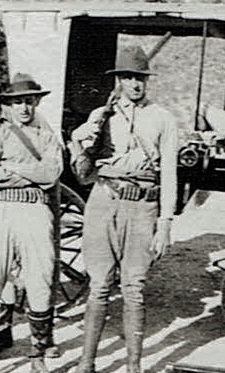 First some background. My father was a hunter (the picture on the left depicts him at 18, in Spain, 1920) and, as such, owned a good amount of shotguns which he kept under lock and key in a gun cabinet. Everything I know about guns I learned from him. Even as a child I was taught that you never, EVER, point a gun –even a toy gun, even a water pistol- directly at another person. When I asked my father why he didn’t buy himself a pistol, he said that he had shotguns because they were for hunting; pistols, and most other weapons were for shooting people and he had long ago decided that he never wanted to kill any other human being (he had done his military service during the Rif war in Africa and, from what I have read about it, there were atrocities committed on both sides); that –according to him- was the reason he had not gone back to Spain when the Civil War broke out for he would have been expected –as a member of the Spanish nobility- to lead troops into battle.
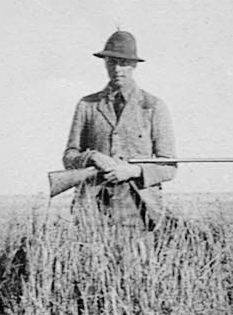 hunting, in Acapulco, out at the Lagoon of ‘Tres Palos’ (Three Sticks) where we stood, at the break of dawn, up to the knees in swamp water, hidden by the marsh grasses, waiting for the ducks to fly over. I remember feeling very important to have been included in the hunting expedition (my mother had preferred to stay home in bed and was happy to have me as a stand-in) although I don’t know if I shot any duck on that first time. Neither do I remember how often I went with my father. Actually I only have two clear memories of these experiences: the first, feeling things crawling up my legs from the swampy water (and discovering later that it was nothing more than the air bubbles from my sneakers) and the time I shot and wounded a duck. The poor animal dropped to the water well within my reach and I could see it fluttering helplessly. From watching my father, I knew that it was my obligation to wring the creature’s neck in order to end the suffering I myself had caused it. So I waded out to where the bird lay and took it gently by the head with my right hand. Then, trying not to look into its eyes which were still open and alive and attempting to kill it without causing it harm, I gave it a couple of soft swirls. I can still feel today the warmth of its body, the life still present there. I was heartbroken, I hated myself and I just wanted the damn bird to die so I could stop suffering myself. It did not oblige under the gentleness of my feeble attempts. So after three half-hearted swings and seeing that the duck was still flapping around suffering, I could stand it no longer. I plunged the feathery body into the water and put my heavy cartridge box on top of it so that it finally drowned to death. I realized in that moment that I was not capable of killing an animal and I have never been hunting since.
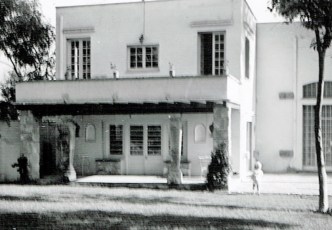 However, the incident that taught me the truth about guns took place a year of two later. Our house in Mexico City –as most of the houses there- had a flat roof where we hung the laundry and had a storeroom. Late one night, after we had all gone to bed, my father heard footsteps on the roof and realized that someone had managed to climb up there and was walking around. As my mother told the story later, my father grabbed a broomstick and went up to the roof to face the invader. She was laughing and my father was right there eating breakfast so it was obvious the story had a good ending, but I was shocked.
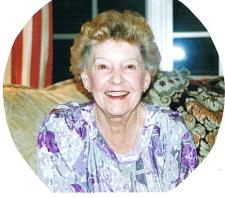 Funny how some moments stick in one’s mind forever. I was just making myself a salad for lunch and every time I make a salad I remember my mother. Not all of her, just one precise incident, one small moment in time. It must have been in the ‘60s, we were at my parent’s weekend house in Valle de Bravo –a small lakeside town in the wooded hills of the State of Mexico about three hours’ drive from Mexico City- and they had invited a Norwegian couple with whom they had been friends (and neighbors) for years: Ella and Ivar. My mother set about preparing dinner and Ella offered to help (I was in the living room talking to my father, I think). Suddenly my mother stomped out of the kitchen; she was livid, her thin face all screwed up into a grimace, her boney hands tightened into little fists.
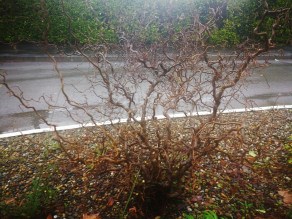
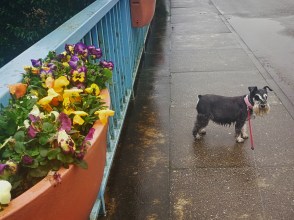 provoked a very early spring.
 month, during which the sun pushed its way through the clouds for at least two hours and no rain fell. But before and after that it has been one storm front after another, accompanied most times by strong winds that uproot trees from water-logged soil, topple lamp-posts, and strew the streets with dead leaves and branches. Even the roosters and hens are
  water-logged.
 week) and I just sighted several printemps (the definite spring flower) peeping out under the bushes in a flower bed and even a lonely violet. And the temperature, apart from seldom going below 9ºC, pushes up to 13º, 14º and 15ºC during the day even without the help of sunlight. It seems that if we had sun, we would have summer already! And then there are some who deny the problem of climate change (won’t mention any names because of
  that F-in-M disease which could catch up with me next time I want to visit my son in Los Angeles).
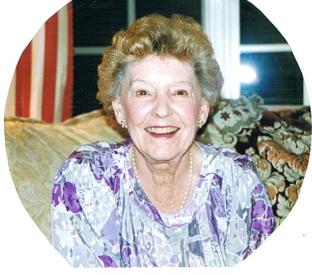 –doubly so, because my husband couldn’t understand what I was so angry about- said a couple of nasty things in a loud voice and stomped off to the bedroom. The thought was: ‘How can she be so cruel’, obviously to me. That scene alone sufficed for years to prove to me how unloving my mother was which, of course, was one of the reasons I was so messed up.
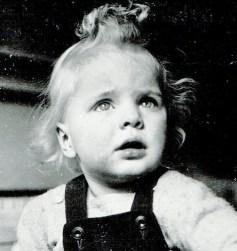 realized I had done the best I knew how to do with the information I had at the moment and that now, with new information, I would hopefully not repeat the mistake. Slate wiped clean.
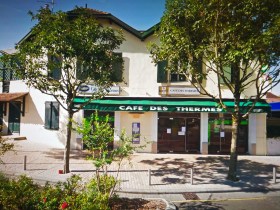 As far as the group went, there was only one person (whom I will call our local Drama Queen because she is always in a state of righteous anger about something somewhere she has found wrong) in the Café and I walked over to say hello. Before I could reach her, she swung around on her barstool and told me she was furious with me because I had fought with the other member of the group and therefore she –the person I had fought with- wouldn’t be coming to the coffee group any more as long as I was there, and therefore the Drama Queen would never see her again. I politely, but firmly, set the story right (I did not fight with her, I made a mistake and she was apparently hurt by it) and told her not to worry, that it would be me quitting the group so the other friend could come. I realized, in that moment, that I had made a decision.
 Strangely, as I walked home, the thought of not going to the café every morning for coffee didn’t weigh me down; on the contrary, I felt lighter. Inside, there was a conviction that the Universe never closes a door without opening a window, and all of a sudden I began looking forward to what might come next. Yes, during the afternoon, I had a couple of down-thoughts (I won’t have the group to buy presents for when I travel any more, and there will be no birthday celebration for me on the 1st of August this year) and a slight feeling of loss swept through my chest thinking of the friend who will not forgive, but on the whole I felt pretty good. During the afternoon, I wrote to the coffee group and explained the situation without going into details, and announced that I would be retiring from the group out of respect for the ‘injured’ party who had been there long before me.
 This morning I went to another café (where the coffee is slightly more expensive but much, much better) and had a jolly conversation with a woman who was visiting from a nearby village (in French!). Then at noon, I met the Artist lady and her friends, spent a delightful two hours and had a delicious lunch. C’est la vie, what to do, that’s life!
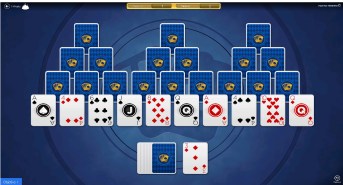 posterity! Like: “Oh, you remember Brianda? She was an A-1 Solitaire player, beat the computer every time! Incredible” or even in the present: “Hi, how is that fantastic game of solitaire going? Still winning? You must come and give us a conference sometime on how you do it. Everyone will be so thrilled. Have you ever considered giving a TED talk?” No, not exactly what playing solitaire gets you, although I do win an uncountable amount of imaginary coins.
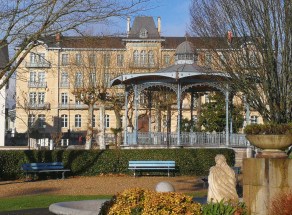 And it is obvious that the FB page I started (A GRAIN of SAND) was to be noticed and applauded as the initiator of a world-changing movement (¡Ha!) with millions of followers placing their grain of sand for the betterment of the planet. Sometimes I make myself sick of myself (yes, the repetition is on purpose)! Just yesterday, when I took my morning walk, the world was so absolutely perfect that I could find not one thing do-able to ‘improve’ it. However, I must admit that looking for something to do in that sense made me really appreciate the beauty of the morning washed clean by the night’s rain and sparkling as I had not seen for more than a week.
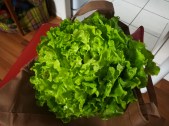 head of lettuce from the Saturday market. Then, as if this were not enough to make my day, I stopped to chat with an acquaintance who was tending to her flowering red camellia. We exchanged a few platitudes about Nature’s confusion what with the weather seeming like spring when winter was still upon us, and she handed me –over the fence- two lovely camellia buds that she had obviously picked for her own living room. So, admittedly, the world had just made me a better place.
 So the dream is speaking to me, it is telling me to stop and look and answer the question… or perhaps to ask other questions such as: ‘I need to know what I want… is that true?’ Or, as Byron Katie would say, ‘What I want is what is’… How do I know that? Because that is what is… Sometimes I feel like saying: ‘Shut-up, Katie!’
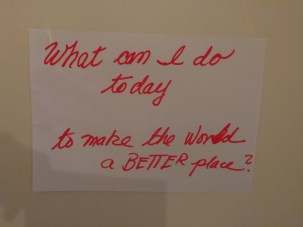 letters, and pin it on my door to remind me as I leave the apartment that I have a debt with existence and that I can actually do something about it. How do I know it was arrogance? Because immediately after placing said sign in the designated place, I went to Facebook and found a video progressively describing, first the planets, then the stars, then the galaxies, and finally the infinite universes in the MULTIVERSE, which brought tears to my eyes and led me to ‘share’ it under the heading:
  message and leave well enough alone? You know damn well I didn’t! No! Actually, I completely ignored the message -which in no uncertain terms showed me my actual importance- and began to feel all puffed up and proud of my act of generosity in wanting to do my part in making the world a better place, Me… Yes, the same me.
 or whatever it’s called, button; I thought up a name (A GRAIN of SAND) without imagining that there probably were umpteen pages with that same name and similar purposes already on Facebook; I looked for a photograph of a beach and cut it down to size for the page; and I wrote out what seemed to me to be a purpose (do small acts that better the world and record them on the page). Then I happily ticked off everyone on my “friends” list and asked them to like and join the page. There was a ‘rush’, a ripple of excitement and self-importance as I pushed the fleeting thought of a million followers to the back of my mind (it interfered with my assumed humility) and saw the world being transformed because of my one simple inspiration.
 grain of sand’. It sounded so presumptuous! Then I remembered I had picked up some empty beer cans that somebody –probably a group of young men out on the town which in Salies is not very exciting- had left on the lawn of a nearby nursing home, so I noted that down, but instead of the expected feel-good (me… look what I did!!!), I experienced the act as useless. After all, there was undoubtedly someone in charge of the green areas around the nursing home as the grass was cut and the bushes trimmed, so I was just doing what someone else would do when he or she came around. Lamely, I added that my grain of sand that day included smiling at everyone I passed on the street on my way to coffee in the morning. That cinched it. By that time, I was feeling miserable, lower than low. After all, I can smile at people because I have the advantage of living in a small town; if I did that in a big city, like Madrid or Paris, I would probably be considered looney rather than ‘kind’ or plain indecent. I know: I’ve tried it.
 This morning I realized that the only way to make the world a better place today was to take care of myself, so I let myself have a little cry hugging me tightly all the while, finally smiled at my innocence, told myself that the silly FB page would do no one any harm, not even me and set off for my morning coffee with faithful Salomé who –in her dog world- does not suffer from these insane flights of ego (up and down, always up and then down). On the way, what did I see but a little grain of sand for me to add to the world’s beach: the wind –which has continued to blow all day- had swept the black garbage bag
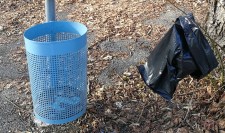 out of one of the town’s blue waste baskets (light blue is the Béarnaise color and shows up in most of the public fixtures) where I was about to place the poo-bag I had used to clean up after Salomé. I placed the poo-bag on the ground, picked up the black plastic garbage bag –which was empty- and replaced it in the light blue waste basket;
 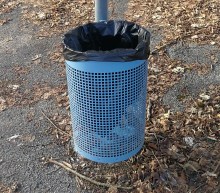 then I put the poo-bag inside to weigh it down.
 Writing a life