EATING DOG

There is a joke that goes something like this: «Two Indians from a dog-eating tribe arrive in New York and suddenly one says HOTDOGto the other: ‘Look, hot dogs! Let’s have one’, so they go over to the hotdog stand and order two. When they receive their buns, one Indian opens his up and looks at it. Then he turns to his companion and asks: ‘What part of dog you got?’»

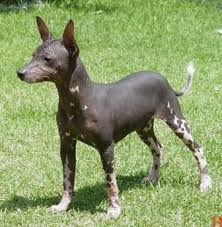
untitledDid such a ‘dog-eating tribe’ ever exist? Yes. Maybe not in what is today the United States, but in Mexico the Aztecs even bred special, vegetable-eating, toothless, hairless dogs for the purpose of eating them. They are called escuincles and they exist today as a very prized breed of house pet.

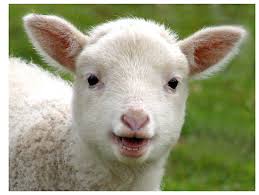
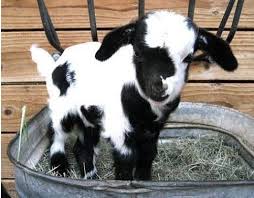
The other day a dear friend sent me an irate protest letter against the Dog-Eating Festival in China asking that I sign it in order to stop this barbarous act. I didn’t sign it. I couldn’t sign it in good faith and, believe me, I love dogs and anyone who reads this blog knows that. I, personally, have never eaten Dog, nor do I expect to in this lifetime, but I am not a vegetarian or a vegan; I am omnivorous and I eat Cow and Sheep and Goat and Chicken and Fish in moderate quantities without batting an coweyelid. And three of these things I eat in their tender, sweet, baby form as Veal, Lamb and Baby Goat. I have also eaten Deer (what could be more adorable!) and probably, unknowingly, at some point eaten Horse as I now live in a country where it is sold in the marketplace because there are people who prefer it to Cow. I have also eaten Baby Eels lambwhen they weren’t so expensive, Manta Ray (recently in a restaurant), Iguana (in a food fair in Mexico), Snake and tasted fried Grasshoppers (once, in Oaxaca, Mexico), Ant’s Eggs (called escamoles and considered a delicacy in Mexico today, along with Maguey Worms which I have not tasted). There is also a town in Mexico where they eat live beetles called ‘jumiles’ or ‘chumiles’ (in English ‘stink bugs’) wrapped in a tortilla and the trick is to get them all into your mouth before they crawl out of the tortilla onto your cheek (they’re fast little critters!) And if you consult Google, you will find that Insects in general, have been eaten the world over for millennium and that they have a very high protein content, are low in calories and very ecological to breed and farm. To each his own. So, as I said: I am omnivorous even though at this time meat makes up less than a fourth of my diet.goat

So, if I can eat these really adorable animals, why should I criticize the Chinese for eating Dog? I can’t do that. I would have to join a campaign against Cow, Sheep and Goat eaters and, of course, those terrible people who eat Chicken (according to a friend of mine, whose chickens are part of the family and receive better treatment and more love than my dog!).

One of the convincing arguments for not eating meat (and it is very convincing!) is that we were never meant to be carnivores and our bodies are not equipped to digest any form of meat. (Here is the link to the article http://www.celestialhealing.net/physicalveg3.htm). As I said, it is very convincing, and yes herbivores like those mentioned in the article (cows, goats, gorillas, elephants, rhinoceroses), are neither scrawny nor unhealthy, but they consume their vegetables raw along with a large amount of very protein-rich BUGS. So the chickenfact that many mainly vegetarian or indigenous cultures eat Insect is not strange at all.

One thing stands out in our carnivorous history and that is that we don’t seem to favor eating other carnivores, but rather stick to herbivores. That is Nature’s rule, carnivore eats herbivore. Even the Nahuas or Aztecs bred toothless vegetarian dogs to eat. So, the habit of the Chinese of eating ‘normal’ carnivorous dogs goes against the natural (Carnivore eats herbivore) grain of things to say the least.

The same aforementioned article claims that vegetarians are healthier and live longer. I have no proof of that. I know quite a few vegetarians and some vegans and those that are around my age seem to have the same as or more physical complaints than I do (and that’s not hard seeing as I have very, very few at this moment… knock on wood). Yes, they do seem slimmer on the whole and I notice that they eat A MUCH SMALLER amount of food than I do in general, so I am not sure if the slimness is due to amount or kind.

On the other hand, they seem to suffer a lot more stress around food matters than I do; they are sometimes very worried deerabout what they put in their mouths or where they eat, what kind of food they buy and what ingredients went into every dish. I do not stress over what I eat: I love ALL food (possible explanation for why I struggle with my weight). Nevertheless, I am accustomed to avoiding carbs and/or not combining even ‘good’ carbs with animal protein. This doesn’t make me better, but it does make me happier and less stressed out, because carbs (any kind of carbs, even the good carbs like quinoa, lentils or chickpeas) awaken a compulsiveness that makes me insatiable, so I shy away from them.

I also can understand how difficult it is to be a vegetarian in a meat-eating world, I have a similar experience being a non-drinker in a world that thinks alcohol and fun/enjoyment are inseparable. Just as a vegetarian might not enjoy going to a coctailsbarbecue, I shy away from cocktail parties (I hated them anyway, even when I drank). So I can understand a vegetarian’s frustration when the menu in a restaurant includes no dishes without meat or meat products, and I sympathize.

Maybe the principal reason why I do not become a vegetarian, in spite of the fact that I am a COWARDLY CARNIVORE (if I had to kill the animal myself I would give up meat immediately) is that I am lazy, I do not like to cook for myself so I eat out every day. If I had a vegetarian at home who would cook for me, I would probably eat vegetarian. When I have gone on retreats (spiritual) I have often enjoyed the vegetarian diet immensely (and gained weight). C’est la vie! I will continue for now to be a Cowardly Carnivore and just try to not talk about it in front of my vegetarian friends (out of respect for their house pets, especially their chickens). One thing is for sure: I would feel the same way about someone eating my dog, as my friend feels about anyone eating her chickens!

THOUGHTS AND THINKING

DESCARTES           Around about 300 odd years ago, the Frenchman René Descartes discovered what for him was the final proof of our existence as humans: “I think, therefore I am” was his conclusion, with which Thought was raised to the status of God, Reason became Almighty.  When I was an adolescent I remember regarding thinking as the ultimate instrument to achieve one’s goals and being fascinated, mostly, with my own mental processes which at that time produced mainly judgements of others (read, my parents especially my mother), unreachable fantasies and unreasonable (I can see now) fears. It also produced stories, which is probably why I became a writer. What stories the picture below might have evoked when I was young!20150510_153644

I was taught, heard or just simply imagined and came to believe that thinking was what distinguished me from animals and made me human. Thinking and the images and language it is formed by is what gave me and my species the possibility of crawling out of our caves and building sprawling metropolises, of studying the stars and understanding the Universe, of communicating complex realities to others of my kind; thinking led to art and war, to literature and murder, to music and the incredible human capability for destruction, to religions and slavery, to charity and abuse. But I truly believed it was what made us human and if we could just control it, we would be like God.

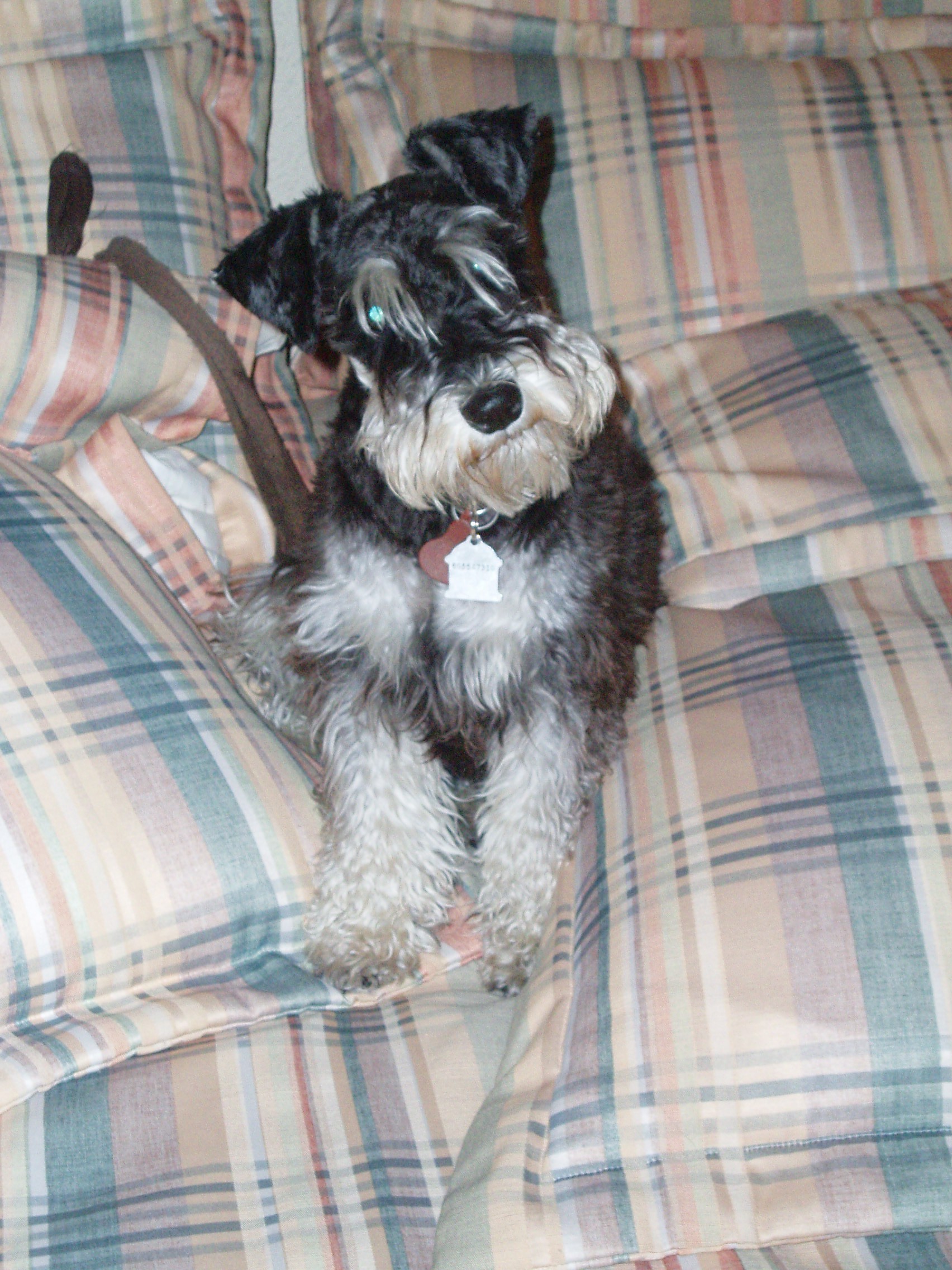
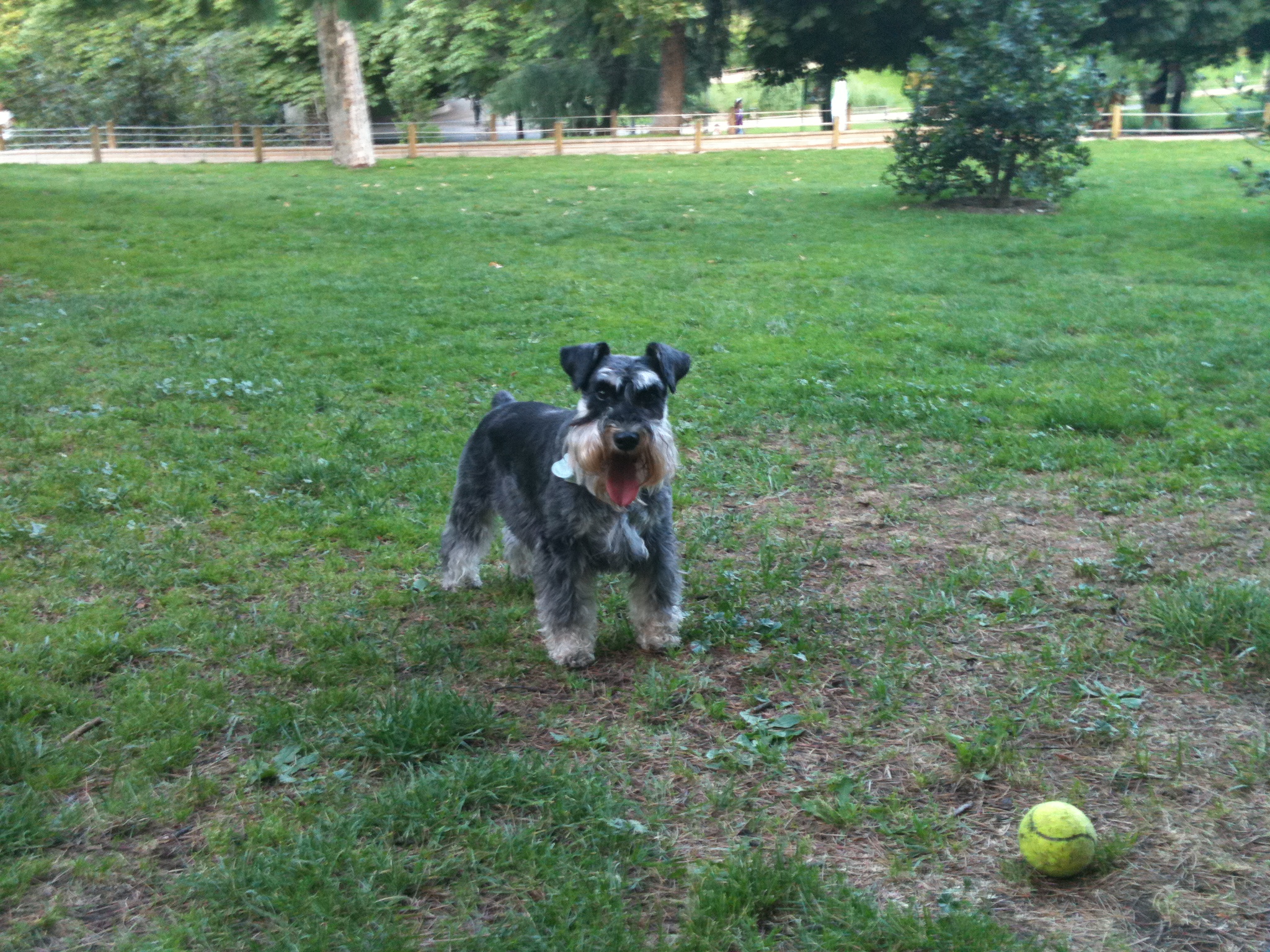
Today, I have learned differently: we are not alone in the animal world to think. Dogs think. Salomé thinks. I have watched her in the process, seen the results and realized many things about reason that I have ignored most of my life. Allow 026me to offer up my proof. Salomé thinks because she dreams; all dogs dream. Anyone who owns a dog has watched them cry and whimper and move their feet while asleep and has thought ‘my dog thinks it’s chasing something’. Their dreams, the same as ours, are based on images, and the body (theirs and ours) reacts to the images the mind is producing with movements and emotions (the whimpering). I do not know whether fruit flies dream, or eagles, but I would bet that elephants and tigers do.

But, Salomé’s thinking goes beyond dreams even though, I must admit, it never comes out as language. However, language is all it is missing: it is thought (images accompanied by bodily sensations and emotions much as dreams are) nonetheless. I have observed her while she is in the process of thinking and as far as I can see her thoughts are motivated by two things: either she wants something or she fears something.

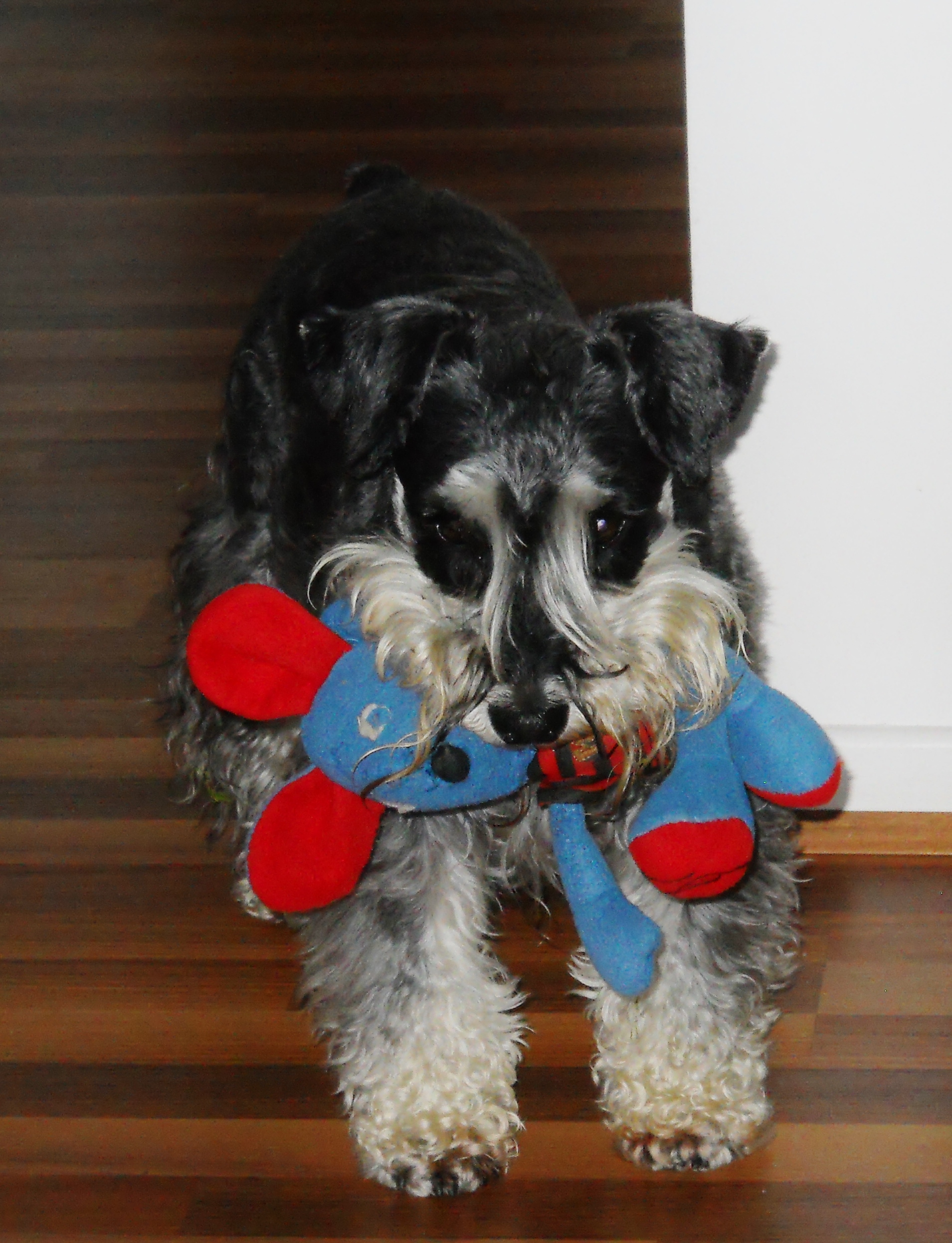
When she wants my attention, she will come to where I am and intensely gaze at me. I will then tell her: “Go get Squeak (her little blue mouse)” or “Bring the sock” or “Look for the ball”. She’ll stand gazing at me for one or two seconds, turn her head in the direction of her toy basket, look down at her feet for a split second more and suddenly get up, trot to the basket and pull out the toy I have asked her for. It is not an ingrained reaction: she has to think about it, turn it over in her mind (the name), find the right image and go get it.2012-2013 Nikon 041

Salomé also has a very good memory. As I drop her off at the hairdresser’s (something she detests), I tell her that when she gets home she will have a “prize”, a “biscuit”. Two hours later, when we come through the door, her all posh and prim, she races for the cupboard where the dog biscuits are kept and sits in front of it until I take out the promised reward. It is not just repeated action for somewhere in her dog-mind she must connect the bath, the promise and the prize over time: this is thought.

Lately, her cognitive capacities seem to have taken on new tasks. Before, when a ball went under the bed or under a chair beyond her reach, she would wait a long time staring in the direction of the desired object until finally barking once (something she never does) to get my attention. Now, I have noticed that the ball goes under the bed or a chair much more frequently, especially when I am busy and have refused her invitation to stop what I am doing and play. Could it be that she is intentionally making the ball inaccessible so that I come to the known summons?

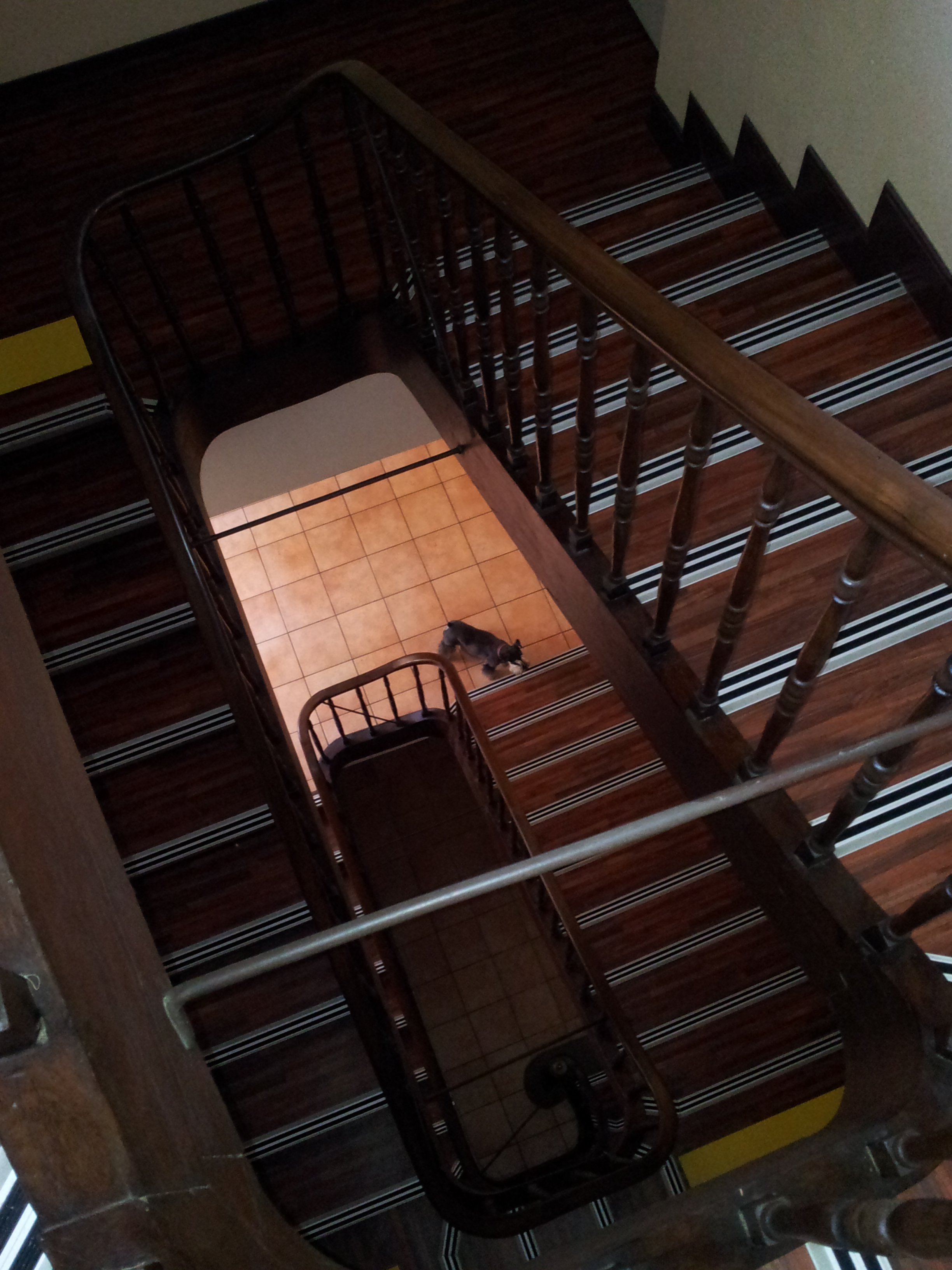
The most interesting of her thought processes, however, is produced by fear. Lately, Salomé has become a fearful dog because she has had two disagreeable experiences, one that could have been fatal. The less important one has to do with the wooden staircases in our building where we have lived without incidence for going on 5 years. However, this year has been extraordinarily abundant in rain and the times that Salomé has had to climb the stairs with wet paws has multiplied out of proportion. Apparently, one or two of those times, her paws slipped as she ran up the stairs and she was near falling; maybe it happened more frequently, I didn’t notice until one day I got to the top of the stairs and realized that she was sitting at the bottom, in front of the first step and looking up at me without budging. I called her. Nothing. I threatened her. Nothing. I went 20150531_151559into the apartment and closed the door loudly. When I came out again she hadn’t moved a muscle. I said the magic word “prize-biscuit” and even that could not get her to put a foot on the steps. So I grabbed a towel, went all the way down the two flights of stairs again, and dried each separate paw carefully. When I was through, I gently urged her up each level of steps and she didn’t once slip. As a matter of fact, as I carry a hand towel in my bag now and dry her feet whenever it rains, she has only slipped when she ‘believes’ she must race up or leap over the last steps precisely to avoid slipping. The stairs, however, continue to present a problem and I must remember to not to race up on my own because I am thinking of something else, but rather to stay with her and urge her gently up one level at a time until reaching the top. It is trying to say the least but when I forget I have to go all the way down again, for there is absolutely nothing that will make her budge no matter how many times she has gone up without slipping. This goes to prove that it is fear above all that glues the experience into our emotional/thought path, and repeats it over and over again even if it never recurs.

The other negative experience came from one day when I was throwing the ball for her across the driveway. A car come zipping in and Salomé disappeared underneath. I screamed so loud, the car stopped. I continued screaming because my mind was flashing pictures of a mashed and bloody Salomé, hurt beyond repair and suffering. Terrified I rushed over, knelt down and extracted her from right next to the front tire. She didn’t have a scratch on her, but nonetheless my mind kept playing over and over the horrid imagined images. To calm myself, I cuddled her in my arms, although all she wanted to do was to continue playing with the ball. Because her reaction had not been immediate, I thought there was none (I thought…) but I was wrong. A few days later, I was throwing the ball once again in the driveway (but from where I could see the entrance so as to catch an incoming car) and she was chasing it, when suddenly I threw it and she sat down and watched it roll away. This happened a few times and I could see she was afraid of running after the ball, but there was no car. I began throwing the ball on the lawn so that the driveway was not involved, and once again, she went for it several times and then suddenly 002 (2)stopped. No car, but she was obviously afraid of something.  After trial and error, I finally got it. It was not the sight of a car that frightened her, but the sound of the motor which, in each case, had been produced not by passing traffic, but by some car coming into an adjoining driveway when there was no noise of traffic on the street outside. When this happened the moment she was about to chase the ball, she stopped dead in her tracks and sat down. It was obvious that she had not seen the car, but had definitely heard it

What I find so fascinating about the thinking caused by fear in Salomé’s case is that no matter how many experiences to the contrary, she has a pattern ingrained by fear that is indelible. To me this explains a lot about the supposed “traumas” humans suffer as infants, and the fact that they can determine behavior during a whole lifetime if not attended by therapy or some other effective method. Take the stairs for example: Salomé slipped once yet every time she faces the climb, her mind repeats the danger as a ‘given’, which makes her body react with fear without the actual slipping being necessary.  If she were a human child, and were not helped over this initial fear (which repeats even if the act does not), she would, upon looking back much later, probably express as: “When I was young I always slipped on the stairs”. A therapist would ask her to remember exactly how many times this had happened and, wouldn’t she be surprised to finally realize it had actually happened only once. I have tried to explain this to Salomé, but alas, the lack of a spoken language prevents me from changing her pattern.

imagesY3EFA4UR     What makes me different from Salomé –and this certainly does not imply better or smarter or anything for that matter- is that as a human trained to not only remember images, sounds, tastes and feels, but also to interpret them using my very special instrument called “language”, I build a story around the images: I think in words. Therefore, when I replay a disagreeable instant such as Salomé disappearing under the moving car, I not only see a mashed and bloody dog, but I also produce a story line: “she’s hurt, she’s suffering, I won’t be able to do anything, it is my fault, I did it wrong, I’m terrible, I made a mistake,”  and with every thought I feel the corresponding emotion of fear, sorrow, powerlessness, guilt, self-loathing, despair and so on, until the complete movie becomes installed in my memory box substituting the reality that Salomé was fine, that nothing happened. Henceforth, I will replay and relive my movie over and over again as if it were reality, while reality itself has escaped me.

If you have any doubt of this, sit quietly with your eyes closed remembering a traumatic moment in your life, notice the images and watch the interpretations arise along with the accompanying emotions exactly as if you were sitting in a movie theater watching a film. Sometimes, the accompanying interpretation is not apparent because the emotion comes so rapidly it is lost, but if I ask myself what my thoughts were at that instant, the mind jumps in and all the interpretations and judgements appear. This is how we construct reality, with dreams and nightmares, products of our imagination that are carved into the DVD of the mind to replay at a moment’s notice when something in reality evokes a past experience. Thus, at every moment, the present isinterpreted by a past that does not exist which in turn is projected into a future that doesn’t exist either.

So here we are, in this giant movie theater called The World, producing the movie of our life and replaying it over and over again, taking scenes from the past and projecting them into the future, with hope (the biscuit) or with fear (the stairs), while this present instant, the only possible reality, slips inexorably by.images5UURRR5N

Perhaps we should invert Descarte’s maximum to read: I am, and therefore I think, and begin to notice how much of our reality actually is made up of nothing but thoughts and how much of our life which takes place in the present we actually miss because we are lost in them.

DICTIONARIES, TYPEWRITERS AND FREEDOM

While growing up, there were only two things I remember wanting more than a chocolate malt from the Dairy Queen: the first was a dictionary, which I asked my grandmother for when I was about 14 and got that very Christmas, and the other was a typewriter, which my father refused to give me until I learned to do handwriting properly. I never really mastered the handwriting commission for even today I switch from tilted to the right, to upright, to tilted to the left with barely a twist of the wrist and sometimes halfway through a note or letter. I tried though… to get the typewriter, I mean, not to write with the perfect Palmer which I knew in my heart would never be half as useful as learning to type. I pleaded, I looked up secondhand typewriter ads, cut them out and left them on my father’s desk; I found the stores that sold them and suggested visiting them instead of going to the movies on a Saturday afternoon, and then I pleaded some more. I guess I must have insisted soooo much, that finally, one Christmas when I was around sixteen, I got a typewriter and I loved my first typewriter just as much as I loved my first dictionary.Websters 2

The dictionary was a Webster’s Collegiate Dictionary in one volume with a greyish-greenish-blueish dustcover, and print one could read without glasses. Of course, at that age I could read any print without glasses.  Now, to read the Webster’s Third New International Dictionary and Seven Language Dictionary in three volumes that I acquired in the ‘80s when I gave the previous one to my son as he left for college, I need my glasses and a magnifying glass. But back then, anything was possible and a book –a Dictionary!- was an object to be treasured.

I can still remember the fascination of opening to any page and reading down the wealth of words appearing, one after another, the length of it, and seeing how each one had such a different and magical meaning: ivy, ivybells, ivyberry, ixodes, ixora, izar, jab, jabali, jabarite, jabber, jabberwocky… ohhh, the Jabberwocky, the discovery that words could be not only in the dictionary but also in one’s most senseless fantasy:

’Twas brillig, and the slithy tovesJabberwocky

Did gyre and gimble in the wabe:         

All mimsy were the borogoves,

And the mome raths outgrabe.

Oh, what magic! Having discovered this, and having fallen hopelessly under the spell of words in print, and as I had no idea that most of the texts I read sprang from handwritten manuscripts  (I would discover that later upon realizing that I couldn’t write directly on the typewriter but had to use a notebook first), I needed the instrument to produce these tiny miracles: a typewriter!

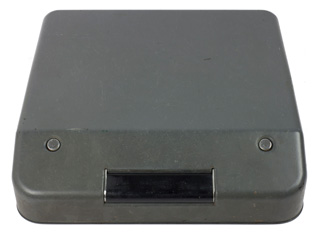
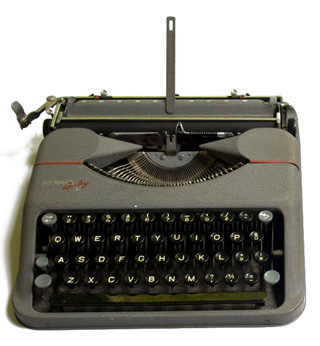
My first typewriter, which appeared the Christmas of 1958 beautifully wrapped, wasn’t very big; as a matter of fact, it was tiny and suited its name to a T: “Hermes Baby” which, according to mytypewriter.com “is the Mini Cooper of typewriters!”, and if you have ever had a Mini Cooper –as I have- you know what that means. Cover to Hermes BabyMytypewriter.com waxes on: “The totally appealing Hermes Baby gained instant success since its introduction and garnered a loyal following among stylish writers of the day. Clean and sporty, it is manufactured with the highest degree of quality, including the precision Swiss engineering that one would expect from a Swiss watch”.

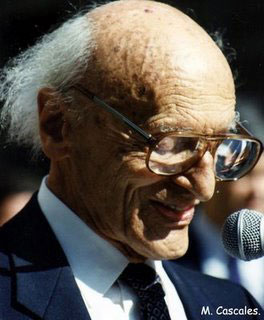
It was a dream of a typewriter. It weighed less than 2 kilos and was easily carried anywhere with its metallic cover: to school, on the train, in the bathroom, to bed, to the dining table, on a picnic… it was an aspiring writer’s dream; when first introduced in 1935 it was said to have become the ‘must have’ typewriter for novelists, celebrities, reporters and journalists. It was sleek and weightless. It was reputed to Hermes baby 2be the typewriter of choice for Ernest Hemingway. What more could a girl want!  I was ecstatic. The Hermes Baby accompanied me and wrote for me right up to the time I finally gave in and bought my first computer around 1990. Even though I had acquired earlier an electric typewriter for my desktop when this became available, the Hermes was my ‘laptop’ and went with me on all my travels. It trudged off to boarding school with me and on it I wrote all the letters to my parents, my grandmother and the usual adolescent boyfriends, and every one of my school papers. My first, and only, very bad poetry was composed with its tiny letters and on it I slavered the long, very gooey missives I’d send to the man who would be my husband. True: it did not make me a well-known, very good or prolific writer, but it was the best of friends for a very long time. Today I have no idea where it went, whether I sold it during one of my get-rid-of-everything-and-move moves, or it just got lost along the path to the future that we all take at every moment. Fortunately now there is Internet, so that the images and the history of this little jewel are well recorded by typewriter-gooks galore and I can become all limp and nostalgic remembering its faithful journeys with me, the things I wrote on it and the time when my friend, Gutierre Tibon (originally Gautier Thiében in Italy before he moved to Mexico and Hispanicized his name), told me he was its inventor. As I discovered today from Internet, he twisted the truth a bit: he was not the inventor –that was a man called Guiseppe Prezioso whose last name in Spanish means ‘precious’ and also ‘beautiful’ both applicable to his invention. But Gutierre was responsible for naming it “The Hermes Baby” and for popularizing it on the US market. Gutierre TibonHe was also a fantastic human being, a prolific writer publishing over 46 volumes of research and essays, a fellow lover of language, and a survivor who lived to the age of 94 accompanied by his then wife, who was over 30 years younger, and I was lucky to call him my friend. But this is material for another piece.

Back to the typewriter and what inspired me to write this piece, jogging my memory and awakening a gentle nostalgia for times past, and a certain admiration for the girl I was. It was an article in Time magazine on a book entitled Spinster written by someone named Kate Bolick. At the top of the page where the article appeared, there was a little blurb, and I quote: “According to Bolick, part of what brought women out of a marriage-and-children mentality was the typewriter, invented in1867”. Upon reading this, I was immediately submerged in the deep waters of reverie to that magical and terribly painful time of adolescence when I dreamed briefly of becoming a writer, when my passionate desires were for a dictionary and a typewriter, for paper and poetry over and above clothes or jewels or frills and fancies, before the marriage-and-children mentality totally enveloped me and I married and had children and attempted to become the perfect housewife and mother. Before all that, there was the dictionary and the typewriter, Webster’s and the Hermes Baby, both swallowed up and temporarily forgotten by the-things-a-girl-is-supposed-to-do. They waited patiently in the background of dinners-for-two and diapers, of supermarket days and children’s first steps, of housework and love-making until I did a radical about-face at 32 that returned me to the University and the wonderful, wonderful world of words.

True, I have not been a prolific writer, but I complain not. I love to have written, and to have loved, to have been a mother and a writer all at once, to have fulfilled my duty to my body and society and also to my spirit and freedom. So there it is, so bright and beautiful, mixed in with the memory of my babies, the grateful remembrance of my Hermes Baby and a Webster’s Dictionary that filled my life with words and let me eventually produce the books I can also proudly call ‘my children’.

EPILOGUE TO “WEEDS”

20150326_112344

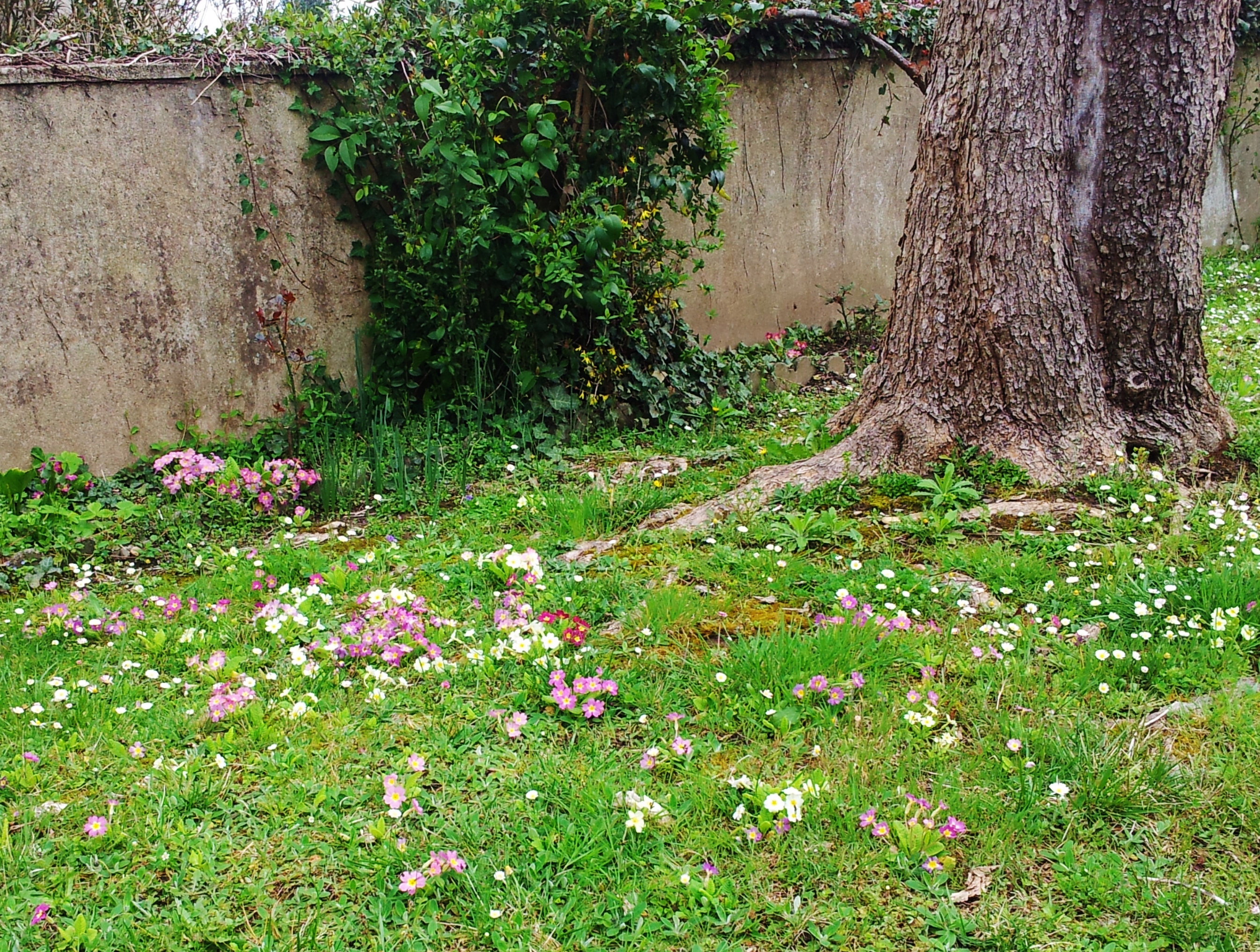
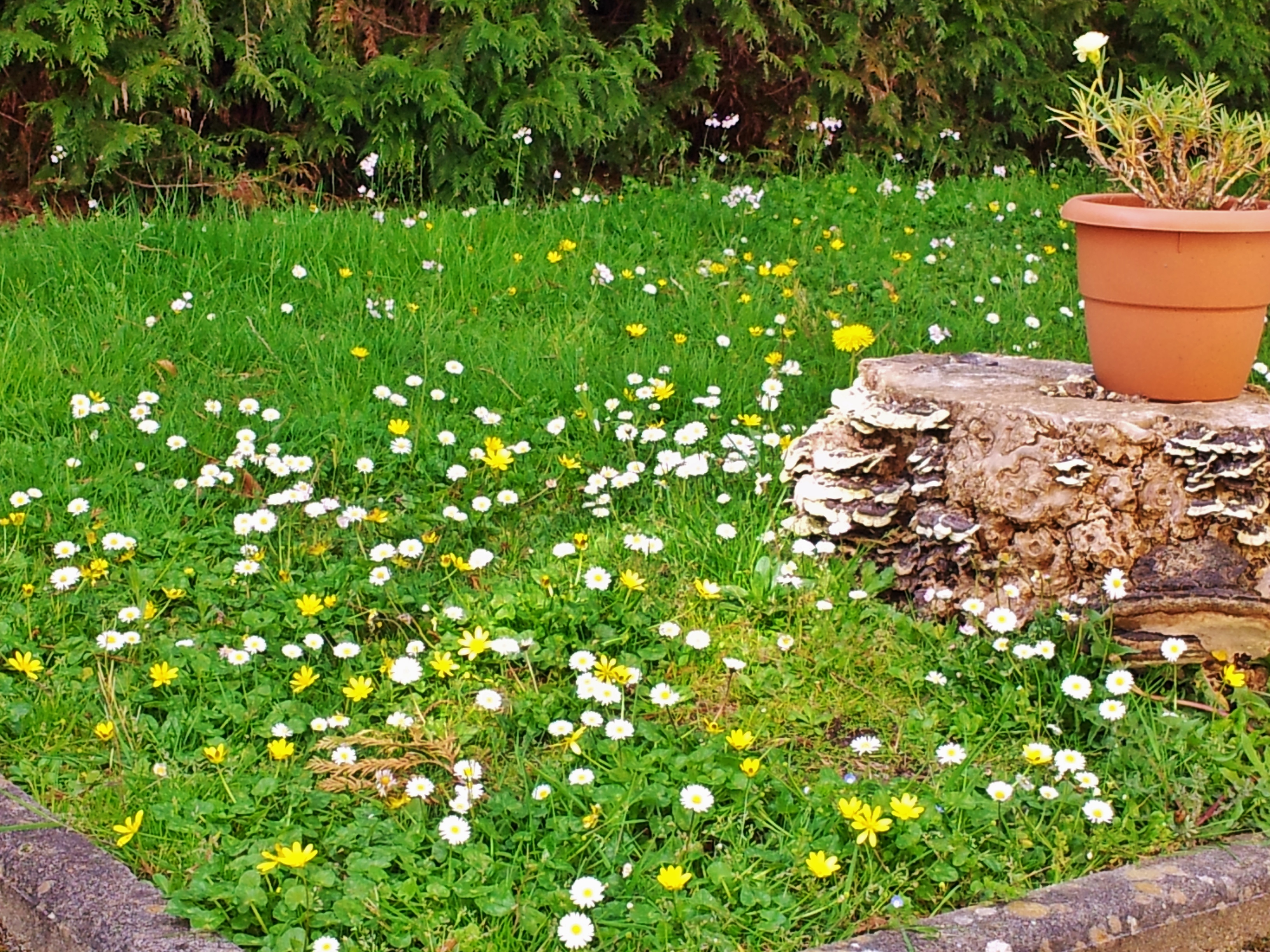
I just couldn’t resist, as I passed a friend’s garden, taking more photos and adding them to the previous Blog. THIS IS WHAT A FRENCH LAWN LOOKS LIKE IN SPRING! The little white daisy-like flowers are paquerettes, called thus because they come around Paques (Easter), and the multicolored are primaveres because they are a symbol of the season and the tiny little yellow one, whose name I ignore, looks a bit like a small buttercup, those flowers that as young girls we used to hold under someone’s chin to see if they were jealous (if one could see the yellow reflection on the other person’s skin then they were.

20150326_112406

WEEDS

20150307_140051

The following story was either told to me or I read it somewhere: “God is sitting on his favorite cloud with his Angel helper and happens to drift over the Los Angeles area of California. Looking down he is puzzled: ‘Tell me, Angel, what happened to all that biodiversity I created?’  The Angel shakes his head: ‘They called it weeds and pulled it out to plant grass.’

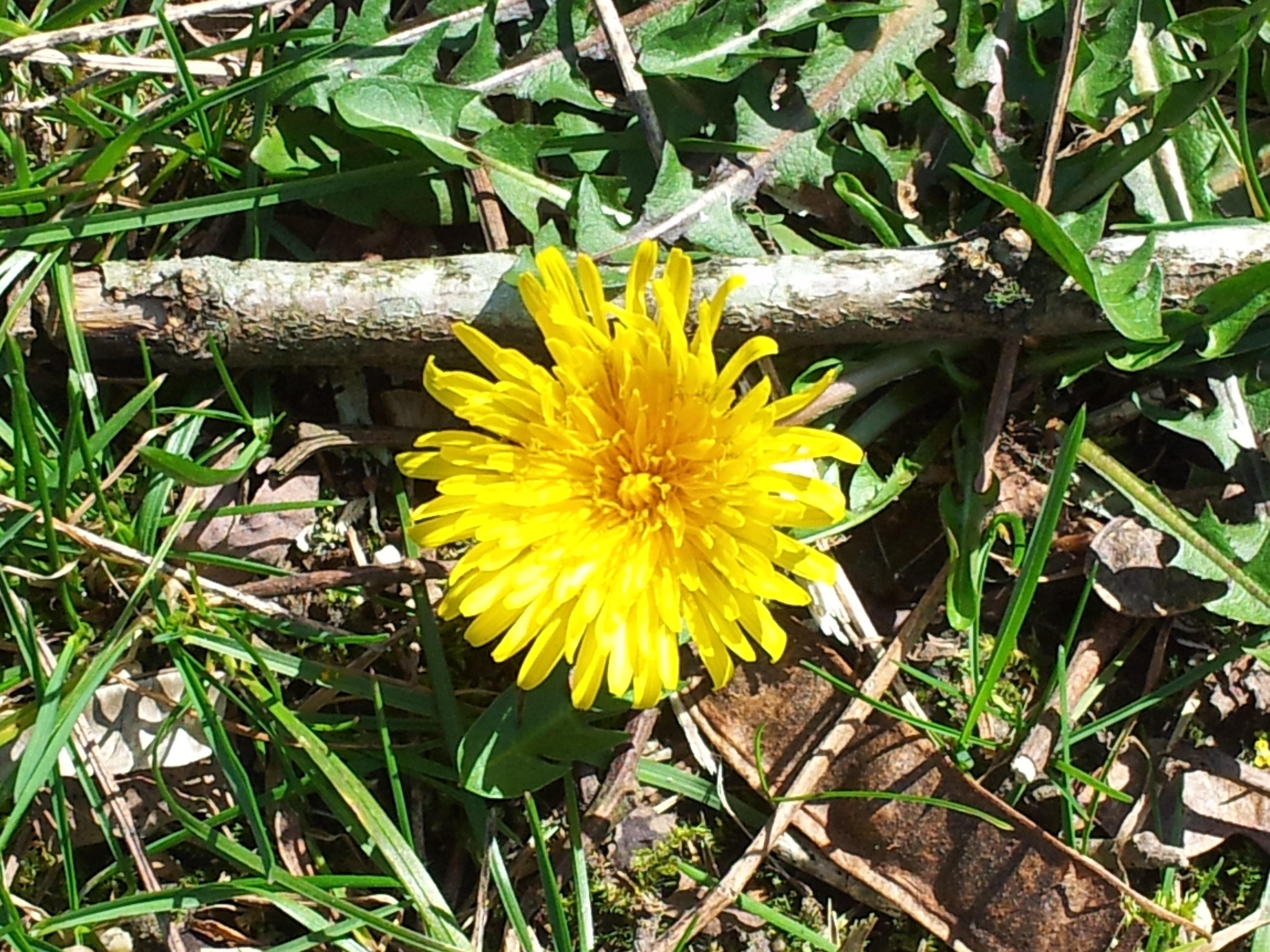
I remembered this tale while noticing the other day that lawns in this part of France are bursting with biodiversity; sometimes what they have the 20140316_145036least of is grass. There are tiny daisies called paquerettes, dandelions galore, and all other sorts of interesting plants that make up the green of the French lawn. The lawn is mowed the same as happens in California and, when not viewed close up, looks pretty much like any grass lawn: what is hauled away are leaves, stalks of grass and decapitated dandelions and paquerettes. The French term for “weed” is mauvaise herbe, only applied to a plant which is harmful to crops: I do not think that the dainty flowers decorating our French lawns at the first20150321_134930 sign of spring would be considered harmful to anything.

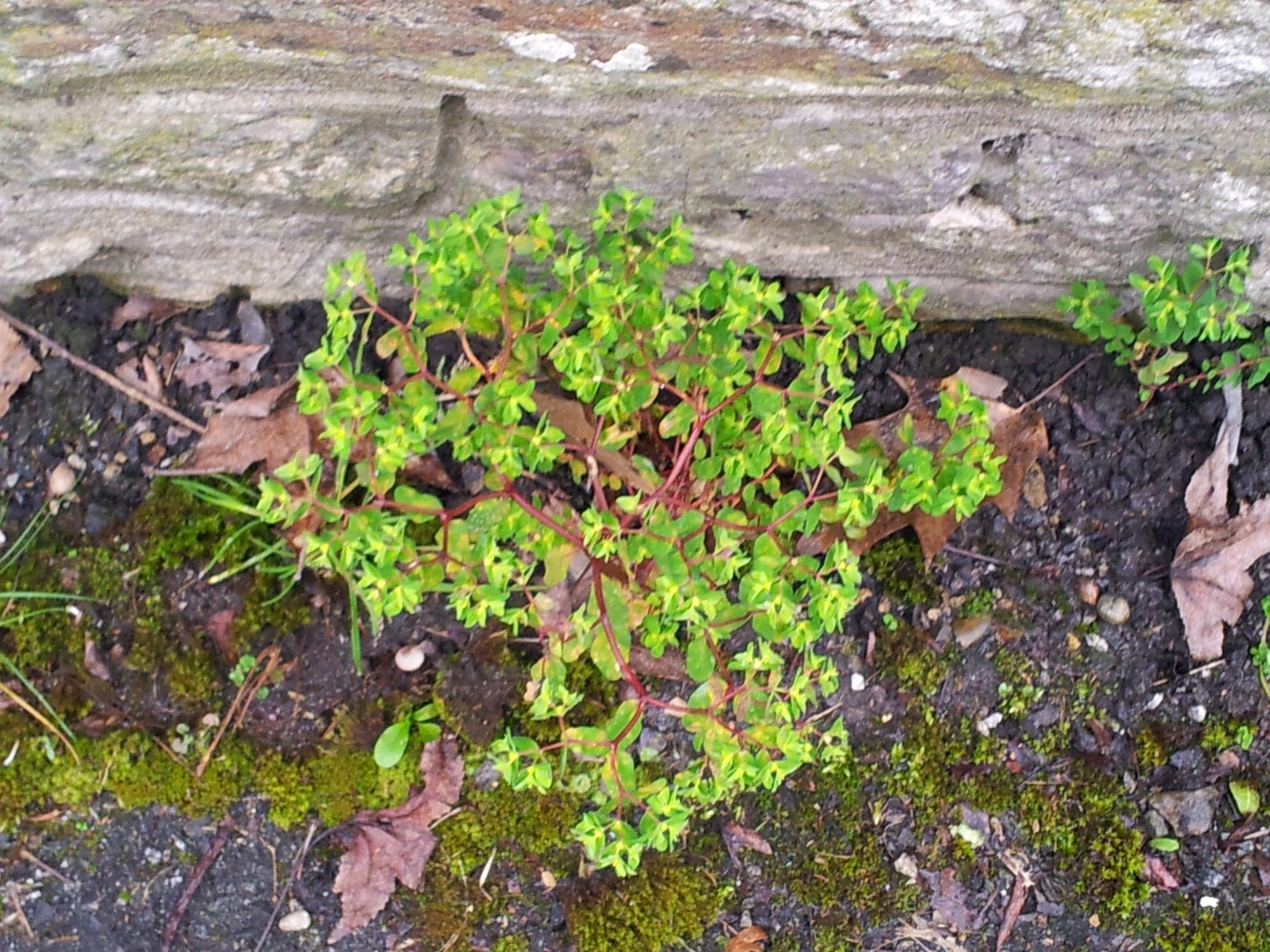
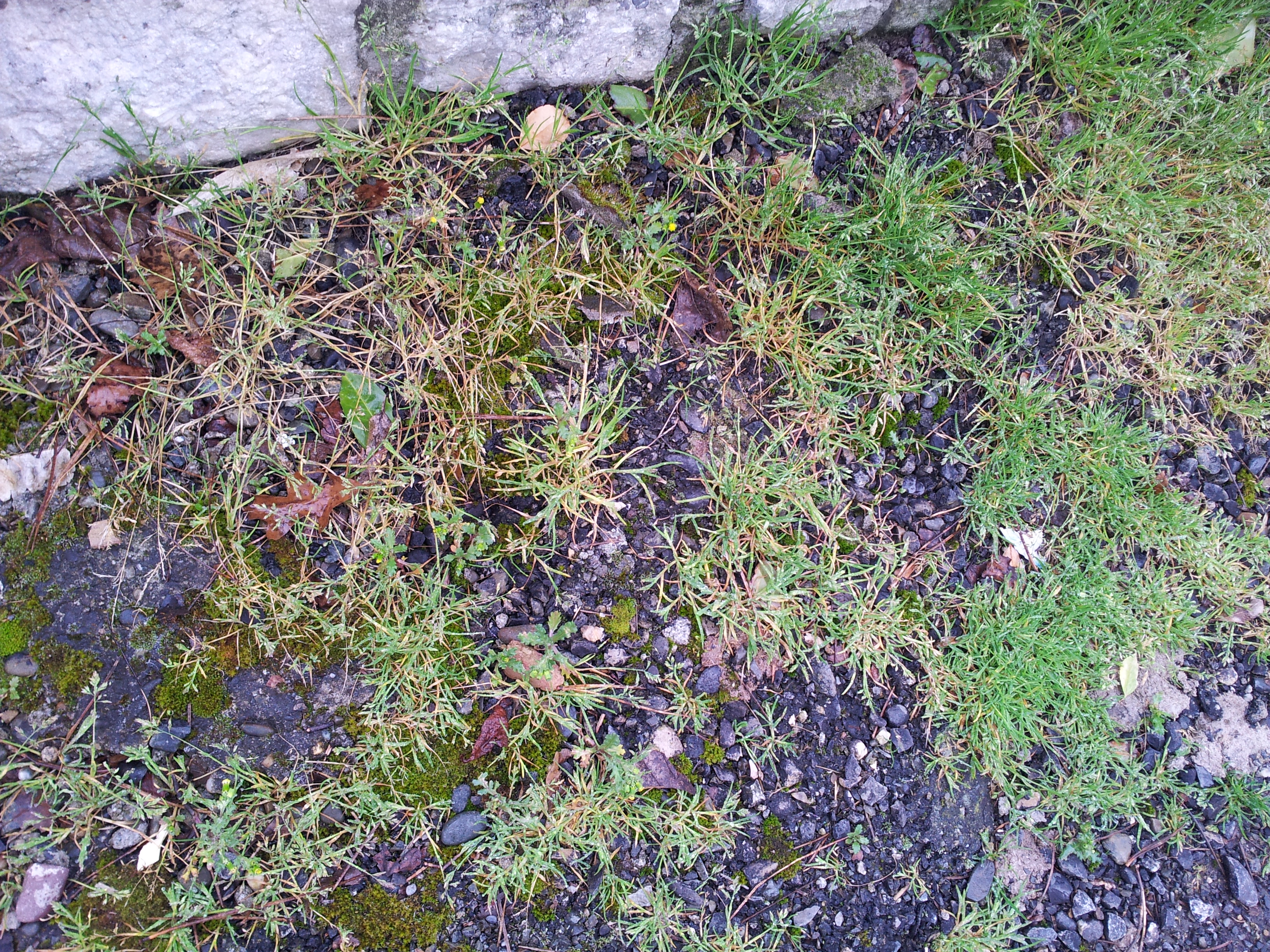
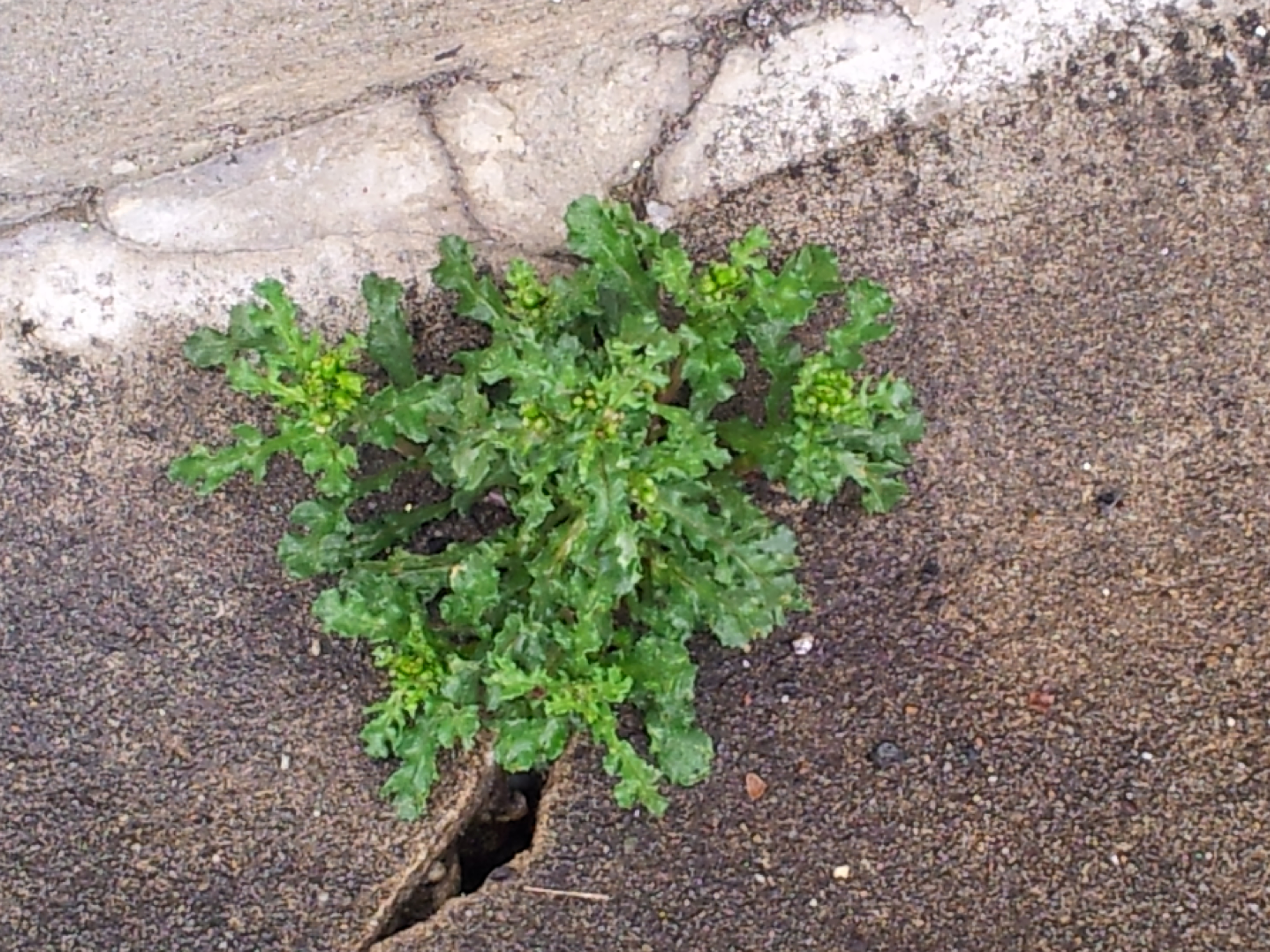
As a matter of fact, if one begins to observe closely while walking to and from the village, weeds are everywhere decorating every available nook and cranny. The pavement has a crack? It is immediately bedecked with a weed of some sort, occasionally accompanied by a much less attractive sprout of grass and a bit of garbage, like a cigarette filter.

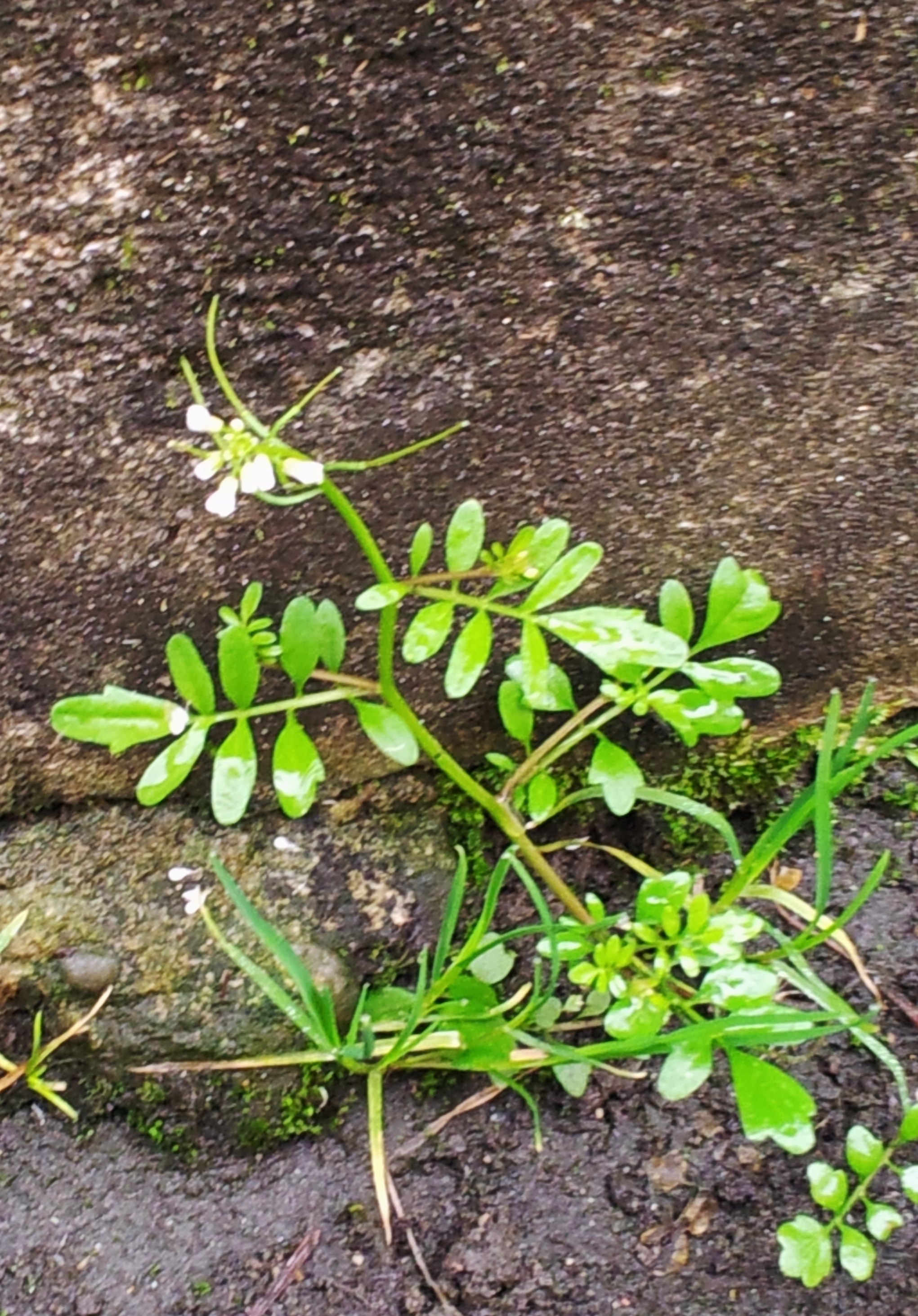
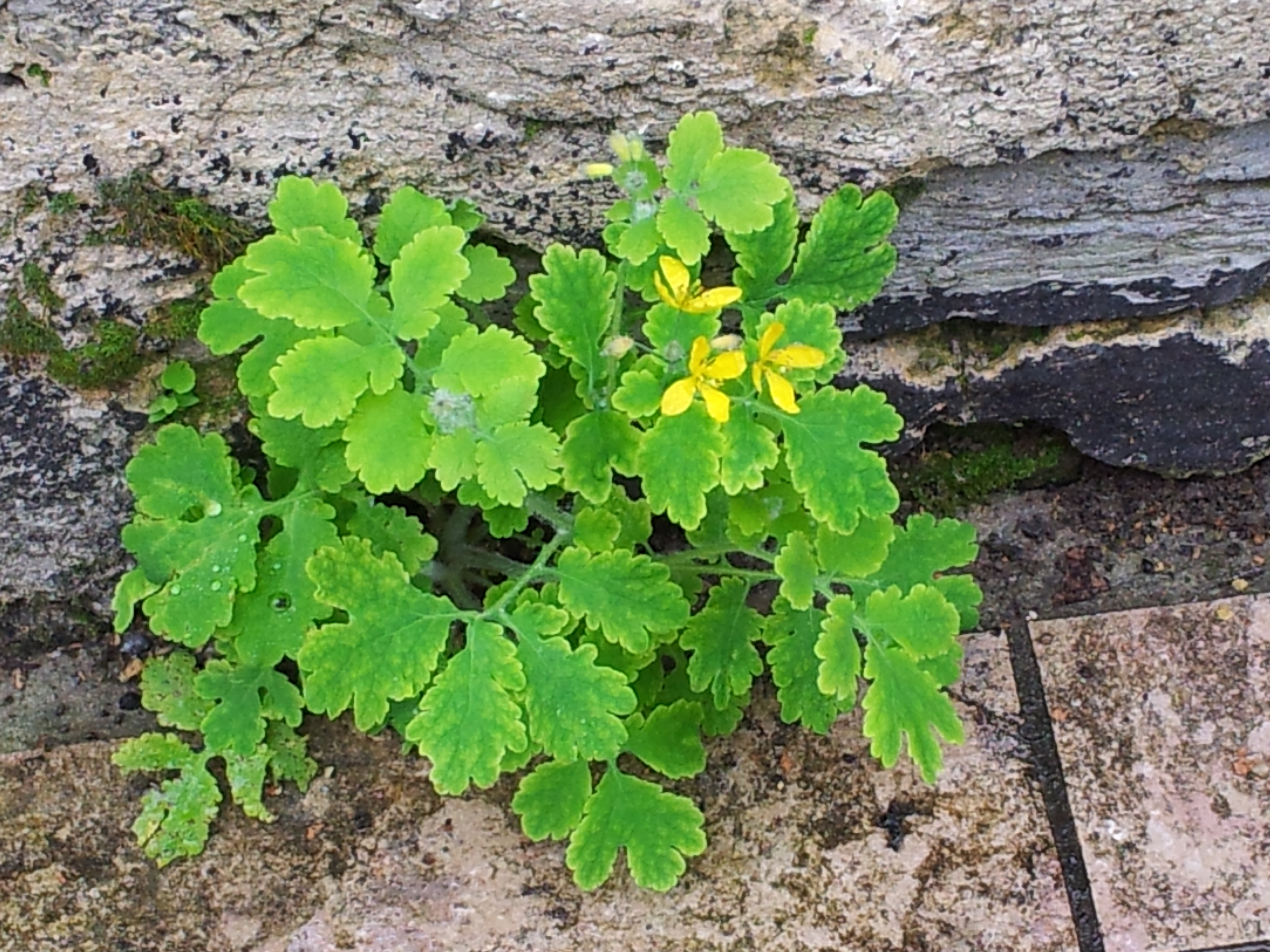
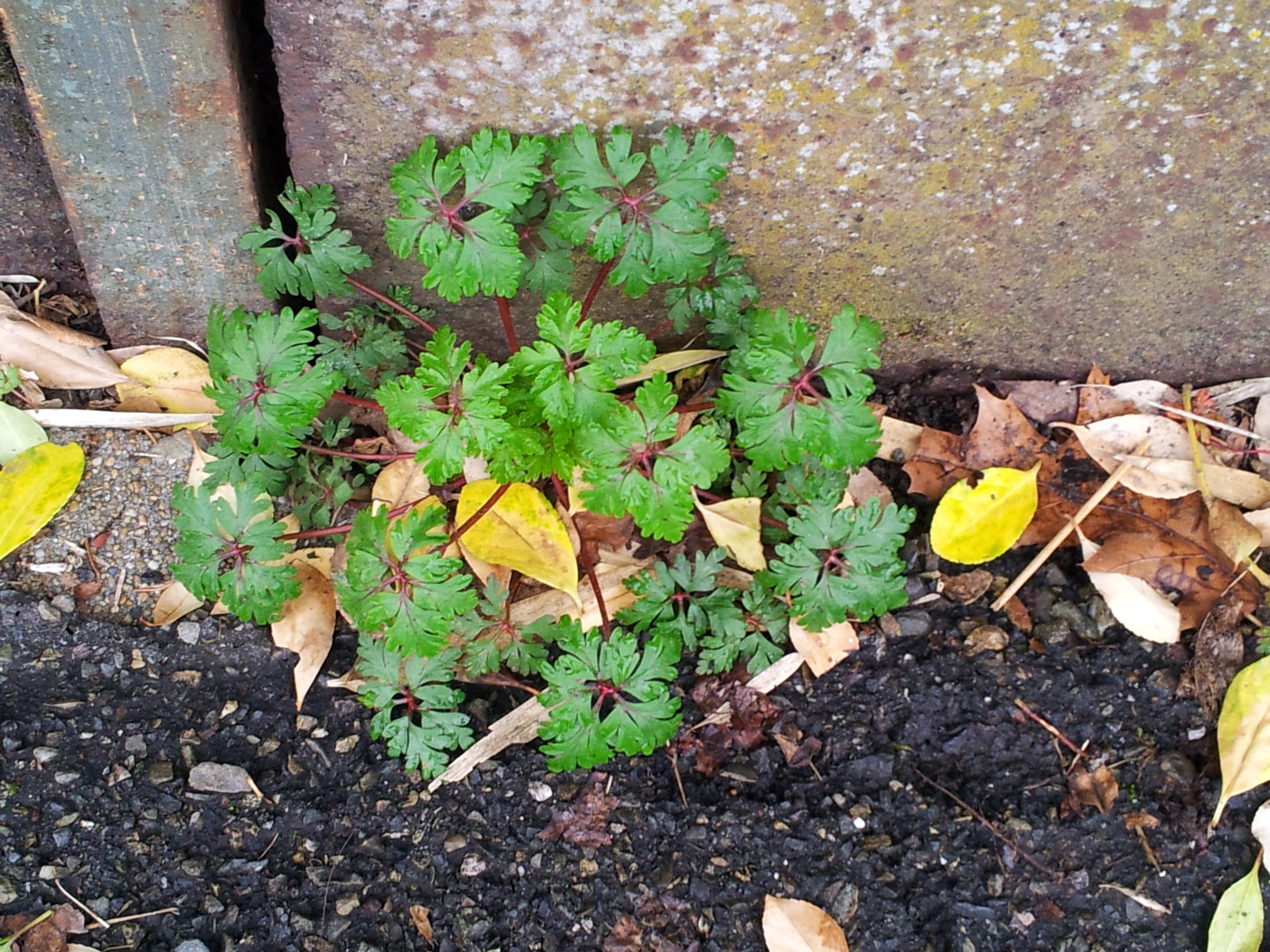
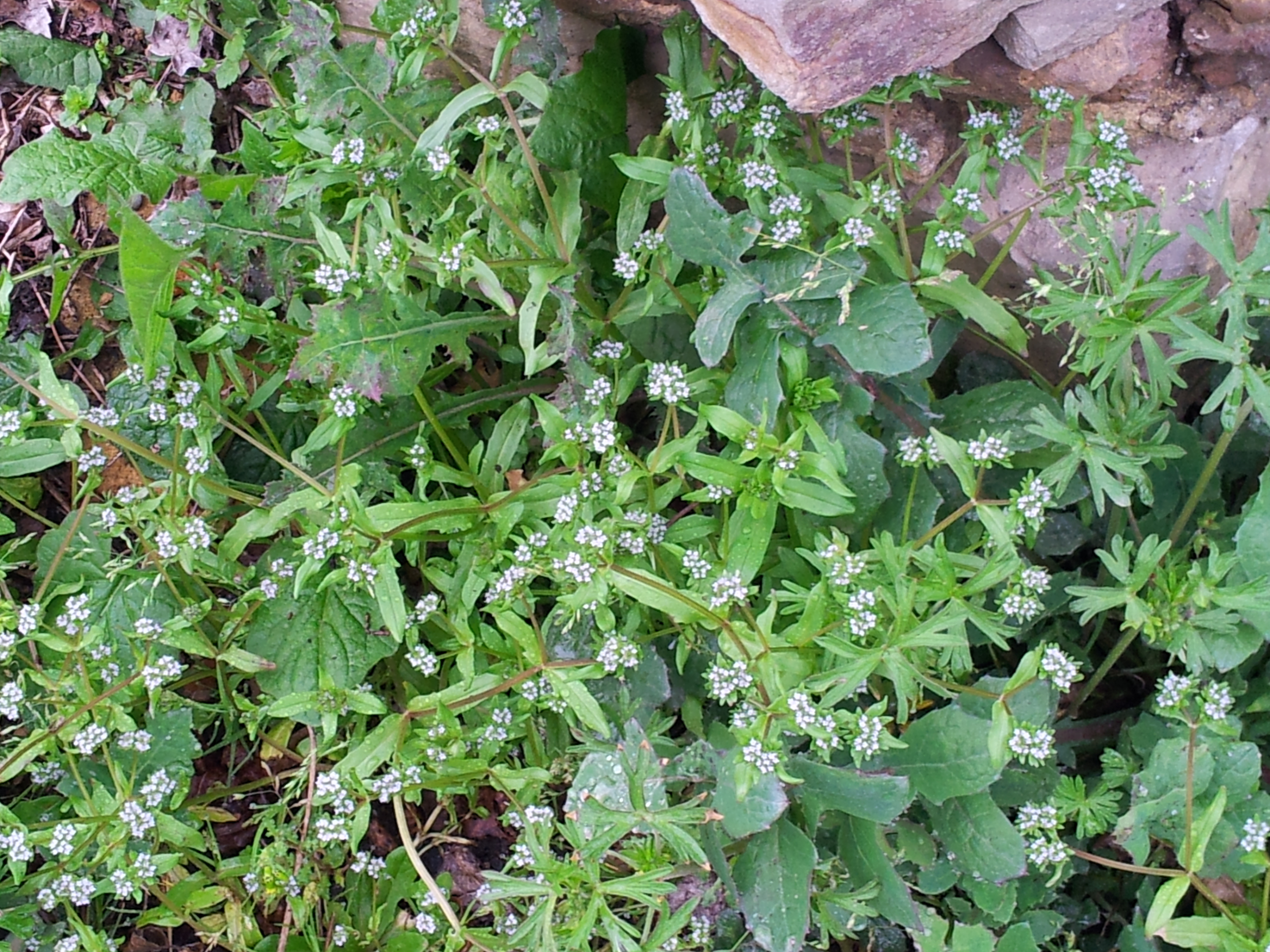
20150321_133923Thinking about the obsession of some people (my mother had a special instrument for extracting dandelions down to the roots) with weeds, I couldn’t help noticing how varied and imaginative the leaves of some of them were. So that day I purposely took my walk looking down instead of up, and noticing the incredibly decorative variety of weeds.  20150321_133256

Weeds, just like people we have judged unworthy of our company, hide in cracks and minute crevices everywhere, as if they were trying as best they could to avoid our gaze, to protect our narrow, restricted world from that which we have termed ‘uglyness’. Yet that day, what I found the ugliest were the sprouts of grass, the kind that the manicured lawns of California strive to cultivate, that had somehow escaped the confines20150321_134131 of our not-too-tidy gardens.

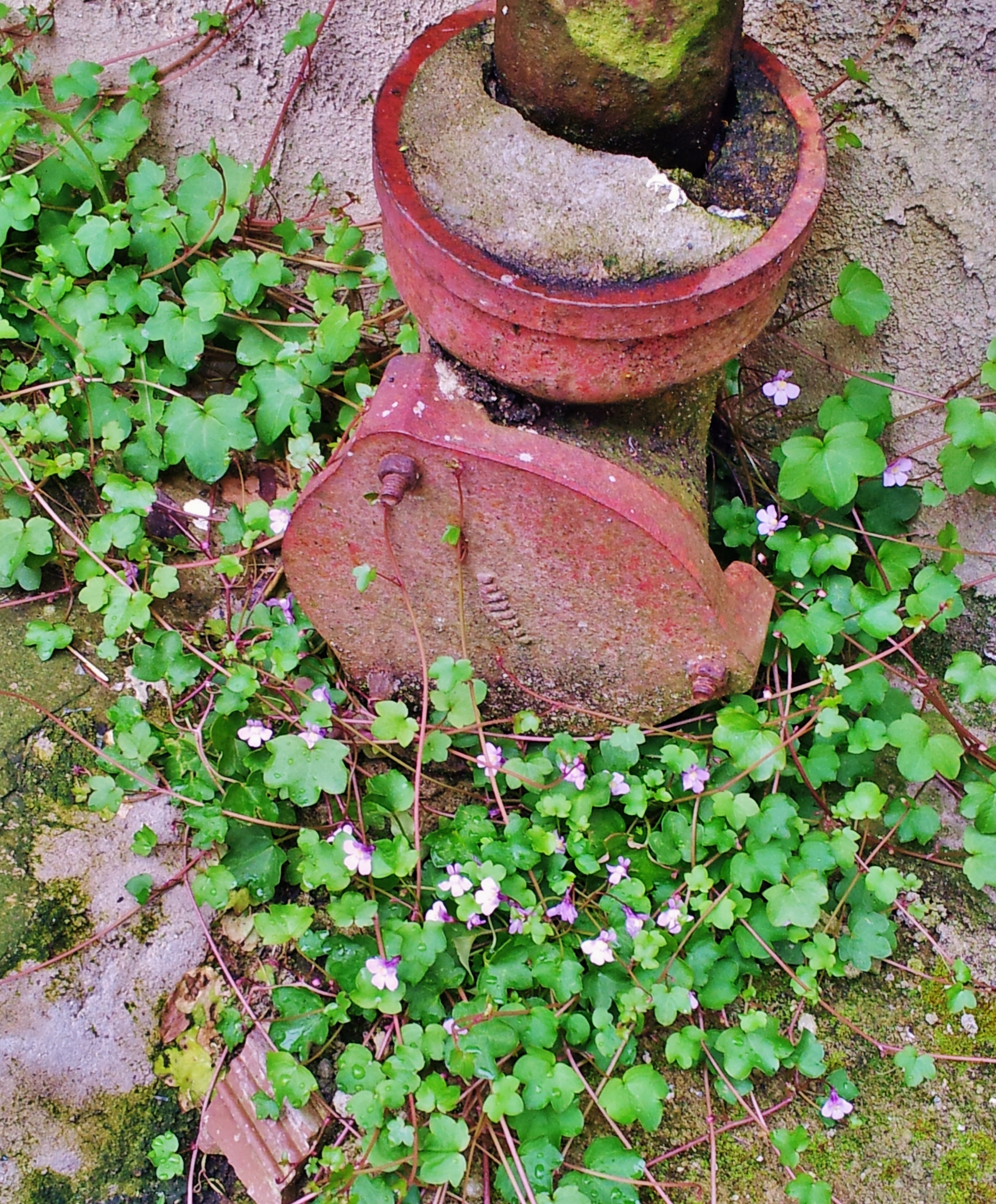
The question would be: What makes some plants acceptable and others not? How is it possible that because this day I decided to take my time to look where I usually don’t, I found beauty growing out of the wounds in walls and walks? Why are dandelions considered God’s lesser plants while yellow daisies are accepted in the choir? Who decides that grass gets the privilege of cushioning the soles of our bare feet, while other wispy foliage must go? Why are there 20150321_133434all sorts of ferns and leafy greens that are allowed to gorge themselves on fertilizers in the pots on my window sills while others must struggle to eke out a pauper’s fare in20150321_133402 some ignominious chink in the pavement and still make room for vagrant grass?  Would not this tiny flowered creeper prosper more in someone’s window box than wrapped around a sewage pipe?

The more I walked the more I marvelled at the intricate and artful variations of these greenhouse orphans and the more passers-by wondered what in the world I was doing aiming the lens of my portable phone at the sidewalk where they perhaps could see nothing but cement and a few weeds, if the plants themselves were at all visible to someone who was not paying attention as I was.  And I found 20150321_133129myself thanking my lucky stars that I lived in a small village in France and not in Los Angeles where any green growth that might struggle to plant itself where not invited by the city’s ordinance would be promptly extracted or herbicided. So my 20150321_134342morning stroll home was festooned with minute sproutings that bravely struggled to hold their own, thanks in part to the fact that our streets have potholes, our sidewalks are far from even and our stone walls are in dire need of repair. Beauty is everywhere, it is 20150321_133729just a question of opening our eyes and our minds and stop tagging some plants -or some people- as weeds!20150321_134705


MACHU PICCHU

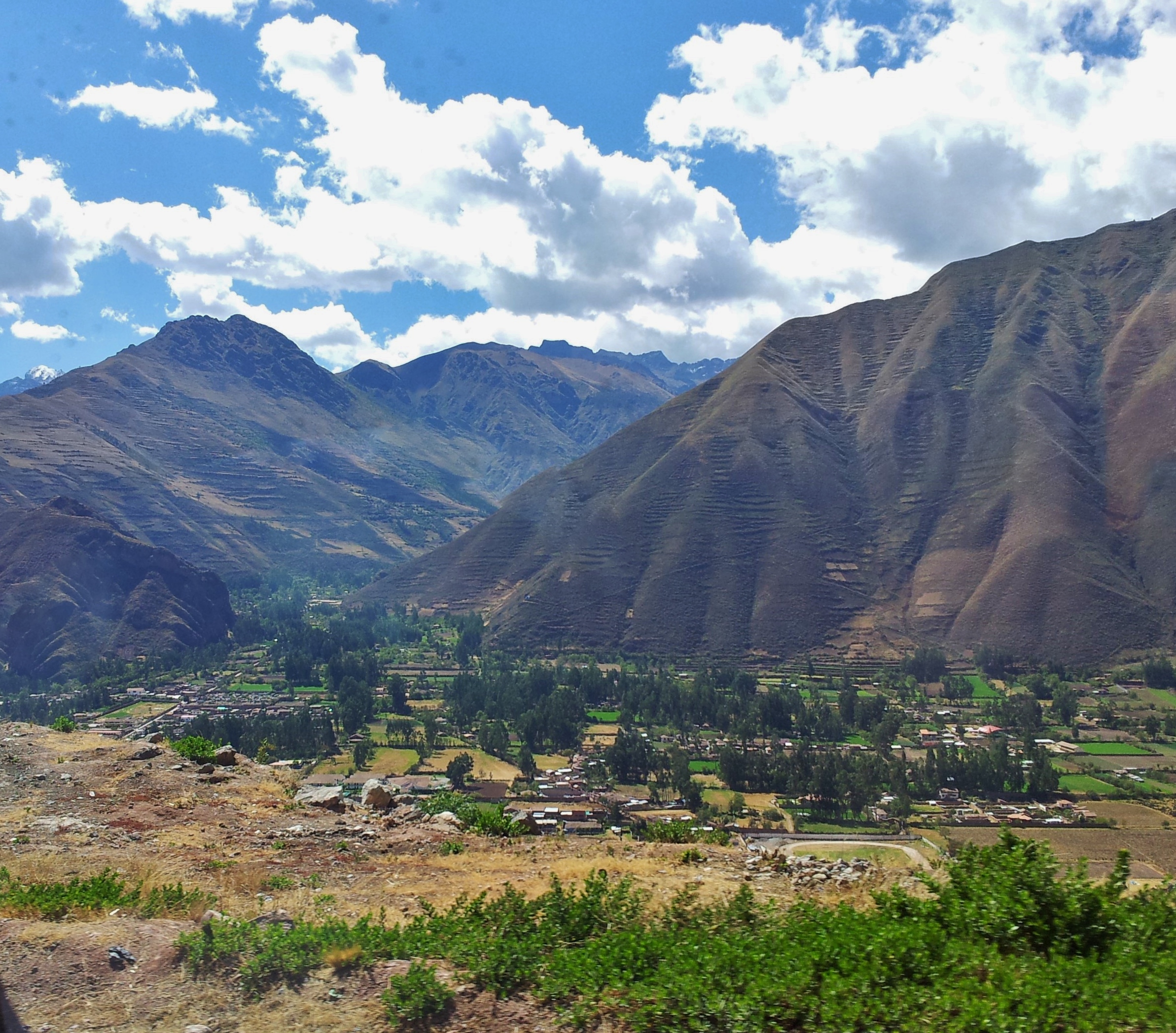
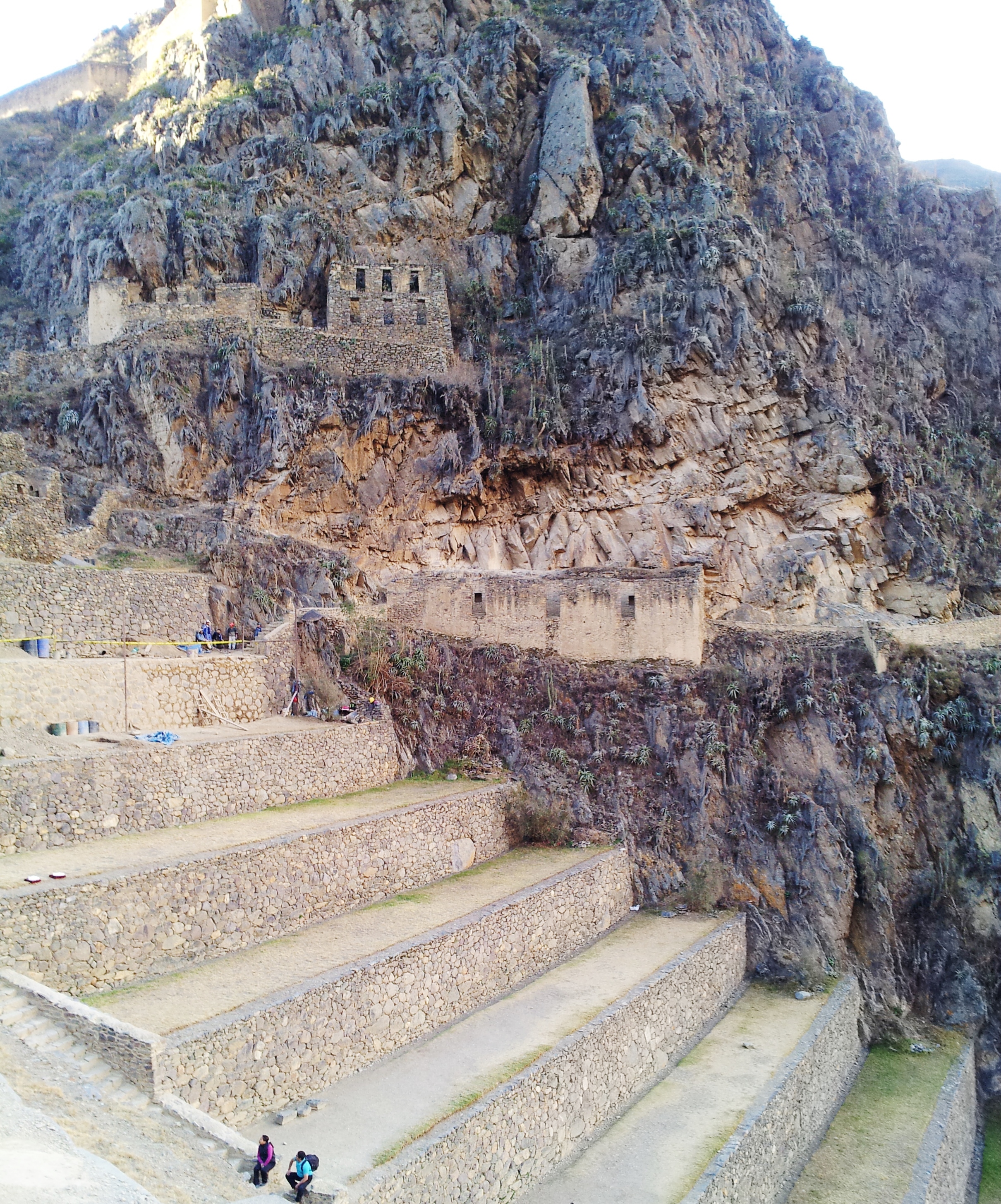
10259700_10204054925727072_4713911763883038271_n[1] My dream of visiting Machu Pichu finally came true last year in August when I travelled to Peru with my son and daughter-in-law. We flew from Miami to Lima and there boarded a plane to Cuzco. The expedition was led by Gregg Braden who met the group at the Sonesta hotel in the Sacred Valley. For almost two weeks we visited fascinating places with magical names like Ollantaytambo, Yucay, Urubamba Valley, Chinancero, Cuzco and Lake Titicaca and I took so many photographs it would be absolutle impossible to share them, just as the experiences were so varied and exciting that remembering them actually becomes painful in some sort of way. However, a few days after my return to reality (home) I wrote the following letter, which I want to share on this Blog.     30 Urubamba Valley or Sacred Valley

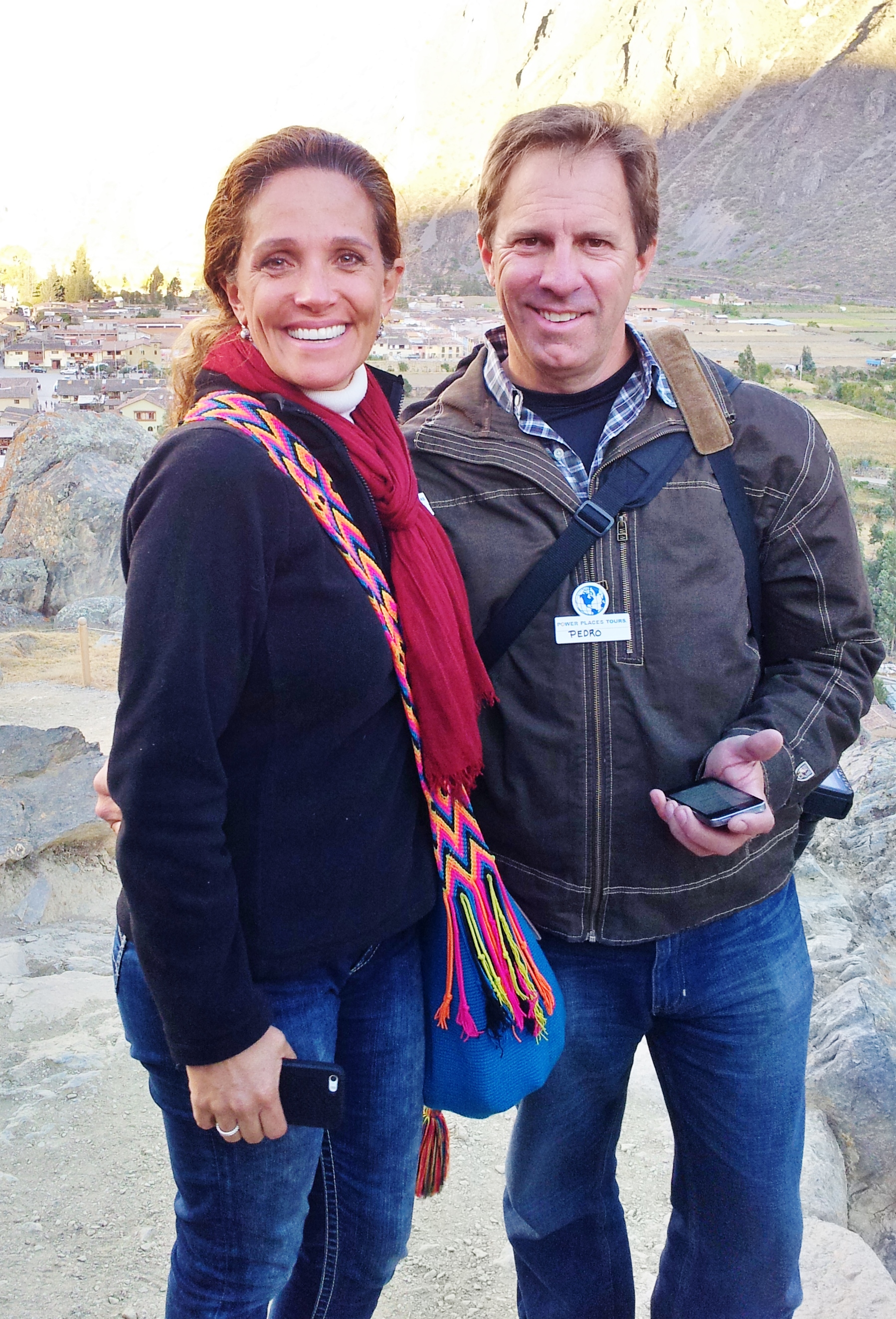
It is early morning and I just read a piece on death that someone wrote upon her mother’s demise and I cried; I cried yesterday night too after reading a form letter from Gregg Braden thanking everyone for their participation on the trip. I realized that I was going through a kind of “mourning” for the trip that was so wonderful, exhilarating, emotional and inspiring. It was a gift to have you both there to share it with; I guess I feel that we are “kindred spirits” to use a cliché. I hadn’t understood why I was feeling a bit down, dragging around, not really getting started on anything, not picking up my work again 10561689_1534980433402676_4636946343054596396_n[1]but rather passing the time doing odds and ends, dithering, watching the end of a series… nothing serious, and now I understand. Seeing Machu Picchu was a dream I had harbored for a long time, believing it not to be possible because I didn’t want to go alone and there seemed to be no one to go with until I thought of the fact that you, Peter, and Patricia would undoubtedly enjoy it, and had the marvelous excuse of your 50th birthday.59 P+P
    Then, as with all dreams, I feared the trip, the sight, the experience wouldn’t live up to expectations, that things would happen to ruin it, that there would be the inevitable letdown from exagerated 54 Terraces and montain Ollantaytamboexpectations. None of this happened. No, the trip was not what I expected, it was different.
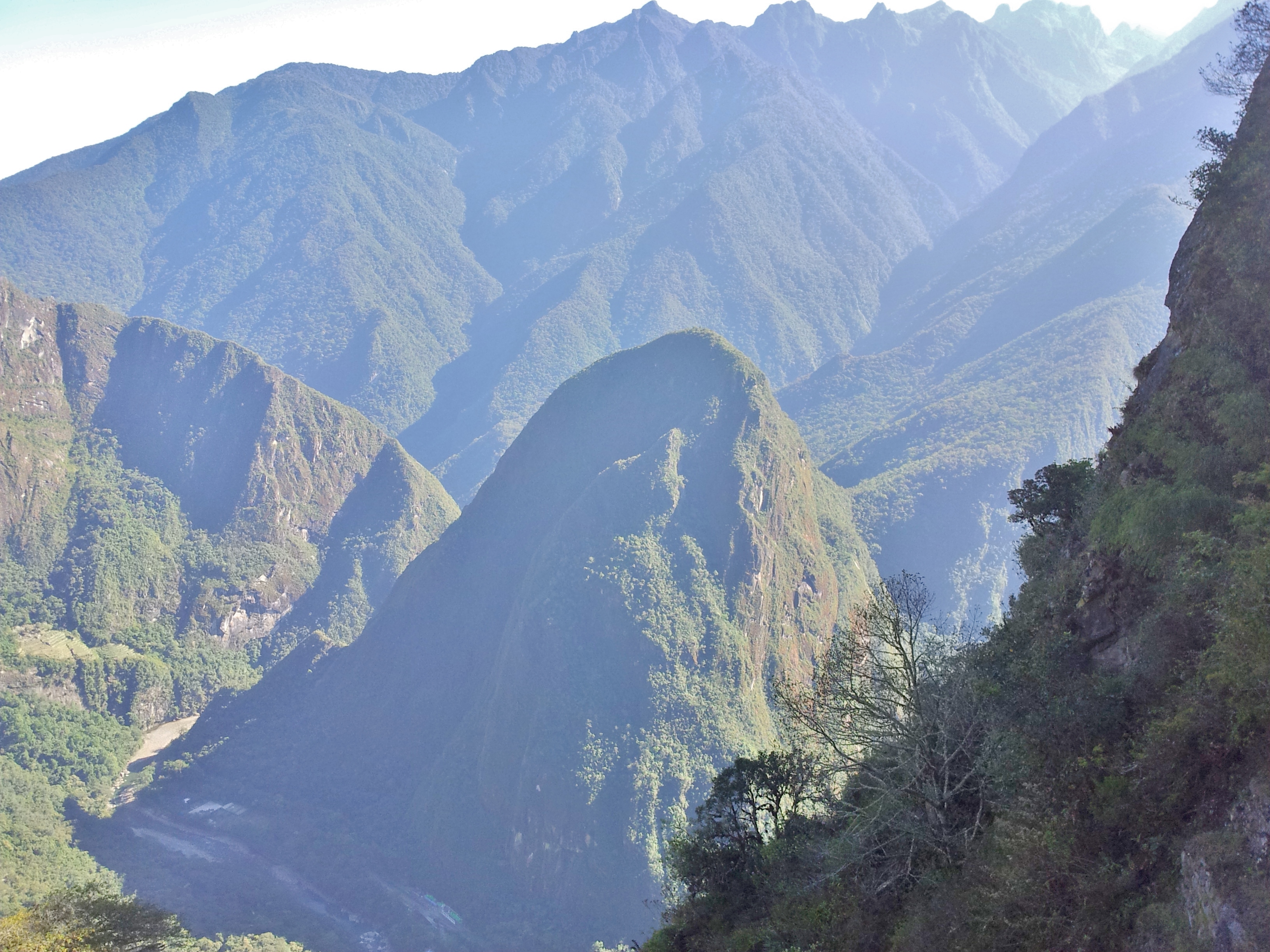
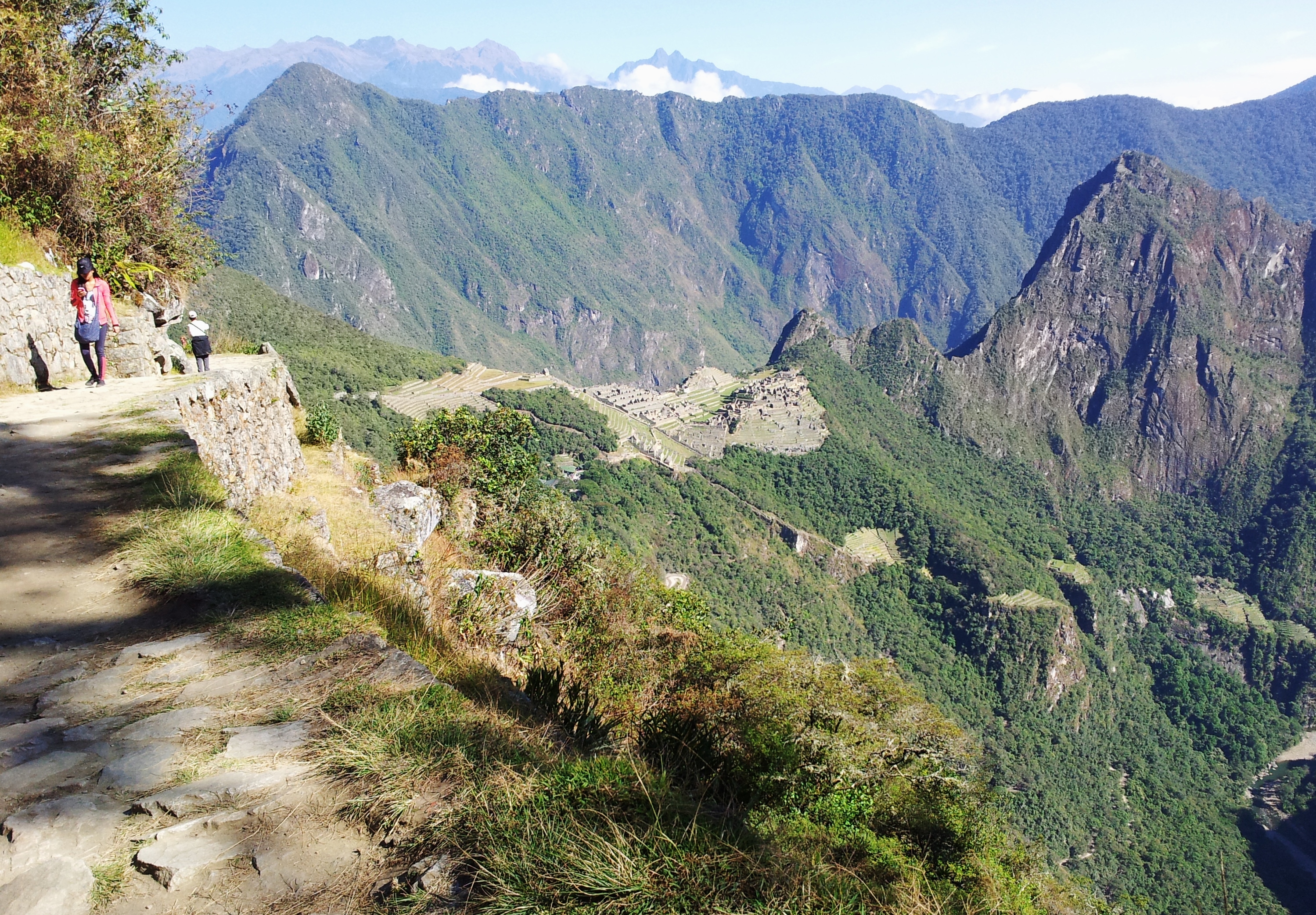
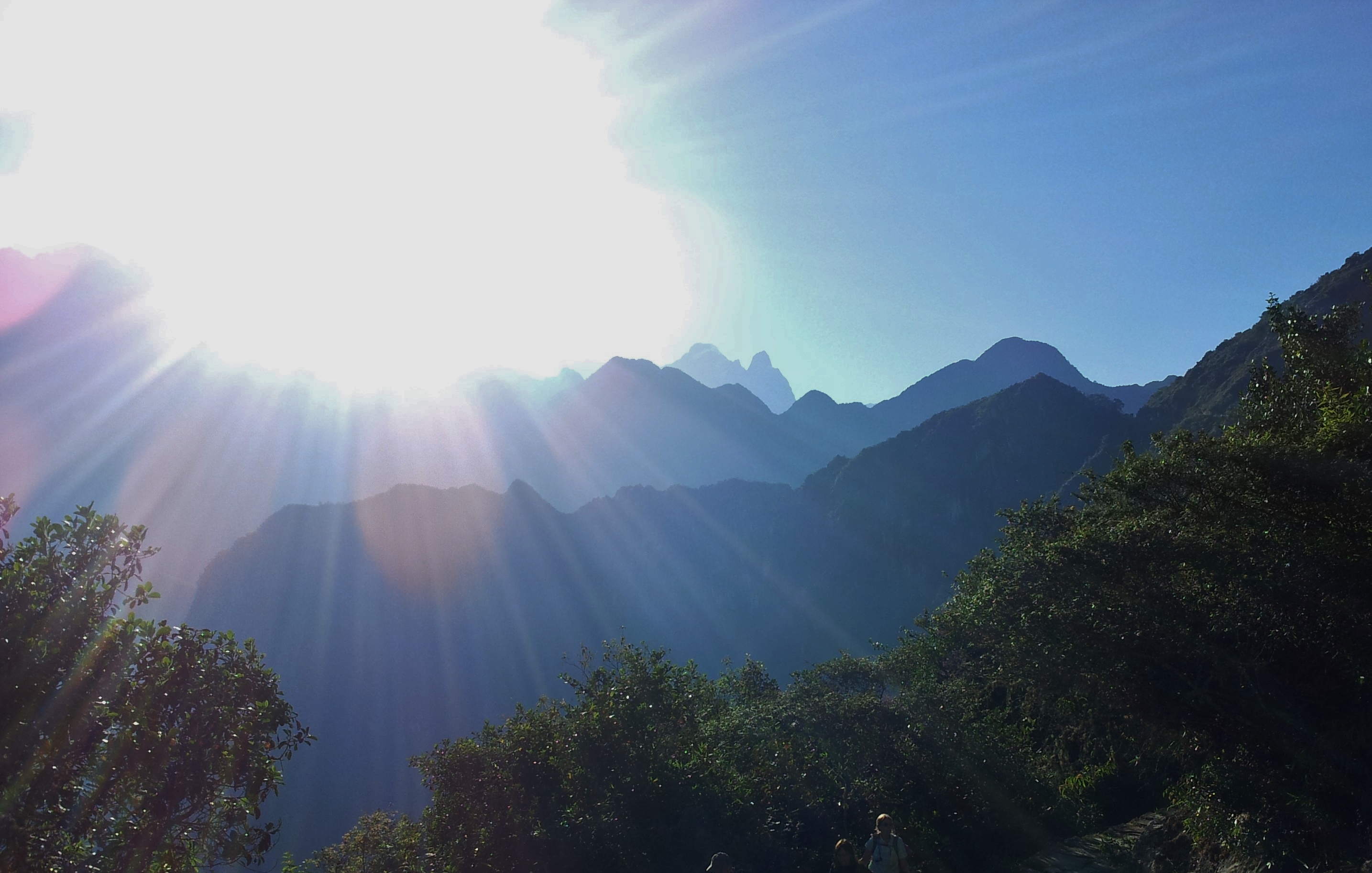
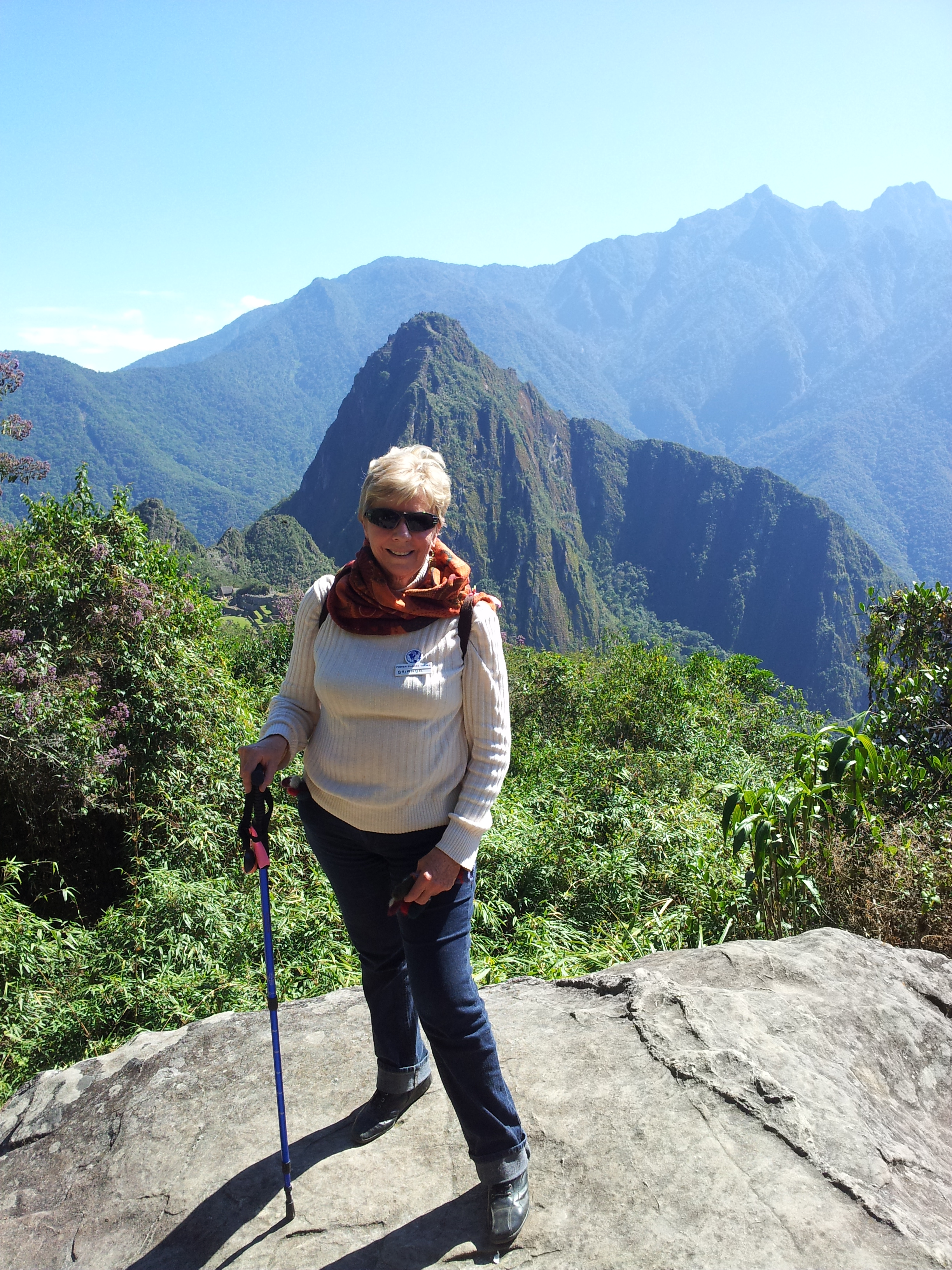
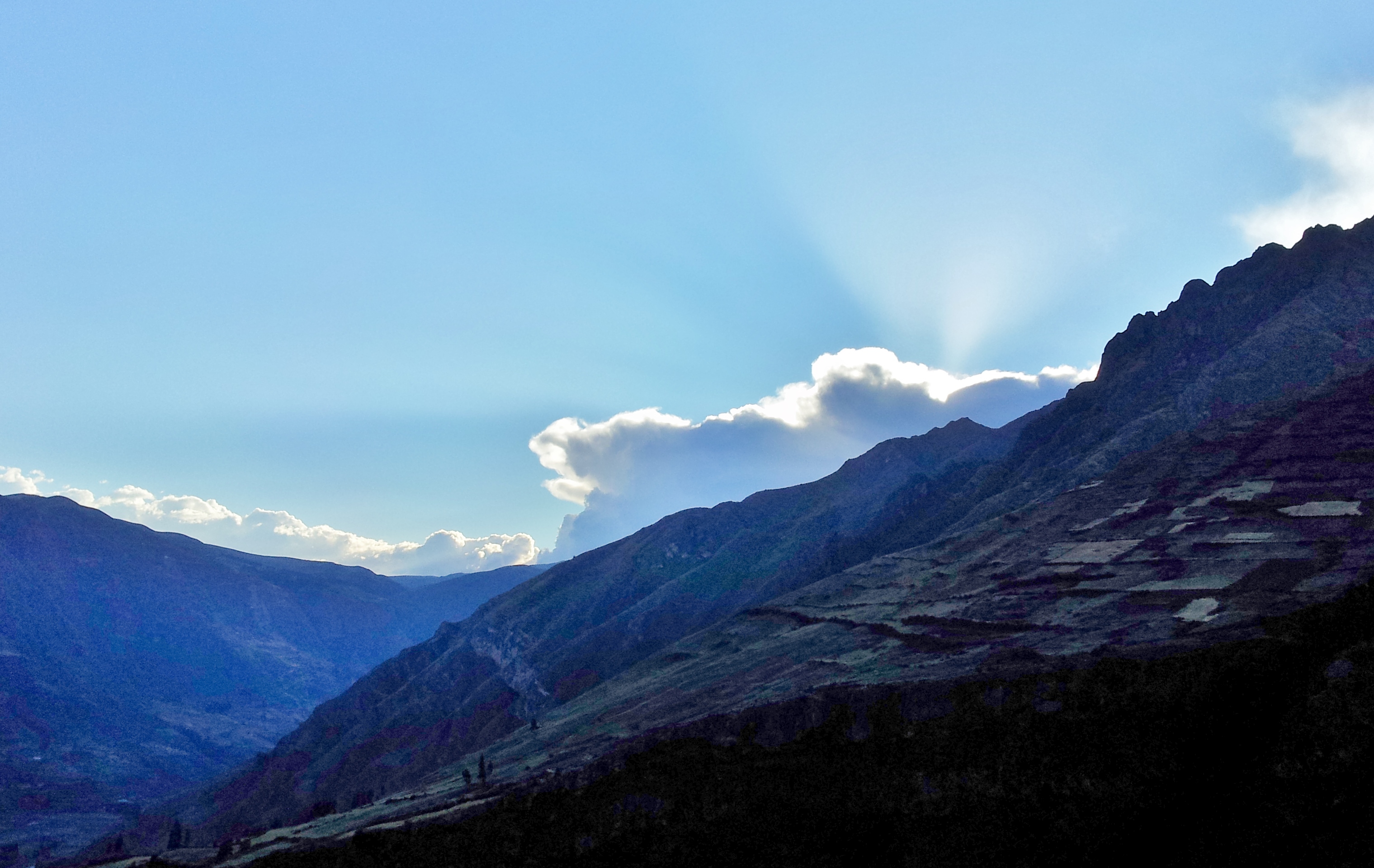
Machu Picchu was not the high point, the great revelation, the unforgettable aha! Machu Picchu, Ollantaytambo, Pisac were just what they are: ruins, stone remembrances of civilizations past and, as marvelous as they are, they are not alive, vibrant, or really inspiring to me. But the mountains, that landscape that speaks of an upheaval so powerful, a force so absolutely impossible and incomprehensible yet there, so much more durable and magnificent than any stones –no matter how large, how carefully carved, how 20140803_085417impossibly perfectly fit, how difficultly moved- that humans might have left organized or scattered over a tiny part of that landscape… those mountains and crags and peaks dwarfed everything around in their overbearing majesty. They were the gods the Incas saw and adored, their snowy glaciers glimmering in the sunshine against a vibrant blue sky; the mountains, the cliffs, the Apus… that was what I had gone for. When, against all my expectations, I climbed to the Sun Gate at the top of the Machu Picchu mountain, constructed over 2 kms above the famed site, and 20140803_090953arrived, breathless but exhilirated at 14,000 ft. I knew that it was for this that I had come, for these incommensurable upliftings of granite reaching for the unfathomable blue sky to enter into my eyes and my soul, expanding a heart that was already beating its way out of my chest as I gulped in the thin air and fell to my knees in awe. On that mountain top, above the impressively high Mayna Picchu that towers over the ordered stones of Machu Picchu, gazing down at the miserably dwarfed human expression of the ruins below and out across range upon range of Earth at its most magnificent with its rocky or snowy mountain tops, its glaciers, its jagged peaks, its20140803_072901 (2) fathomless valleys and the sky so inmense and indomitable with the sun bursting out from over the crest, I experienced a gratitude beyond words that was at the same time humbling and uplifting, that both made me feel so small and yet infinite, nothing and everything at the same time. So, I realized last night and again this morning as I write, that I am mourning that vision, that experience, that unrepeatable instant when I stood at the top of the 20140803_101016mountain and looked out over the Andes in awe.
    Now I am back in Salies, beautiful Salies where everything is human-sized and domesticated and for the first time in my life I understand why human beings climb mountains. So that is why my eyes tear up every time I think of the trip, of Machu Picchu, of our wonderful times together, of the laughs and talks, of sharing the incredible journey that is now in the past, and done and over. I am mourning the passing of an experience that I may never have again and I am also crying with gratitude for having had it.
So today, remembering once more, I pull out the pictures and try to chose which ones I can include in this memory, which would be meaningful or simply too beautiful to pass over, and once again my chest opens wide feeling so grateful, wanting to go back at the same time as knowing that what I lived then can never be repeated.10710557_10204054937167358_4846205909494950970_n[1]
10649745_10204054927807124_7413342280349671604_n[1]Like that magical instant that the Incas called “the crack between the worlds”, that short time when it is no longer day but night is yet to come,  it can only be experienced at the instant it is real; everything else falls short.
20140801_164303

ATTACHMENT

Dec. 5 2011 029Buddha recognized that what made us suffer were our attachments; Byron Katie recognized that all we could attach to was a thought. Although it’s hard to believe it’s that simple, it is. This is something I know as surely as I know to breathe because I have experienced it over and over and over again.2011-2012 034

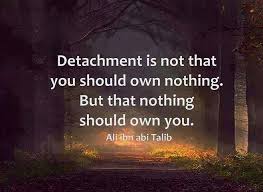
For instance: I am cleaning out clothes and I come across a pair of pants I haven’t worn all winter. For a moment I contemplate putting the pants in the “out” bag, and then my mind says: ‘It’s your only pair of green pants; what if you want to wear that green sweater next week?” When I had looked at the pants a split instant before and had separated them from the others in the closet, it was because I saw that they were out of date, worn at the sit-downs, slightly faded…  It was the mind: the thoughts about the ‘loss’ of the pants made me feel fear, fear of a non-existent future where I would suddenly exclaim “¡Oh, I never should have thrown out those pants! ¡Now I have nothing to wear with the green sweater!” and these thoughts had nothing to do with the actual pants in front of me. Without a thought, the pants are gone; I am not attached to them ever, only to my fearful thinking about the pants.detachment

It is not possible to be ‘attached’ to a thing, not even to something as close and common as my own breathing. My breath started without my willing it and will stop without my being able to avoid it: it is not attached to me nor I to it, although I may be attached to the thought that I don’t want it to stop.  If I am attached to this or any similar thought in relation to my own breathing, I will probably begin to experience some anguish if my breathing becomes labored at any point, as due to a pulmonary congestion or something. The thought “I don’t want my breath to stop” to which I am apparently very attached because I believe it to be true, will probably produce enormous amounts of anguish the moment my breathing seems not normal, result of which will be to make my breathing even more labored than it was to begin with. So it is the attachment to the thought and not to the breath that causes my suffering. If I suffer apnea at night and stop breathing for periods of time, there is no problem: no thought, no attachment. The attachment is to the thought (I am going to suffer, to die, it will be terrible) not to the breath.

NUBES Y DIENTES DE LEÓN (AMARGÓN) 007The moment I claim it as “mine” (a mental construct called ‘possession’), my breath, I become attached to the thought that it belongs to me, like ‘my’ pants, or ‘my’ son. The mind is that way. As a matter of fact, the mind attaches everything to everything else chaining together events, people and things until we are caught up in a veritible ‘network’ of attachments in a world of distinct and unattached objects (and I include people and even emotions). A friend of mine had kept an old chair because it was the one her mother used to sit in to read (‘I’m attached to it because it was my mother’s’ she’d say when someone suggested she get rid of it). Then her sister came one day, saw the chair and immediately identified it as being an old one her mother had absolutely hated and had placed in the garage thinking to get rid of it. My friend immediately saw the chair for what it was and threw it out: no thought (story), no attachment.OLYMPUS DIGITAL CAMERA

And so it is with every single thing in this fantastic experience we call life. I think of my son and my heart aches a bit with the desire to see him. Am I attached to my son? Of course not! By what means would I be? One might say “my heart strings”, but where on earth are these located? No such thing. I am attached to the thought of my son (the image I have created of him in my mind), whereas the instant before the thought and the instant after the thought I could just as well never have had a son; and for all I know, I might never have had him, except in my imagination; I have heard women lament the absence of sons they have never had as if their heart would break at the loss. Then my son Peter + Betty01052014 (2)phones: I am in the middle of writing this blog and tell him that I can’t talk now and will call back later; later comes and I am hungry so I set about fixing my dinner forgetting completely to call my son. Where is the attachment when there is no thought? So it can’t be the son I am attached to, but the thought of my son and that is all I am attached to.

It is all thought, can you see? Without the thought, there is no son, there is no breath (except when there is), and there are no green pants that are gone forever with the discards. There is only now, now, now and this, and this, and this. The immediate, the perceived, the instantly gone forever: nothing possibly to attach to… but a thought.

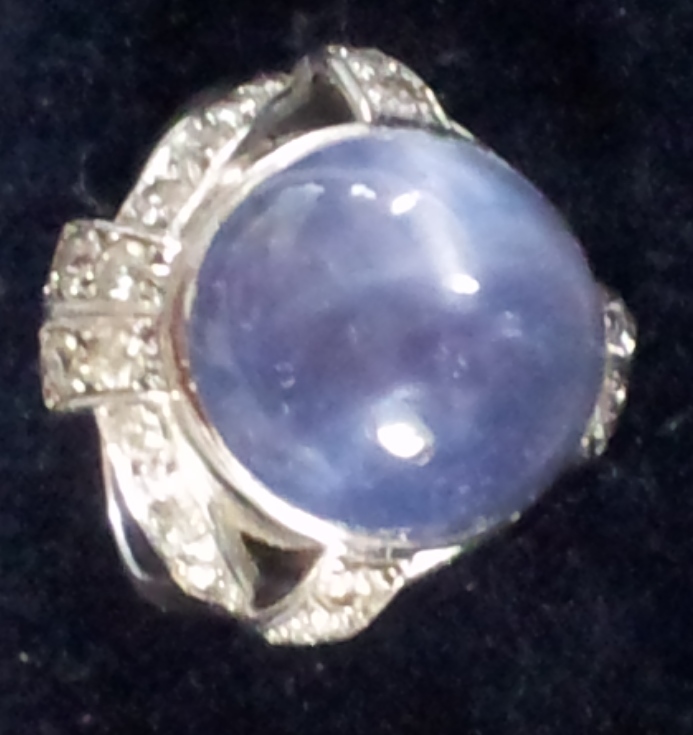
So there it was. I went to London to sell my mother’s jewels which I had held on to for over 20 years (ever since she lost herself in dementia). Before she died I couldn’t sell them or give them away (if it had been my desire) because they weren’t mine. After she died, for reasons beyond his control, my brother -with whom I had to share the inheritance- was not available to make the necessary decisions. So, after 20 years of never using (I wear very little jewels and hardly ever the real stuff) them, and having had to hide them every time I travelled for fear someone would come in and steal them, my brother and I went to London, marched into Sotheby’s, and signed away a nice amount of diamonds to be auctioned off in June. So many people had asked me if it wasn’t painful to part with my mother’s 20141108_150733jewels that I had actually sat with myself the night before looking for some thought of attachment that might jump out of the unconscious shadows the moment I exited Sotheby’s without the booty. Having found none I had no problem signing the corresponding papers the following day. What I had not expected was the physical sensation of lightness that enveloped me the moment I stepped into the street making me feel as if I were a form of Mary Poppins without umbrella floating about 1 foot above the pavement. I found myself singing and dancing my way to the nearest restaurant where I was so happy I actually paid for my brother’s lunch. Was this Nirvana?

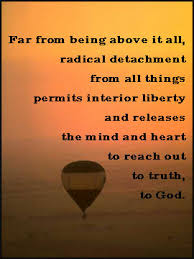
Did Buddha say that when one achieves complete detachment, one finds Nirvana? Or was it just peace one achieved?  Are peace and Nirvana the same thing? Katie just says ‘Question your thoughts, set yourself free’ or something similar. And what, after all, is Nirvana if not peace, serenity, wholeness, freedom, joy, love, presence, astonishment, joy again and again, right here, right now?radical detachmentOct. 27 2011 001

OLD AGE

Before, the only thing I thought of Old Age was that it was the better of two choices (the other being, obviously, dying young), but now that I am about a foot and a half (or more) into the Matter, things are looking differently.

Still aliveOld Age does not come overnight, at least not in my case. I remember clearly when I was about 50 things began to make noise, things -I mean- like joints and bones and what-not. I called it the “Rice Crispies Age” because everything went “Snap-Crackle-and-Pop”, and that reference might make sense only to persons reaching the same “ripeness” as myself who have heard the advertisement in their youth. After the noise subsided, the small occasional pains began: a joint here, a vertebra there… My second partner reminded me joyfully that, after 50, if you wake up in the morning and nothing hurts it means you died in your sleep.

But unless you have done the Dying Young thing, Aging is inexorably progressive, although there are many, many days when one is allowed to forget it (as long as you don’t look in the mirror).

The Powers that Be, however, are kind and they soften the way as best they can. They take your eyesight away as fast as they put the wrinkles on so, unless you are stupid enough to approach the bathroom mirror with your eyeglasses on, you really don’t notice all that flabby crinkly skin around your mouth and jowls. They diminish your physical energy at the same time as they add aches and pains and physical danger to exertions beyond a simple walk to the supermarket two blocks away.

Nevertheless, things do change and by “things” basically I mean the body. As my grandmother used to quip: ‘”If it’s not one thing it’s another” said the woman with the nosebleed.’ Things ache: if it’s not the ankle, it’s the knee; the neck gets stiff and cracks when you turn it too sharply; no sooner has the shoulder stopped hurting than you get a pain in the right hip before dawn that has you twisting and turning in bed to find a position that alleviates the twinge. Sometimes everything comes at once (the ankle, the hip, the shoulder, the knee) or everything suddenly disappears and you feel like 20 again until it creeps back in.

Photographs stop being fun, although for heaven knows what reason, Skype seems to improve one’s looks. Good hair days become fewer and fewer, and if you have my fine straight hair, you begin to feel “holes” on the top and sides of your scalp where the hair barely covers and you curse the Universe for not abiding by your belief that only men go bald. There is, however, the advantage of being blond which makes grey hair almost, if not totally, invisible… unless of course you look at my eyebrows which I have to color over every morning to hide the white ones everyday more numerous.

Hands are a good measure of how much you have aged. You can make up a face, brush over the balding spots on your head, pretend that your joints don’t hurt, but there is no way -except gloves- to hide the devastation of your hands. I remember entering my father’s studio one morning when he was in his late 70’s and suddenly noticing his hands and realizing that he was going to die some day in the not too far future. It was a shock and my heart squeezed into a painful ball at the thought. Today I look at my own hands and feel tenderness towards myself, for the beating I have given this body and the noble way it has not buckled under the punishment. Nothing is as wrinkled or splotchy as my hands, bless them: I do love them so.

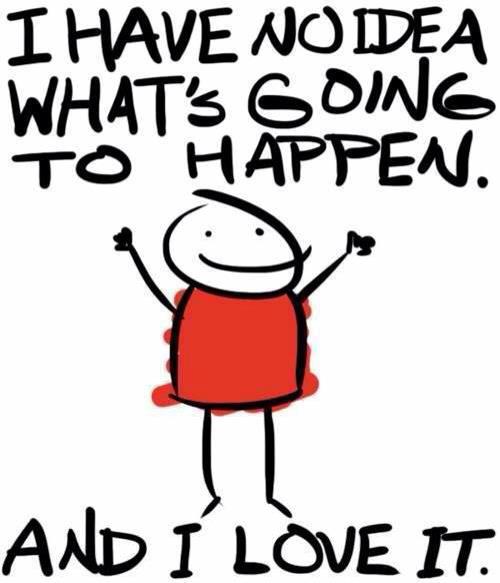
So for quite some time I had the attitude of ‘grin and bear it’ in the face of advancing deterioration, but suddenly I realized I was making a very grave mistake.  This Getting Old business is actually very exciting. First of all, I have never done it before and I have no idea of what comes next. Everything is so new, from the wrinkles to the flab to the pains to the sun spots. Everything belongs to the This-Never-Happened-Before world.       no idea what is going to happen

I have become very conscious of my body and find myself dedicating much more time to its care and its observation. I catch myself feeling extremely grateful to it when a pain that has been around for a few weeks or months suddenly disappears as incomprehensibly as it had appeared. I talk to it alot more, making sure it understands how much I appreciate its capacity for endurance. I almost broke down crying with gratitude when it threw every fiber into allowing me to take all the walks and do all the climbs when we went on the trip to Machu Picchu. And recently, during the silent retreat with Jeff Foster in Belgium, when I slipped going down the slate stairs and my body flew into the air landing with a resounding thump on the pavement on my right hip which had been hurting anyway for the last 6 months, what a difference it was to think ‘Oh my goodness, I am sure this blow is going to knock everything into place and all pain will be gone’, instead of ‘Oh shit! Now I’ve really  messed up this time!’  I was so grateful that I hadn’t broken a bone, that the tearing of a ligament in my knee seemed a small price to pay for the experience of flying through the air with both legs flaying about wildly. Today, one month later, the pain is still there, although it doesn’t stop me from doing anything I want too. When I feel it as I walk into town or even through my apartment, I think to myself: ‘Well now, there is my body letting me know that I’m still alive.’

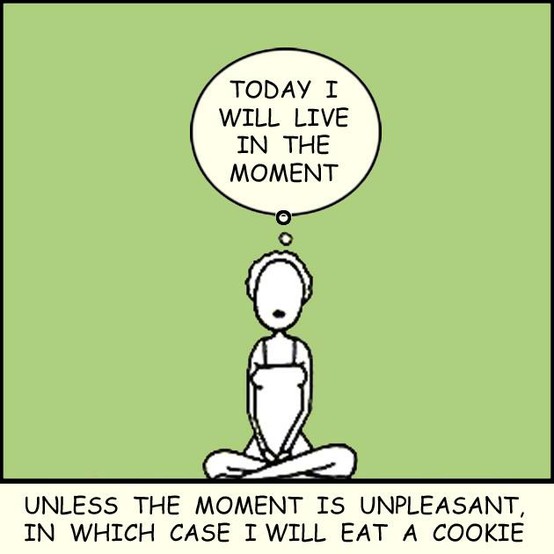
There is also a new liberty and a new comfort in growning Old. I allow myself to do things that I didn’t allow before like taking short naps when I feel tired or playing a few games of solitaire on the computer when I’ve worked for several hours or watching a tv series while eating homemade popcorn. I am kind to myself and exercise patience; I don’t push anymore; I have stopped believing that “I should be doing something purposeful”.  And I follow the wise advice of whoever created the following cartoon:

Today I will live in the moment

And there is something else: I am happy, happier than I ever thought I could be when I thought about being happy. I have no idea what I have done to deserve this, like María in the The Sound of Music, perhaps somewhere in my youth or childhood, I did something good. I know what serenity is, I am not trying to change anything, and much less myself. I live in a state of astonished, unending gratitude, absolutely in love with this incredible Universe that parades itself before my eyes instant by vibrant instant.

DEATH OF THE FATHER

“IT’S NOT SO BAD… BUT ALL THE FUSS!

(Statement of Manuel Domecq Núñez de

Villavicencio on his death bed, to his son)

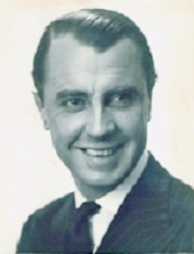
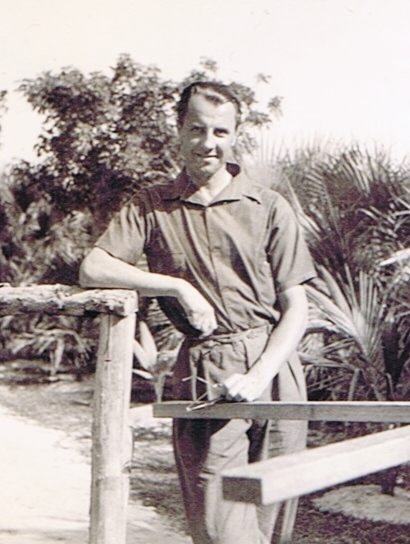
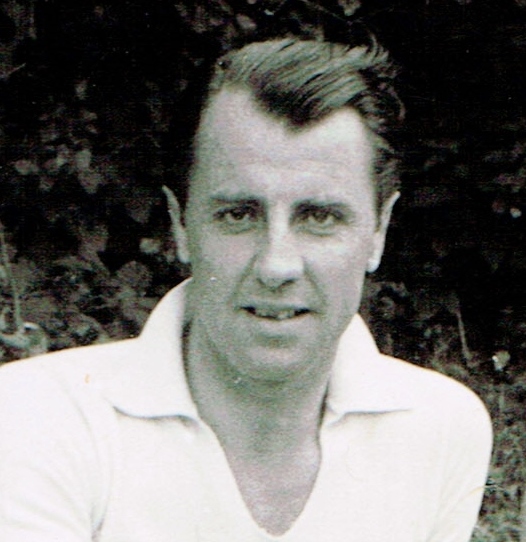
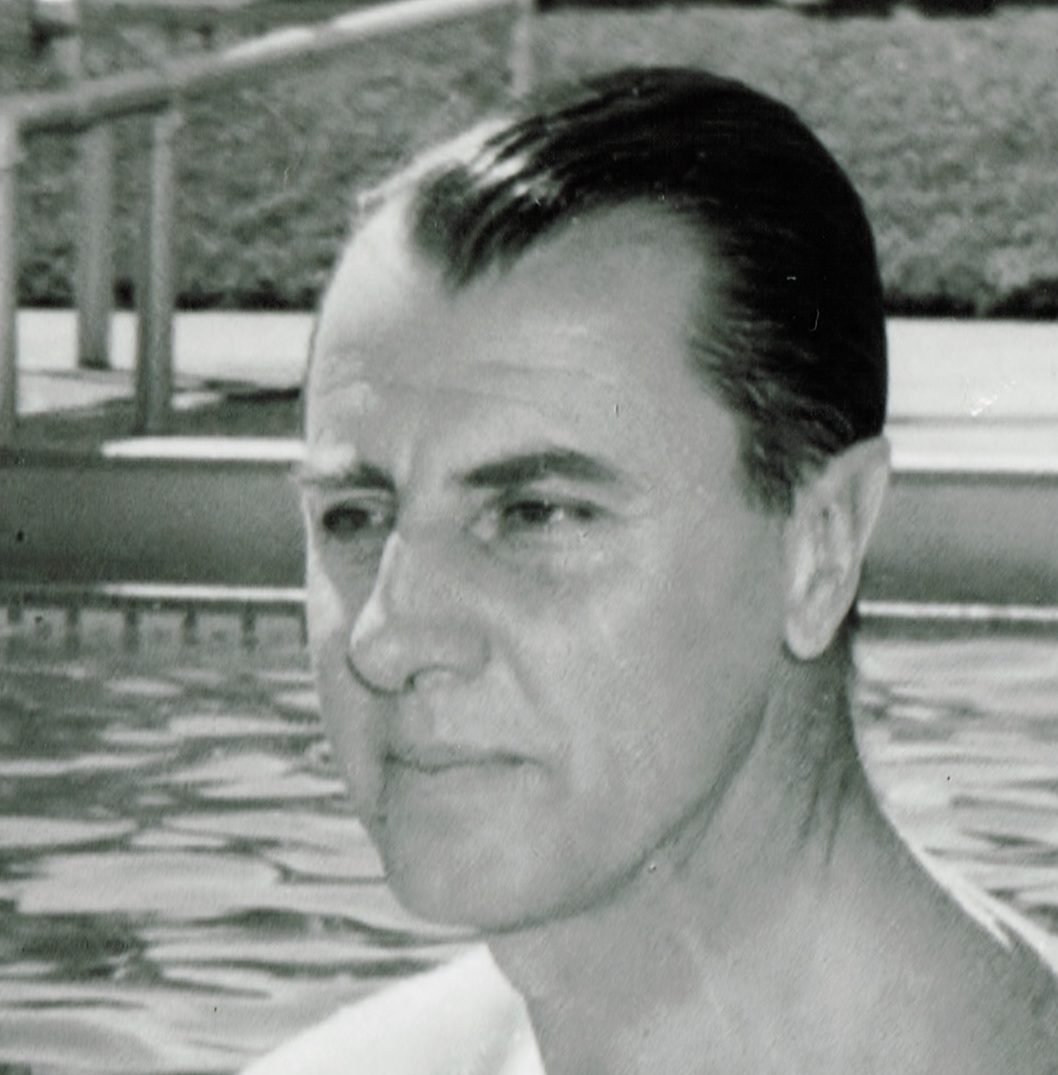
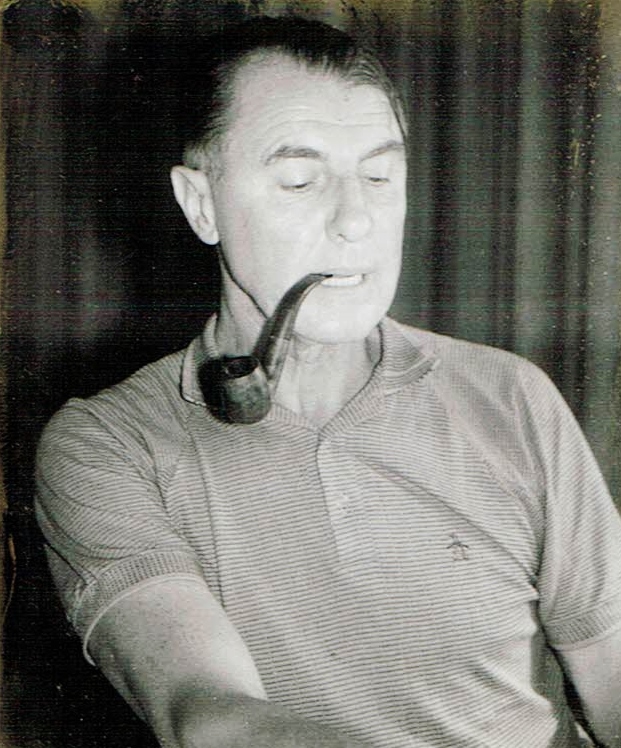
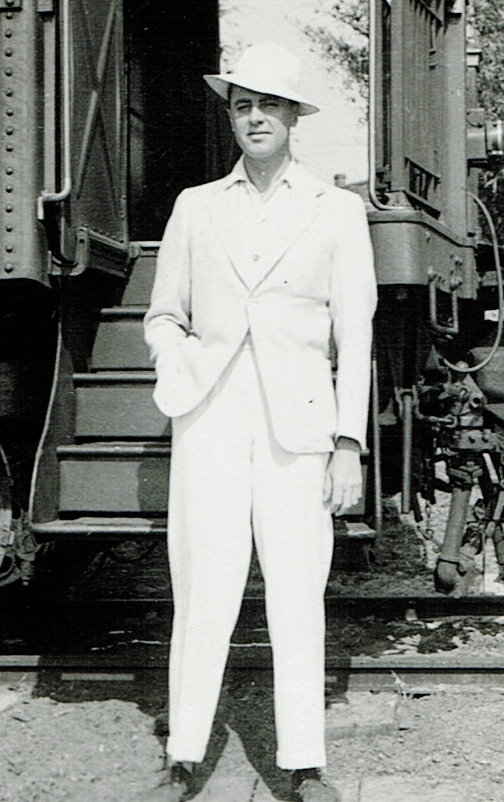
In August of the year of 1977, Pedro Domecq González Núñez de Villavicencio and Gordon, 2ndPerico circa 1942 Viscount of Almocadén had a heart attack. He was in San Francisco with his wife, Elizabeth Cook, and his granddaughter, Maria Fernanda Rodríguez Domecq who, at the time was 10. They had taken her to Disneyland in Los Angeles and then gone on to San Francisco. They had been out to dinner and, upon arriving back at the hotel room, Perico (as he was called) complained of indigestion. He took an Alka Seltzer, as was his custom in these circumstances, but the problem only got worse. Suddenly he gripped his chest, leaned against the wall and slid to the floor. Betty knew there was a problem. Probably, if they had been anywhere else but the U.S., he would have died, but an ambulance took only five minutes to arrive and in less than twenty he was in the hospital. Betty called her daughter.

When the phone rang, I was sitting in the bar (in our house) having a nightcap with my husband. I answered and heard the news: my father had had a serious heart attack, was in the hospital and the next day my mother was going to put my ten year old daughter on a plane to fly home alone. She gave me the arrival time so I could pick her up and promised to keep me informed of my father’s progress. All I remember was a hollow feeling inside. I loved my father; I think I have loved him more 1938-1 Cat Cay 1938 3 (2)
than any other person in my life. If nothing else –and there was plenty else- he showed me that it was possible to be happy in this life with very simple things and that was what kept me going every time I was ready to give up.

My father survived that incident, although it was a bad attack and he had to spend at least three weeks in the hospital and then another month at Burlingame Country Club in a small cottage they rented before the doctors would allow him to fly and return to the altitude of Mexico City.

He had survived, but he was never the same again. “I wish I had gone then” he used to say. I think he meant that the waiting for the next time was not much fun. He lost most of his interest in the things that had occupied him before: the1939-3 Gordon Claridge's Manor  England (5) bird watching, the translations, loading his shotgun shells, painting bird pictures. Life seemed to have turned into a waiting game, trying to guess, perhaps, when the next “sablazo” would hit. (Sablazo is a Spanish word for being struck by a saber with force and it is what my father used to call the blows life dealt one; he called his heart attack “un sablazo”.)

After three and a half years of waiting, Betty figured it was safe to travel and they went to New York to see their son, Michael and his family. Again, the phone call came at night.

“Your father’s in the hospital again. His lungs filled up with water and he was drowning. We rushed him there in a taxi because your brother had gone out to dinner. He almost died,” she said in what sounded like a tired voice.

“Did you consider letting him go?”

“Yes, but he said he was afraid, he wanted to live so I had to take him. The doctors say he will pull out okay, but he is going to have to take care or his lungs will fill up again.”

1949-1 Travels to Latin America07052014That was when my mother learned to cook without salt thanks to a wonderful cookbook that I ended up adopting just because the recipes were so tasty. After a while, my father didn’t miss the salt either, and he would continue having his glass of wine in the evenings and midday on weekends so the loss of salt was not a tragedy. He got well, he even took up some of his hobbies again and all seemed to be going along smoothly.

Then my mother decided that she had to go to San Francisco again, I guess because they had some money invested there, and she took my father along. In Spanish we say “la tercera es la vencida”, which means the third time is the one that wins, and, at least for my father, this turned out to be true.

It was the 25th of February 1982, and once again the call came at night. My mother’s tone sounded emotionless.

“He’s not going to make it,” she said, her voice heavy with fatigue; “I saw an x-ray of his  heart. Poor thing, it’s all limp and barely beating; it looked like a dying fish.”1960-8 Bodegas  (3)

“I’m on the next plane,” I told her and hung up.

My husband and I got tickets for a flight the following day and, once on board the plane, I remember thinking all the time of what I wanted to tell my father when I got there, all the things I thought he might be interested in, how the Conservation Association he belonged to was doing so well, and the projects that had been approved at the last council meeting for the following year. Then suddenly I knew, I knew from deep in my heart: There was nothing left to say. My father and I had said it all. In that instant I accepted that I did not need for him to stay alive, to wait for me, to continue living. I understood that I was ready for him to leave and realized how blessed I was that there was really nothing left to say to him. From somewhere in the air, I closed my eyes and said goodbye with all my heart. When we arrived at the hospital, I practically ran to the room. My mother was standing by his bedside gazing at him as if she were trying to recognize him.

1943-1 Florida trip21042014 (7)“He went 5 minutes ago,” she said looking up slowly from the blessed fog that deep change shrouds us in for a moment to protect us from the shock.

I noticed the strange waxen aspect of his face and, walking over to the bed, put my cheek next to his; he was still warm. “I’ll take care of her, so don’t worry” I whispered and gently kissed his cheek. Then my mother began to talk.

“It’s so strange. About three days ago his voice began sounding different; it wasn’t his and it came from somewhere else. I couldn’t recognize his voice, but he didn’t say much anyway. Only once, he said ‘I want to D-I-E’ in this strange voice, spelling out the word as if it were difficult for him to say it. And then today, I was just sitting here gazing out the window and he called to me.1955 - 3 Trip to Cuba (2)

“’Lay down the bed, I want to rest.’ You know, he had to be in a sitting position to be able to breathe due to the liquid in his lungs. I asked him if he was sure. We both knew that if I lay him down, it was the end. He said ‘yes’. So I cranked the bed down. And then I just held his hand. It wasn’t too bad, but it took about 10 minutes. After he was gone, I called the 1939-7 Perico visits Tony Ruggeron in Portugal15042014 (4)doctor. He asked if I wanted him to revive your father so he would still be here when you arrived. I said ‘no’.”

I walked around to the other side of the bed and embraced my mother. She seemed tiny and all bones in my arms. The admiration I felt for her in that moment was overwhelming; as far as I was concerned she was the bravest woman I had ever known. We sat together holding hands until they 1977 Perico19042014came to wheel my father’s body away. The following day we went for the ashes and flew back to Mexico carrying them in a plastic shopping bag. My father would have had a good laugh over that. No fuss.

AN HONEST WOMAN

I’ll become an honest woman yet! Believe me, it isn’t easy but today I made a giant step.  Those of you following this blog with any kind of continuity probably already know that I am given to stealing… corn. That may sound strange. There are people who steal money, who steal their taxes, who steal jewelry, who steal children… people can steal anything, ideas are stolen, wallets and identities are stolen, dreams and art are stolen. Anything that is and has an owner is up for bids and anyone that wants it, is a potential thief. Some people enjoy stolen goods more than something they had paid for with hard earned cash: it’s the thing and the thrill all rolled into one. So I steal corn. The corn is there, it belongs to someone else, I enter the field and steal it. I have done this ever since I began coming to Salies in the summers and since I have been living here, I have continued.3
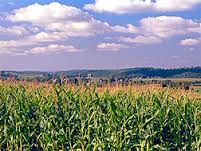
The reason I steal corn (every thief that prides him or her self on being an honest-to-goodness filcher will have a “reason” for doing what they do which in their mind justifies the pilferage) is because there is nowhere around here that sells it, at least not fresh corn, in spite of the fact that this is Corn Country, in capital letters. There are plenty of little cans and medium cans and big cans of sweet corn in the supermarket, but I don’t eat canned corn just as some people don’t pay their taxes and others don’t do an honest day’s work because there is plenty of money around for the picking.

Around here, all I have to do is walk out of my building to run into a corn field; I can’t drive a kilometer on the road without passing three or four, ninety nine percent of which are planted with fodder corn. Fodder corn is the worst kind of corn imaginable. However, I have found that if it is picked very, very early, cooked somewhat longer than its tasty cousin (sweet corn) and slathered with butter, it can pass for a meager excuse of good old american brand sweet corn like what granma used to buy at the corner stall in the market. That is how much I like corn!

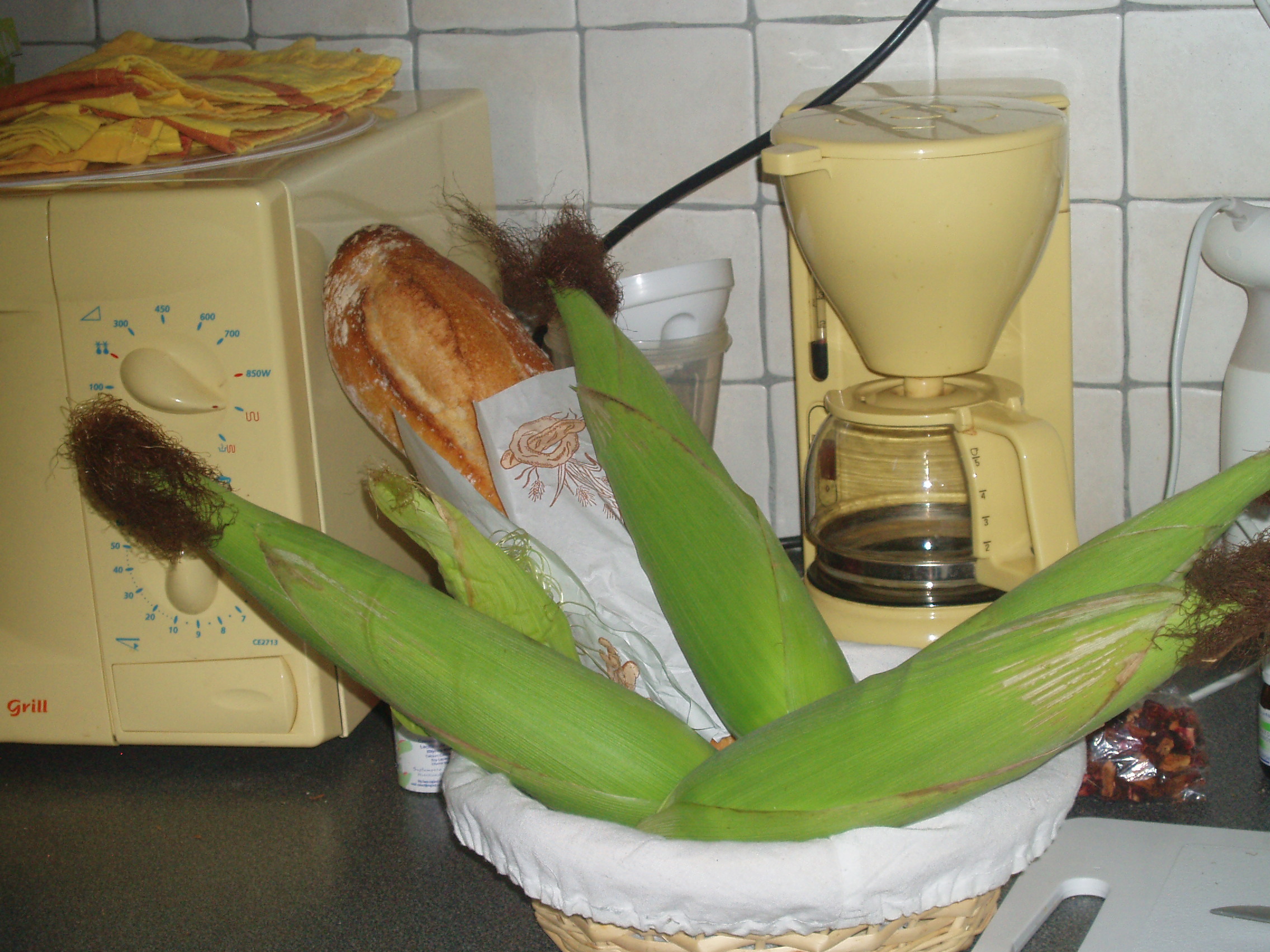
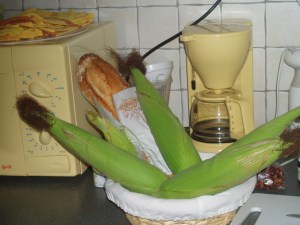
So ever since I began coming to Salies, and more so since I have lived here, I have been stealing corn. I very quickly learned how to tell the tenderest ears without husking them, and would never take more than two or three at a time (I’m a proven liar, too, because I count 5 ears in the basket). I also learned howOLYMPUS DIGITAL CAMERA to know when a field would not yield any more edible ears. If you consider that I have been coming here since 2007 every summer and lived here since 2010, that adds up to quite a bounty of corn!
When I checked into internet to see what I could find about fields of sweet corn, I discovered that some people have turned this stealing corn into a business. In Bristol, Conn., for example, there was the following on the news last August 5th:  “A thief or thieves who knew what they were doing stole 20 row of corn right off the stalks at a Bristol farm over the weekend.”  It wasn`t me, scouts honor! Apart from the fact that I was nowhere near Bristol on that date because I was climbing up the Machu Picchu mountain in Peru, I doubt very much that I could have carried, hidden or consumed 20 rows of corn.

Anyway, to cut to the chase, two years ago I was driving to Navarrenx, which is about 35 minutes from Salies, for an appointment with my osteopath when I spotted a field of very green fresh-looking corn. It was the month of September and all the fields of corn were beige and dry with the cornsilk so black it looked as if it had been charbroiled already. The kernels 11themselves had lost any juice of which they could have once boasted, and wouldn’t have looked appetizing but to a cow or a pig. So a field of corn stalks that were upright, bright green and frankly inviting, was like a red flag. I quickly turned the car around (the field was on the other side of the highway) and pulled into an uneven dirt road that ran between a field of utterly dry, unappetizing corn and this miraculously tempting stuff. There were the ears, sticking right up as bright and perky as a puppy’s, and who was I to resist what I judged to be a late or perhaps second crop.  I picked a couple of ears and went on my way to the osteopath. That evening I husked the corn; the kernels were shiny and plump, much shinier and plumper than anything I had picked so far in Salies. I pinched one and tasted. It was sweet! Not really believing I had been that lucky, I pinched another one and popped it into my mouth: like honey!  I had discovered a field of sweet, tender corn! 2
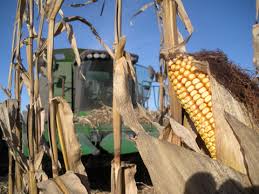

That was the year of 2012 and all through the month of September, I ate magnificent corn. Then, one week when I drove back savoring on the way the corn I would have that night, I found the field harvested, there was nothing but shreds of corn stalks and a few crushed ears lying destitute on the earth. The bonanza was over; I accepted that I would have to wait another year, but I knew now where the field was and never again would I have to eat fodder corn no matter how young and tender.

In 2013, I anxiously awaited August when the young corn plants in MY field would begin to sprout, but nothing happened. Nothing but the disorderly ground cover was growing in the field. September rolled around and I had to admit that whoever was responsible for the field was not going to plant my good corn that year, so I went without.

Hope springs eternal, however, and this year I began watching again from July on. Towards the end of July, right before I went to Peru, I was rewarded with a sight that warmed my heart and made my mouth water: tiny sprouts of corn plants were beginning to break through the earth and open up to the sun. My corn!  I calculated: by the time I got back from my trip around mid August it would just be beginning to form substantial cobs, not ready for picking yet, but promising nonetheless.6
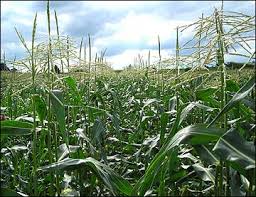
Sure enough, by September the corn was edible and I began harvesting my share. However, as I knew now that it was sweet corn, and I knew I would be wanting to take quite a bit, maybe even share with friends, I began thinking that I would like to find the owner and pay him or her and make a deal to be able to pick to my heart’s delight. I started watching for signs of someone tending the field. I wrote a note, placed it in an envelope and planned to leave it tied to a cornstalk, but the fact that I had put my phone number in it asking the owner to call me made me nervous, so I just carried it around in my car in case I ever found anyone. That way, at least, if I was caught stealing I could prove my intentions were good.

But September progressed and I ate corn at least twice a week and shared with friends, and no one showed up to beg permission from or pay for my harvest.

Today, October 1, it suddenly occurred to me after lunch, that the corn I had picked last week was very ripe and that the harvesting would probably happen soon and that I had better get my last batch in before this happened. As I drove, I prepared myself for the worst possible scenario: a field completely devastated and with not an ear of corn available, all gone -as I knew it probably did- to Green Giant for canning. Visions of an ear of corn dribbling butter passed through my frenzied mind as I 5drove as fast as possible, as if that would get me there in time.

Finally, I approached the field and my worst fears were semi-confirmed: they were in the process of harvesting the corn and had cut about half the field. I looked in dismay, but decided there was still corn for the picking. Turning around, I pulled into the usual dirt road. It was going to be difficult because the corn nearest the edges of the field had already been cut, so I would have to walk quite a distance to get to the stalks still standing. Plus anyone, from anywhere could see me (before it had been easy to hide amongst the tall corn stalks so that no one could see me while I hustled my load. As I 9pulled to a halt I observed at the far end of the field, quite distant from me, but visible, the harvesters and the trucks for loading the corn. It was obvious they would see me if I got out of the car and walked into the field, so I backed out onto the road again and went past the field looking for another access. There was one on the other side, not as wide or well formed but it was a path the car could get into; from there I would not be as easily seen. I was about to pull in and risk the walk across the field when suddenly I realized that here was my chance, the one I had waited for. Amongst the small group of men gathered at the foot of one of the loaded trucks, I would undoubtedly find the proprietor of the field and I could pay for my corn: I could become an honest woman. So, instead of pulling into the protected pathway, I drove back to the dirt road and turned in and drove all the way to the back of the field where the men were gathered. They were standing next to 10the truck loaded with corn and turned to watch as I approached. In my poor French, I asked who the owner was and the first man directed me to a nice looking young farmer who smiled as I picked my way over the clumps of plowed up field to where he was standing. By the time I got there I was laughing at myself: there I was, a 72 year old blond foreigner traipsing across a harvested field to tell this unknown man that I had been pinching his corn and would like to pay him for it. It was quite a laughable matter! But that is what I had come for and that is what I was determined to do.
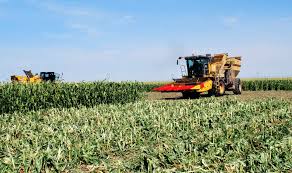

First I asked if I could buy some of the corn that was on the truck, then I explained that I had found the field two years previously and had helped myself to some corn; that I was very disappointed the year before when there had been no corn (they were all smiling widely by then) and extremely happy that this year there had been some. When I finished speaking I couldn’t have felt sillier, but their eyes were kind and jolly. The owner proceeded to tell me that, today, the corn actually wasn’t his to sell anymore because it belonged to the taller gentleman at his side who was going to truck it to Green Giant (Geant Vert). I smiled and said that I had imagined as much as the corn was very good. Yes, he confirmed, it is special corn for Green Giant.

“But it is you I want to pay because it is your corn I have been pilfering all along.”  By this time, I felt we were good friends all of us, crazy about corn each for his own reason, and I was actually enjoying the meeting, their faces were so open and sweet, like the corn. The owner asked if I had a bag and I said “yes”, it was in the car. We began walking back together.

“Are you going to plant corn again next year” I questioned, as if now I too were part of this business of sweet corn and Green Giant and friendly farmers who were willing to listen to a crazy lady telling them she had been helping herself to their corn without blinking an eye or looking annoyed. He said he didn’t know, that he would decide around January or February.

“Oh” I said, taking out my cell phone; “Would you give me your name and phone number so I can call you and see if you are going to plant next year” (I didn’t add ‘so that I can come and steal some more’ because I didn’t think it would sound too good). He immediately gave me his name and phone number which I registered under the name of CORN.

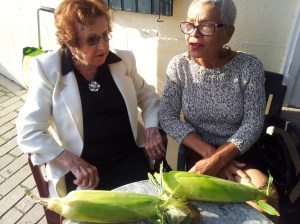
When we got to his van, he pulled out a small plastic bag which I immediately qualified as too small. In my car, I had a sack I usually carry Salomé’s stuff in when she goes to her caretaker that I produced without a quiver (I wonder now if he thought20141001_183636 about how much corn I was going to pinch carrying a sack like that around). We went back to the truck, he climbed up and began filling the sack as I watched. Finally, when it looked as if I wouldn’t be able to carry it, I called out to stop. When he handed me the bag, I had been right: it weighed a ton! I put it down and asked how much I owed him for this corn and what I had snitched previously but, even before I asked, I knew deep down that he wasn’t going to let me pay, as turned out to be the case.

I said ‘thank you very much’, I said ‘I’ll call you in February’, I said ‘Thank you’ again. Mr. tall Green Giant picked up the heavy sack and said ‘I’ll take it to your car’. And I drove off with over 20 ears of corn.

So crime pays, but coming clean pays more, at least in corn, and today I am an honest woman who is calling all her friends to offer them corn on the cob, last batch for this year, honorably filched near Navarrenx with the help of its owners.

EPILOGUE

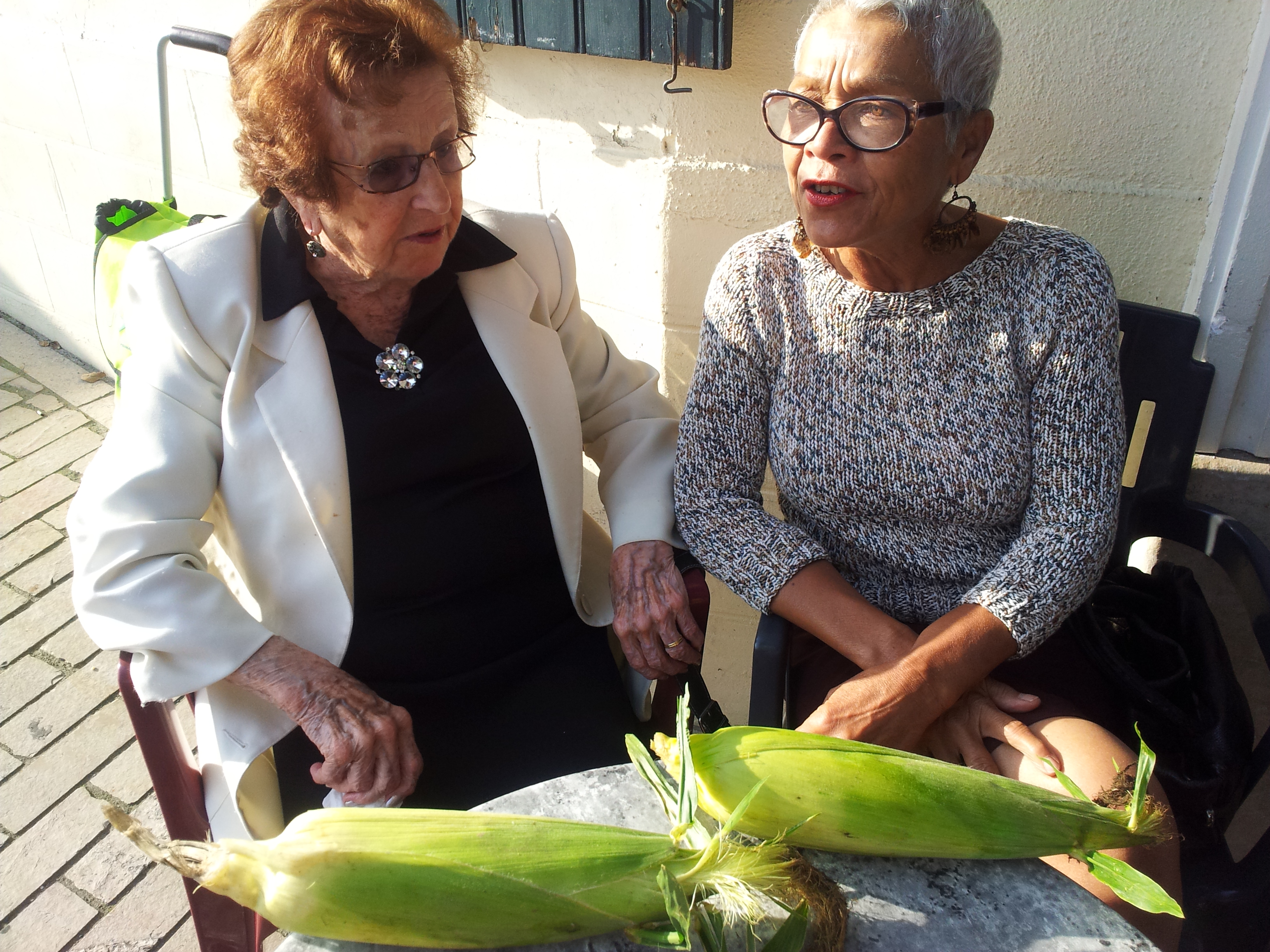
The next day, at our coffee gathering, I become very popular:  20141002_101125