
Please tell me how to explain to my little schnauzer, Salomé, that we went back to standard time from daylight saving time and it is NOT 8:30 and time for her breakfast, but only 7:30 and barely a decent hour to begin thinking about getting up. At 9 a.m. she wants to go out and pee because her inner clock says 10, but I’m barely beginning to get dressed. All day today has been torture for her, and thus, for me.
At 4 p.m. on the dot, she is poking my leg with her nose while I write this piece, convinced (by her stomach) that it is supper time, which arrives –for her- at 5. I attempt to distract her with a dog biscuit, but she isn’t fooled. Swallowing the treat as fast as possible, she returns to the push-push on my leg gazing imploringly at me with her dark brown eyes. I make her wait till 4:30 and then give in thinking that tomorrow I will push it back to 5. In the spring, when we put the clocks forward, she doesn’t mind at all that her meals are an hour earlier, but getting up at what is for her such an unearthly hour of the morning is confusing to say the least.![170px-George-Vernon-Hudson-RSNZ[1]](https://writingalife.com/wp-content/uploads/2017/10/170px-george-vernon-hudson-rsnz1.jpg?w=153&h=249)
I explain to her that she can blame Hudson –not the river, but George, the man- who, according to Wikipedia, was a British-born New Zealand entomologist who proposed Daylight Saving Time or DST in a paper presented to the Wellington Philosophical Society in 1895. Most people then were more like Salomé and preferred their hours just the way they were, thank you very much, so it wasn’t implemented until the German Empire decided to try it out and –along with Austria-Hungary- organized the first nationwide implementation on the 30th of April, 1916 in order to save coal during WWI. I doubt that Hudson heard anything of this –although he was still alive- because he probably was running around the wilds of his country collecting insects for what would eventually be the largest insect collection in New Zealand, today housed in the Museum of New Zealand Te Papa Tongarewa. He died in 1946 and no longer has to worry about remembering to set his clocks either back or forward depending on the time of year.
 Wiki goes on to state that DST clock shifts can complicate “timekeeping and disrupt travel, billing, record keeping, medical devices, heavy equipment and sleep patterns…” and that its usefulness in saving electricity and heating fuels is questionable. It mentions nothing about dogs or other household pets that might think they are being tortured for no justifiable reason.
Hudson was seconded in his idea by Robert Pearce, a Liberal Member of the British Parliament who introduced the first Daylight Saving Bill to the House of Commons in 1908. After some consideration it was discarded and even though the following years saw several other bills they all also failed. So it was left to the Germans during the war to begin what today is Salomé’s torture, with Britain, most of its allies and many European neutrals following suit. Russia and a few other countries waited until the following year, and the United States adopted DST in 1918. However, most countries (except Canada, the UK, France and Ireland) dropped it after the war and brought it back during WW II. Then it became widely adopted, particularly in Europe and North America in the 1970s as a result of the energy crisis.
However, there is no general agreement on the benefits or detriments of DST. Personally, at my age, I have no problem with putting the clock forward, putting it back or leaving it alone other than remembering to do so. Since hearing the Spring Forward/Fall Back reminder, I no longer have trouble knowing whether we are adding or subtracting an hour from our day. However, if I look at the detrimental effects on health that Wikipedia delights in enumerating, I might side with Salomé in thinking that we humans should leave well enough alone.
Although some benefits due to greater exposure to sunlight seem to be favored by the hour shift, the negative effects include an increased risk of heart attack (10%), sleep disruption and severe effects on seasonal adaptation of the circadian rhythm which can last for weeks. It also has a disruptive effect on sleep for a lot of people. I would have no idea if this is having an effect on me as the hour change comes shortly after my trip home from Mexico from which I am still experiencing a certain amount of jet-lag that is affecting my sleep anyway. Salomé sleeps off and on all day long so it would be difficult to determine if there is any sleep deprivation in her case.
It is now 6:15 in the evening and there is a little black nose pushing against my thigh to remind me that she believes it is time for my dinner (around 7- 7:15)… which, of course, means that she gets titbits and to lick some of the cooking dishes when there are yummy leftovers. Oh dear… I think Salomé has DST-lag which will probably last for a few days and maybe clear up with my jet-lag.
 Someone might say “that’s normal” what with hurricanes, earthquakes, mass killings, threats of nuclear war, global warming, Donald Trump, Brexit and terrorist attacks going on all over. And, if the general goings on were not enough, there is personal stuff too that could make me sad.
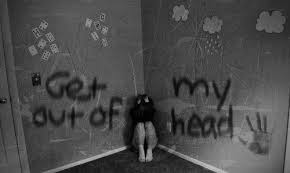 life. Her language and rage was such that I had to block her from calling me again. This certainly might have made me sad but, although I felt for her, I understood perfectly how her mind had finally taken over completely and attacked the last person she trusted. If there was a lesson for me in that, it was to contemplate the power of the mind, in case I had ever doubted it.
 Facebook. She obviously realized this the next time she tried to go into my page, and sent me an unpleasant message on my cell phone, so she got blocked there too. If I don’t like what someone writes, I stop reading them but I don’t send them sly remarks suggesting that they are mentally deficient or, at the very least, absolutely wrong. I have no hard feelings about this friend, I just wanted to save her the pain of reading what I write and also I prefer not to be perusing her comments.
 moved to Spain I realized how regionalist the country was, and how people tended to identify with their region more than with Spain as a whole. Cataluña was just the most. So, it could come as no surprise to me that what had been just under the surface for so long should suddenly and violently come to light. However, it seemed that this was the cause of my sadness.
 thought about it, the more depressed I got. It wasn’t logical. The conflict has nothing to do with me and doesn’t actually affect me in any way. There was no logical reason why it should be affecting me at all. Why couldn’t I find it (on both sides) as absurd or amusing as the Donald’s goings on? But as incomprehensible as it was, I couldn’t let it go. Even if I stopped reading FB or watching the news, the thought of the conflict was constantly in my head, and the more it was, the sadder I got. Not only was I sad, but also the feeling of powerlessness was overwhelming: there was nothing I could do.
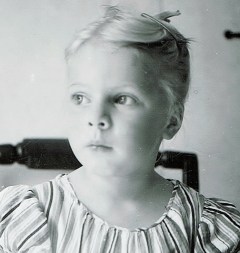 were yelling at each other, I have no idea what they were saying, but I felt every bit of fear, powerlessness and deep sorrow of that little girl. I knew in that instant what it was that Cataluña-vs-Spain was awakening in me, and the painful belief came to the surface: There is no solution and it will never end. I walked the rest of the way home hugging myself and letting that little girl cry her heart out. By the time I got home, the sadness had gone and I felt light and tired.
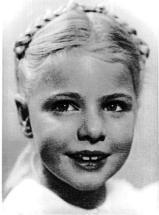 I was never again awakened by a fight between my parents and I am sure they had many, but somehow the frightened seven-year-old has always been inside. The last time she awoke was during my daughter’s divorce when her soon to be ex would make angry threats against her. I remember lying curled on the bed sick with nausea the night before she was to move out, when suddenly the little seven year old girl shared another belief with me: My father is going to kill my mother and then kill himself, was what I heard in my head. In that moment, the nausea disappeared and I realized that there was nothing to fear in the present; it had all been a childhood fear that had lain in the pit of my stomach for all those years.
 Writing a life